Specifications
Supply specifications
Finished panel formats
Send your required width and length. Available formats are confirmed with the selected panel and quoted scope.
Buying components?
Include part dimensions, grain direction and quantities by item with your drawing.
| Material | Selected plywood or MDF board |
|---|---|
| Finished length & width | Your part list; size basis and tolerance confirmed with quotation |
| Thickness | From the selected board; finished tolerance confirmed with quotation |
| Face & orientation | Visible faces, grain/decor direction and matched sets in the drawing |
| Processing scope | Cutting and any requested additional operations confirmed with quotation |
| Labels & packing | Part codes, quantities, protected faces/edges and packing sequence agreed with the order |
Application-specific specification checks
Panel construction and finishing
| Size basis | Rough blank, cut panel or finished component; state whether edging and machining allowances are included. |
|---|---|
| Processing proposal | Requested cuts, shapes, holes, grooves, CNC and edging reviewed with the drawing; feasibility and scope confirmed with quotation. |
| Part reference | Part codes, dimensions, quantities, drawing revision, visible face and grain/decor orientation. |
| Trial and inspection | Material selection and representative part, dimensional measurement, edge condition and component fit checks. |
| Packing sequence | Protected edges and faces, bundle labels, matched sets and part quantities arranged with receiving needs. |
Give every dimension the meaning your workshop needs.
State whether you need a rough blank, a cut panel or the finished component dimension. Where edging or later machining changes the size, identify that stage with the part drawing.
| Part and material | Part code, plywood or MDF designation, board grade, thickness and finish. |
|---|---|
| Finished dimensions | Length × width, tolerance and quantity; identify whether the size includes edging or machining allowance. |
| Face and direction | Visible face, grain or decor direction, permitted rotation, paired parts and sequence references. |
| Processing requested | Rectangular cutting or additional shapes, holes, grooves, routing and edge work listed separately; feasibility and scope confirmed with quotation. |
| Inspection | Dimensions, squareness, surface and edge requirements, plus the agreed measurement and sample conditions. |
| Packing | Part labels, bundle quantities, matched sets, edge protection and the receiving sequence. |
Source sheet formats for the cutting discussion
These are our established board formats for planning. The chosen board, actual cutting layout and quoted processing determine the proposed finished parts.
Scroll horizontally to compare all columns.
| Material | Regular formats | Formats on request |
|---|---|---|
| Plywood | 1220 × 2440; 1250 × 2500; 1525 × 3050 | 1220 × 3050; 1250 × 3660 |
| MDF | 1220 × 2440; 2100 × 2800 | 1220 × 3050; 1830 × 3660; 1220 × 3660 |
Attach the part list before fixing the sheet quantity. Include the actual cutting and trimming allowances, with grain restrictions and any parts that must remain together.
Write the cut list so the dimensions cannot be read two ways.
Scroll horizontally to compare all columns.
| Schedule field | Specify | Why it matters to the part |
|---|---|---|
| Unique part code | A code for each distinct material, shape, size and handed component. | Connects quantities, drawing, pack labels and receiving records. |
| Dimension stage | Rough blank, cut panel or completed part; edging and machining included or excluded. | Stops a later edge layer or finishing operation changing the fit unexpectedly. |
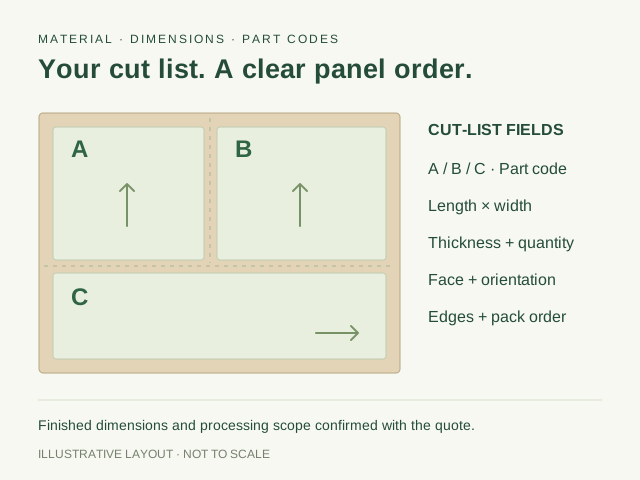
| Units and direction | Millimetres, length and width convention, visible face and a grain or decor arrow. | A rectangle alone does not show which way the face must run. |
| Tolerance and measurement | Required limits, datum edges, measurement positions and the condition of the part. | Gives the quoted dimensions and receiving checks the same meaning. |
| Revision and quantity | Drawing issue, parts per assembly, number of assemblies and spare-part lines. | Keeps the material quantity connected to the current job. |
For a finished 600 mm-wide panel with edging on both sides, provide the finished-width requirement and edge construction. Identify any trimming or finishing allowance instead of leaving the supplier to infer a substrate width from the nominal edge thickness. For mirrored parts, use separate left/right codes and a drawing showing the reference face.
Send required length, width and thickness limits separately from squareness, flatness and hole-position requirements. Identify the measuring tools and datum surfaces relevant to assembly. The quotation sets the achievable processing and agreed checks for the chosen construction; there is no single tolerance that describes every material and operation.
CHOOSE THE MATERIAL AND DELIVERED SCOPE
Plywood parts, MDF parts or sheets for your own cutting?
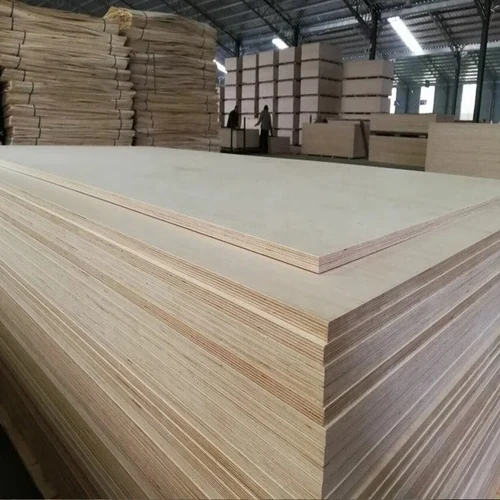
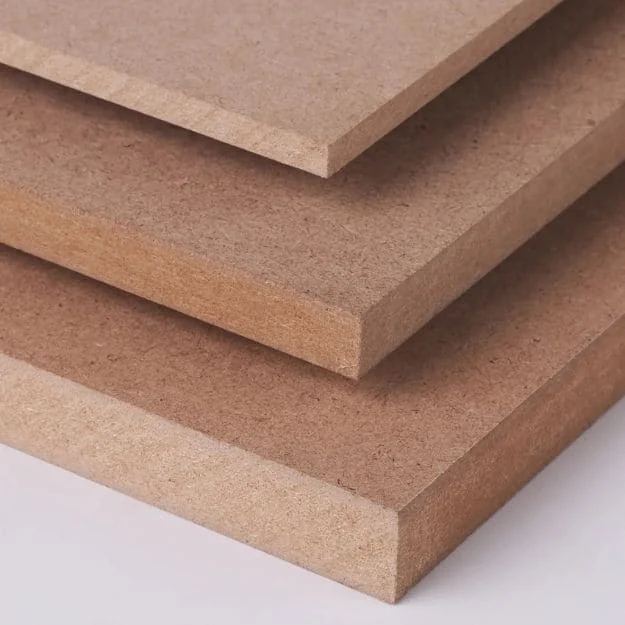
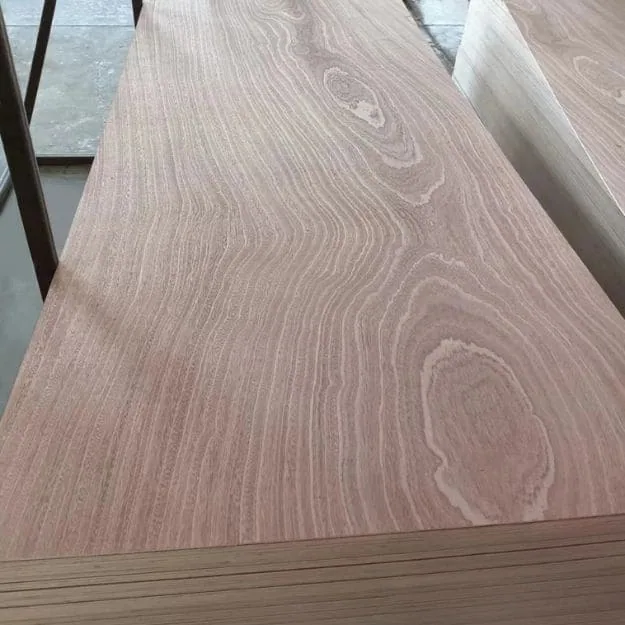
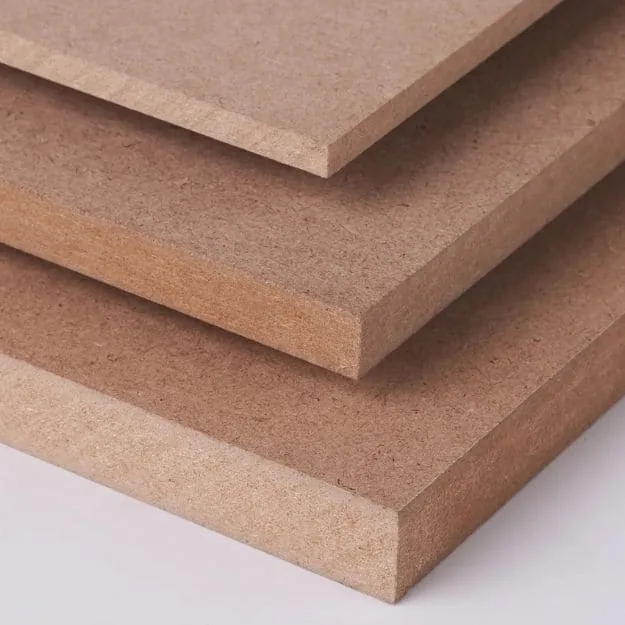
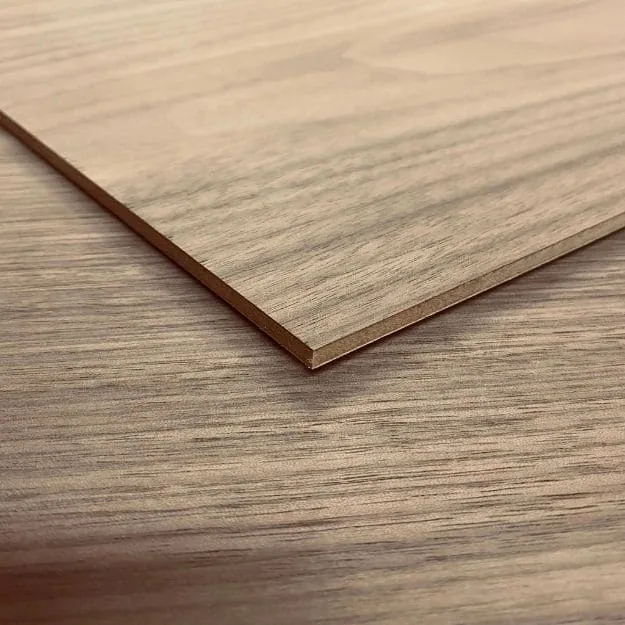
Choose the material before defining the cutting job. These photos show plywood and plain MDF stock; the part drawing defines the cut components requested for your order.
Plywood cutting inquiry
Specify the face, core, grade and board thickness with the part sizes. Link directional veneer and any visible layered edge to the intended component.
Choose the plywood constructionMDF cutting inquiry
Choose the board grade and decorative or unfaced surface for the job. State the finished thickness, face/back detail and the machining or finishing your workshop will perform.
Compare MDF board optionsFull-sheet supply
Compare source formats and your own cutting process on the same usable-part output. Include workshop handling, cutting, edging and rework when comparing the complete cost.
Prepare the cutting layoutList CNC work, drilling, grooves and edging as requested operations in the inquiry. The quotation confirms feasibility, delivered scope and any requirements for the proposed part; specify these before comparing a cut blank with a more finished component.
For a detailed MDF profile or hole pattern, use the MDF machining drawing inquiry to identify datum edges, feature depths, fitting references and the proposed component trial.
Decide what arrives ready and what your workshop finishes.
A rectangular cut blank, an edged panel and a drilled component have different delivered scopes. List operations in the intended sequence, including trimming, drilling, routing, edging and coating where relevant. Mark the operations that belong in the supplier’s quotation and those completed after receiving.
For decorative faces, carry the selected surface reference, grain arrow and matching sequence into the cutting schedule. Ask the proposed layout to keep paired fronts or adjoining wall panels together where the appearance requires it. If rotation is allowed only for concealed pieces, put that instruction on those item lines.
COMPARE OPTIONS
Your selection at a glance
Material and dimensions
Name the plywood or MDF board, part code, finished size, thickness and quantity; identify edging and machining allowances.
Face and processing
Keep grain/decor direction, visible faces and matched sets with the drawing. Requested cutting, CNC, drilling and edging scope confirmed with quotation.
Delivery and receipt
Discuss part labels, bundle quantities, protected edges, assembly sets and the receiving sequence.
TRY THE MATERIAL. CONFIRM THE PART.
Make the trial useful for your production line.
Start with the board that matters most to the order. Discuss a representative part where the cut edge, fitting, face or finishing process determines whether it works in your workshop.
- Share the partSend its code, dimensions, quantity, visible face and edge requirements, plus any drawing or physical reference.
- Agree the trial scopeConfirm the material and requested cutting or additional operations. Identify the dimension and fit checks you plan to carry out.
- Retain the referenceKeep the selected board and trial part with its drawing revision, measurement record and quoted processing scope.
Board samples follow our free-sample arrangement, with buyer-paid freight and a possible later-order credit. Confirm the proposed cut-part sample format and processing scope when arranging the trial.
Take the dimension stage and assembly task into your request.
Choose the part where the purchase succeeds or fails. The 18 mm targets below are drawing preferences to confirm with the actual raw or faced material. Keep cut-part size, finished-after-edging size, inspection limits and the operations included in supply on separate fields.
Scroll horizontally to compare all columns.
| Part to compare | Retain through the trial | Start the request |
|---|---|---|
| Edged MDF component | Code/revision, final length/width limits, actual edge and bonding construction, substrate cut size and remaining trimming/finish work. | Request the edged MDF part trial Request the material and part file |
| Plywood joint or fitting part | Complete plywood construction, datum/reference face, left/right features, grain arrow, actual mating hardware and measurement stage. | Request the plywood fitting trial |
| Numbered front or wall-panel set | Full elevation, decor/grain direction, matched position/part codes, pieces per complete set, stage quantities and chosen spares. | Quote the numbered component set |
Choose the part that exposes the most important fit.
Trial the material and component that determine your buying decision: a visible edge, a pair of adjoining fronts, a groove for a backing panel or a drilled joint. Measure at the stage in which the ordered dimension applies, then assemble or finish it with the intended mating parts.
Record what passed, what needs a drawing change and which operations remain in your workshop. Keep that record with the quotation and revision. A successful material selection and a successful completed-part trial answer related but different purchasing questions.
Acceptance worksheet
Record the dimensions and the part your team tested.
Use one worksheet to connect the cut list, workshop trial and buying decision. Record the measurement method and what is included in the offered part.
Open the cut-panel trial worksheet
| Check | What to record |
|---|---|
| Material and part | Part code, board designation, thickness, surface, drawing revision and selected sample. |
| Dimensions | Specified and measured length/width/thickness, tolerance, allowance and whether edging is included. |
| Geometry and fit | Agreed squareness, flatness and joint or hardware checks under the intended support arrangement. |
| Cut and surface | Edge condition, face breakout or damage, visible-side appearance and any later finishing work. |
| Direction and sequence | Face, grain/decor arrows, rotation restrictions, pair/set codes and panel positions. |
| Packing and receipt | Part quantities, bundle labels, protected edges, pack order and receiving observations. |
| Schedule reconciliation | Drawing issue, parts per assembly, total assemblies, spare lines and the agreed delivered quantity by code. |
| Delivered scope | Included cutting, drilling, routing, edging and finishing; remaining workshop operations and their measurement stage. |
FROM THE DRAWING TO THE QUOTED PART
Keep the material and dimensional requirements together.
Send the cut list with an identifiable drawing revision. Include the material documents your destination or application requires alongside the finished-part checks.
For MDF, the RAW MDF report is a substrate reference. Request documents for the actual board, finish and component construction specified in the order.
The European Panel Federation’s MDF sawing guidance explains the role of tooling and supported workpieces in cutting quality. Use it to discuss production and sample checks for your specified material.
Resolve drawing conflicts before committing the material.
Use a revision number or date on the part list and drawing. If a dimension on the list differs from the drawing, identify the controlling requirement before the cutting schedule is agreed. Keep units, dimension stage, rotation restrictions and requested operations with that revision.
A clear dimensioned PDF or table is enough to begin the discussion. For shaped or machined parts, agree the production-file format with the processing quotation. Keep a readable drawing alongside any machine file so purchasing and receiving can identify the part, features and reference face without opening workshop software.
Product data & reports to request
Request a technical data sheet covering:Identify the plywood or MDF board, surface, thickness and destination documents with part codes, dimensions and drawing revision.Include these specification details:- Selected plywood or MDF designation, grade, thickness and surface references
- Required board test methods, emission and project documents
- Part dimensions, tolerance, orientation and referenced drawing
- Included operations, inspection method, labels and packing schedule
Company documents to view
FSC chain of custody Wood panels · purchase & salesISO 9001 & ISO 14001 Management systems · stated sales activitiesEN 13986 plywood document Non-structural scope · listed modelsUse these for supplier qualification; match product performance to the proposed panel’s technical documents.Cut-panel material and processing requirements: what to match
- Material and drawing
- Identify the plywood or MDF board, surface, thickness and destination documents with part codes, dimensions and drawing revision.
- Quoted processing
- Requested cuts, holes, grooves, CNC and edge work; confirm feasibility, tolerance, size basis and included scope for the specific job.
- Trial and receiving
- Agree measurement conditions, representative part checks, face direction, pack labels and the receiving sequence.
BEFORE YOU ORDER
Board-order reference
These terms cover regular board supply. Confirm the cut-list processing, proposed part sample and job schedule with your quotation.
- Minimum order
- 1 container
- Regular lead time
- 10–15 days
- Samples
- Free samples
- Quotation terms
- FOB / CIF
Sample freight & order notes
- Minimum order: Mixed loads available.
- Regular lead time: Production; shipping time is additional.
- Samples: Buyer pays freight; credit available on a later order.
- Quotation terms: Name the port in your inquiry.
HELP EACH PART REACH THE RIGHT WORKSTATION
Pack by material, part code and assembly sequence.
Discuss protection for cut edges, corners and decorative faces. Identify matched sets, narrow parts and staged project deliveries in the bundle instructions, with labels that follow the cutting list.
At receiving, reconcile quantities by part code and inspect pack condition before removing protection. Check the agreed dimensions, face direction and edge condition against the retained reference before assembly or further machining.
Use the panel receiving checklist to keep observations tied to the item and bundle. Include unloading limits and storage arrangements in the delivery discussion.
Reconcile pieces before the packs reach separate workstations.
Match pack labels to part codes, quantities and drawing revision, with set or room references where required. Agree whether counts are per bundle or per assembly set. Photograph any affected pack and record the code and quantity before mixing its contents with other deliveries.
Discuss pack dimensions, measured gross weight and unloading access with the receiving site. A net-area or volume calculation does not include protection, pallet weight or every finished layer. Keep those loading details attached to the delivered configuration rather than deriving them from the cut-list area alone.
FROM YOUR CUT LIST TO THE ORDER
Turn your cutting list into a defined panel order.
A good panel inquiry starts with the parts you need to make. Material, dimensions, quantities and orientation give each part a clear place in the order.
Discuss cut-to-size plywood and MDF requirements with CUZI. Start with a simple part list or drawing, then confirm the selected board, finished dimensions, tolerances and processing scope in the quotation. Identify which operations your workshop will complete and which you want included in the proposed supply.
For a mixed order, keep each material and thickness on its own item line. A cabinet front, concealed back and packing component may use different board constructions even when their dimensions look similar.
Planning a thin backing part? Use the thin MDF specification to connect the selected board thickness with its frame or groove, finished-stage dimensions and support before preparing the cut list.
Buying plywood parts for crates or cases? The packing plywood brief connects full-sheet selection, component dimensions, case assembly and destination requirements.
Buy the quantity of usable parts your assembly needs, with the right material on each line. A cutting list becomes much easier to quote when purchasing and production use one part code, one dimension stage and one drawing revision. Start with those three details; we can discuss the board format and delivered processing around them.
BUY AROUND THE PARTS YOU WILL USE
What does your cut list need to deliver?
Furniture and cabinet components
Separate doors, shelves, backs and carcass parts by material and finish. Mark visible edges, grain direction, left/right pieces and the drawing revision.
Interior project panels
Organise wall or joinery panels by room, elevation and installation sequence. Keep adjoining faces, returns and access panels identifiable in the part schedule.
Distribution and packing items
Discuss cut formats around the stock or packaging components your customers use. Include quantities by item, bundle arrangement, handling needs and material requirements.
For structural, fire, wet-service or other specified uses, identify the required board and construction documents with the cut list. Finished dimensions are only one part of the material selection.
Use the same labels from the drawing to the workstation.
A cabinet schedule can name sides, shelves, backs and fronts by assembly code, with parts per cabinet and total cabinets shown separately. A wall-panel schedule can name the room, elevation and installation position. Add the bundle order your receiving team needs, rather than expecting it to reconstruct the sequence from a stack of similar rectangles.
For distribution orders, agree the saleable size, material designation and pieces per pack. Keep spare or replacement parts on explicit lines, with their direction and appearance relationship where relevant. Full sheets purchased for later workshop changes remain distinct from the scheduled cut parts.
MAKE THE CUT LIST WORK FOR RECEIVING TOO
A cabinet-part brief your teams can share.
- Material lines
- Plywood or MDF by board specification and finish; different carcass, front and back constructions kept separate.
- Part schedule
- Unique codes, finished length × width × thickness, quantities, face direction and permitted rotation.
- Processing proposal
- Requested cuts, additional operations and edge details, with the drawing revision and quoted tolerance.
- Delivery set
- Parts grouped by furniture or assembly code, with agreed labels, bundle quantities and edge protection.
A cutting diagram illustrates where parts may sit on a sheet; the reviewed production layout includes actual tool and trim allowances. Keep the same part list through quotation, trial and order, and identify any change before production.
Compare sheet formats using a direction-aware layout.
Consider 160 plain MDF blanks, each 600 × 400 mm, with the 600 mm direction running along the sheet length. The calculation below assumes 10 mm trim on every sheet edge and a 3 mm gap between neighbouring blanks. These are stated planning inputs, not a quoted cutting allowance or machine specification.
Scroll horizontally to compare all columns.
| Source sheet | Usable rectangle after trim | Grid and output | Sheets for 160 blanks |
|---|---|---|---|
| 1220 × 2440 mm | 1200 × 2420 mm | 2 across × 4 along = 8 blanks | 20 sheets |
| 2100 × 2800 mm | 2080 × 2780 mm | 5 across × 4 along = 20 blanks | 8 sheets |
For the first format, the occupied rectangle is 803 × 2409 mm: two 400 mm widths plus one 3 mm gap, and four 600 mm lengths plus three gaps. For the larger format it is 2012 × 2409 mm. Both fit their stated usable rectangles.
Each blank has 0.24 m² net area; 160 blanks total 38.40 m². The proposed sheet purchases total 59.536 m² and 47.04 m² respectively. Net blank area divided by purchased sheet area is about 64.5% and 81.6%. This compares these two fixed grids only; it is not an optimised nesting result, a usable-grade guarantee or an allowance for defects and reserve.
Compare the quoted material price, handling, transport and completed-part yield before choosing the larger format. A directional decor, matched face set, extra part size, unusable area or additional operation can change the plan. Send the whole schedule so the proposed production layout includes those constraints.
ONE PURCHASE SCHEDULE. DISTINCT PART LINES.
Coordinate your materials, cuts and quantities.
Separate plywood and MDF items by board construction, thickness, finish and part code. Keep cut parts and full sheets distinct so the proposed mixed load and quotation follow the delivered scope you need.
Regular CUZI panel orders start at one container and can include mixed loads. Regular production takes 10–15 days, with transit additional. Confirm the proposed cut-list job’s quantities, processing and delivery schedule with its quotation.
We discuss FOB or CIF with the named port. The mixed-panel schedule helps organise the purchase, while the completed-part cost guide helps compare sheet and processing offers on the same basis.
Compare a delivered usable part, with the same scope on both offers.
Scroll horizontally to compare all columns.
| Cost item | Full-sheet route | Cut-part route |
|---|---|---|
| Material and yield | Purchased boards, cutting layout and usable parts produced. | Quoted material construction and delivered usable quantity. |
| Processing | Your cutting, handling and any drilling, edging or finishing. | Included operations plus the work left for your workshop. |
| Packing and transport | Full-sheet packs, unloading and workshop storage. | Part packs, set labels, protection and receiving sequence. |
| Fit and rework | Dimensional and appearance checks on your produced parts. | Checks against the agreed part specification and revision. |
For a price comparison, divide the relevant material, processing and logistics cost by the usable parts delivered to the next operation. Keep the same currency, delivery point and material specification, and identify what each quotation includes. A lower sheet price cannot settle the comparison when the layouts or completed scopes differ.
FAQ
Questions before you send the cutting list.
Can I discuss both plywood and MDF cut panels?
Yes. Describe the material and requested part dimensions on separate lines. The proposed board, cutting scope, tolerances and finished format are confirmed with the quotation.
Which dimensions should I send?
Give length, width, thickness and quantity for each part. State whether the dimension is a rough blank, cut size or final size after edging, and identify the required tolerance.
Are CNC routing, drilling and edging included?
List these as requested operations with the relevant drawing and edge detail. Feasibility, tolerances and included processing are confirmed in the quotation for the specific job.
Can I calculate the order from total part area?
Area is useful for an initial comparison, but the cutting layout also needs tool/trim allowances, part geometry and orientation restrictions. Review the layout before fixing sheet and finished-part quantities.
What drawing or file should I send?
A readable part list and dimensioned drawing can start the discussion. Include units, material, part codes, revision and grain arrows; agree the production-file format with the quoted processing.
How do I send the cut list?
Begin with the main dimensions and quantities in the inquiry form. Email the cutting file or drawing to info@cuzicn.com, or use the existing drawing and file-sharing guidance to keep it connected to your inquiry.
Can cut parts be mixed with full sheets?
Discuss the proposed quantities and packing for both item types. Keep them separate in the purchasing schedule so the quotation and bundle labels describe what is delivered.
How is the delivery date agreed?
Send the requested receiving date and destination port with the cut list. The quotation confirms the selected material, processing and production arrangement, with shipping time considered separately.
How is the cut-part tolerance confirmed?
Include your required dimensional tolerance, size basis and measurement conditions in the cut list. The quoted processing scope and sample agree the proposed part and checks; tolerance is confirmed for the specific board and job.
Request a quote
Send the part list. Start with the dimensions you know.
Material, length × width, thickness, quantity and destination are enough to begin. Add the drawing and extra operations as you define the quoted scope.
Open the cut-to-size panel inquiry outline
Cut-list inquiry: plywood / MDF panels for [workshop / project application].
Material: [board designation, grade, thickness and surface].
Parts: [code; length × width; thickness; quantity; units].
Size basis: [rough blank / cut panel / finished after edging; tolerance and allowances].
Orientation: [visible face; grain or decor direction; permitted rotation; pairs or sequence].
Layout inputs: [edge trim and cutter gap to agree; direction and matched-set restrictions].
Requested operations: [rectangular cutting; other shapes, holes, routing or edging to discuss].
Drawing: [reference and revision; proposed production file to agree].
Trial and checks: [material / part sample; measurement, fit and surface requirements].
Scope and cost basis: [included operations; remaining workshop work; usable pieces required].
Packing: [part labels, bundle quantities, protected edges and set order].
Other supply: [full sheets or different materials for the proposed mixed load].
Quotation: FOB or CIF [named port]; [requested receiving date and processing scope].
Download the cut-list inquiry (.txt)