On this page
THE SHORT ANSWER
Plywood vs MDF: choose around the finished component.
Choose MDF as the starting point for a smooth painted face or routed profile; choose plywood for a visible layered edge. For a decorated surface, compare the finished panel, matching edge and reverse. For a shelf or heavy fitting, compare the proposed construction and the complete supported component. For a cabinet or furniture range, choose by component: the door, carcass and shelf can each use a different panel.
Scroll horizontally to compare all columns.
| Your component | Useful starting point | Compare before the order |
|---|---|---|
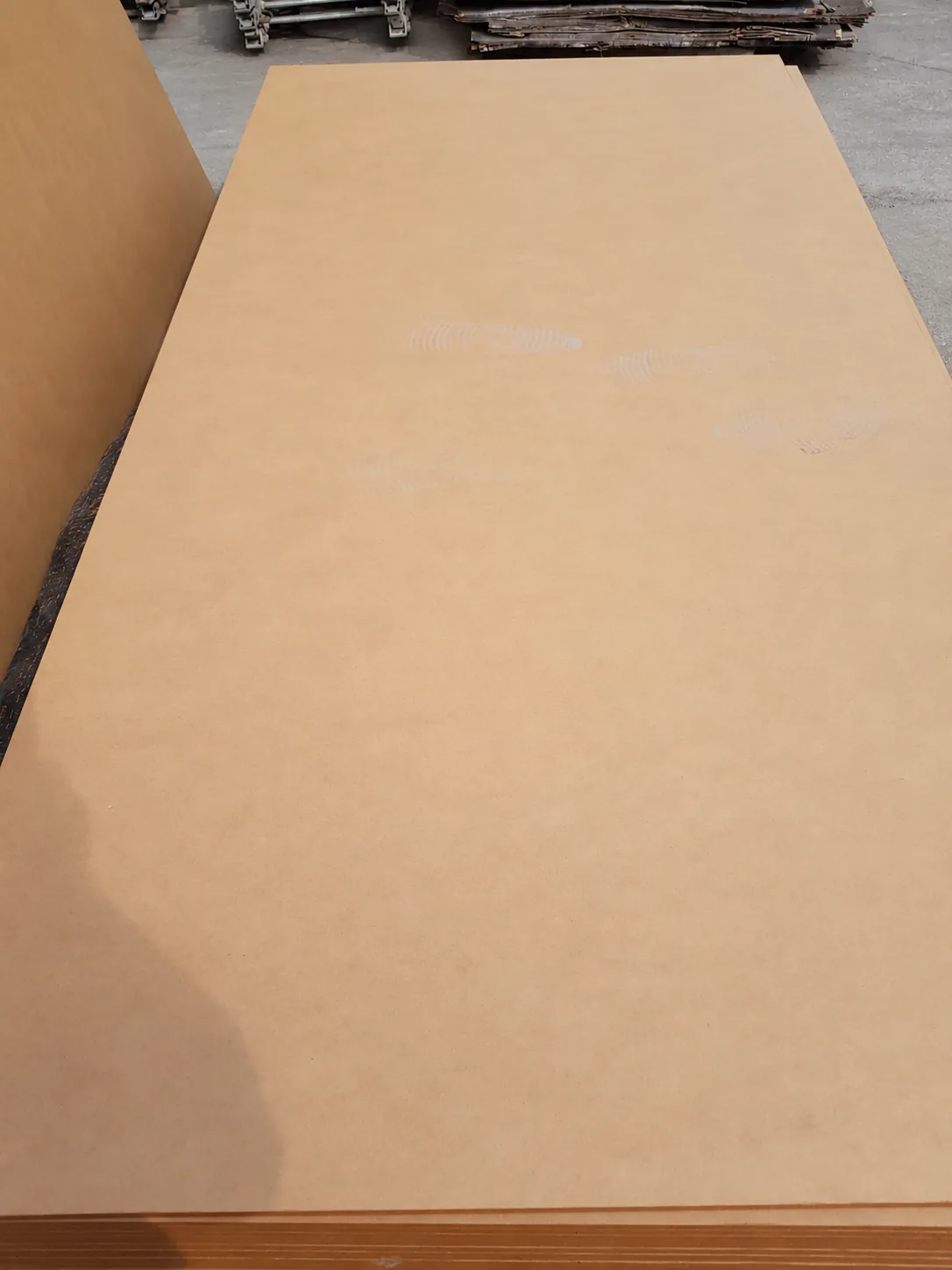
| Painted front / routed profile | Plain MDF, or MR MDF for the specified humid-use requirement. See MDF options. | Deepest profile, prepared cut edge, cured coating, reverse and complete-door fitting. |
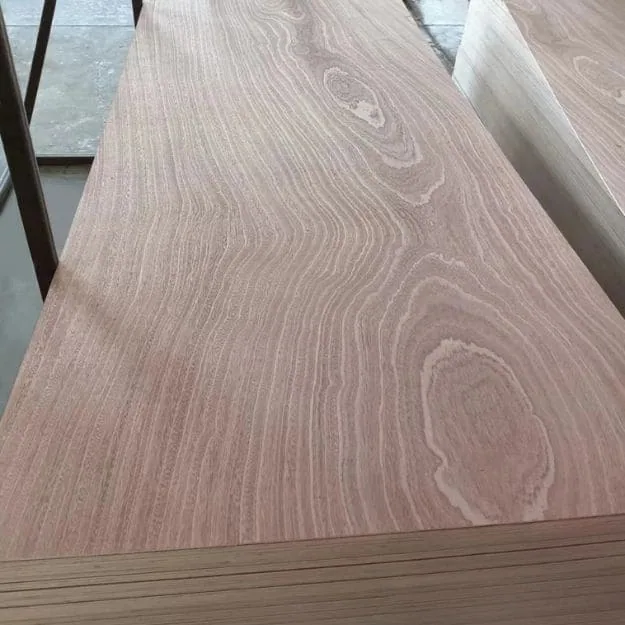
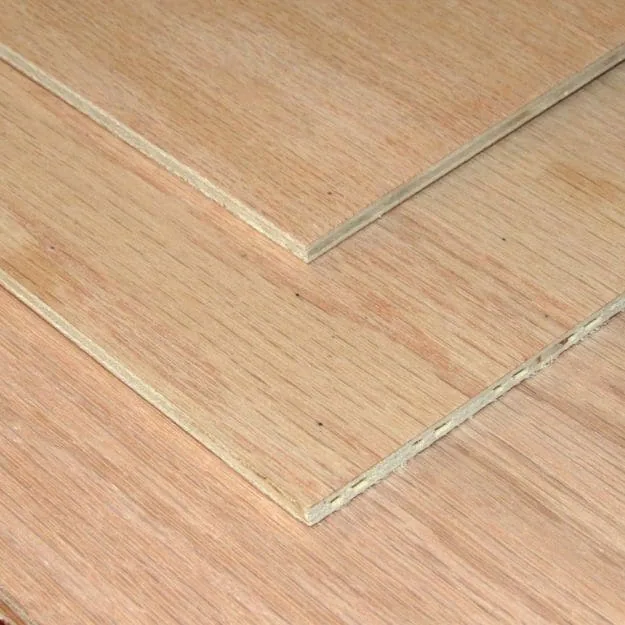
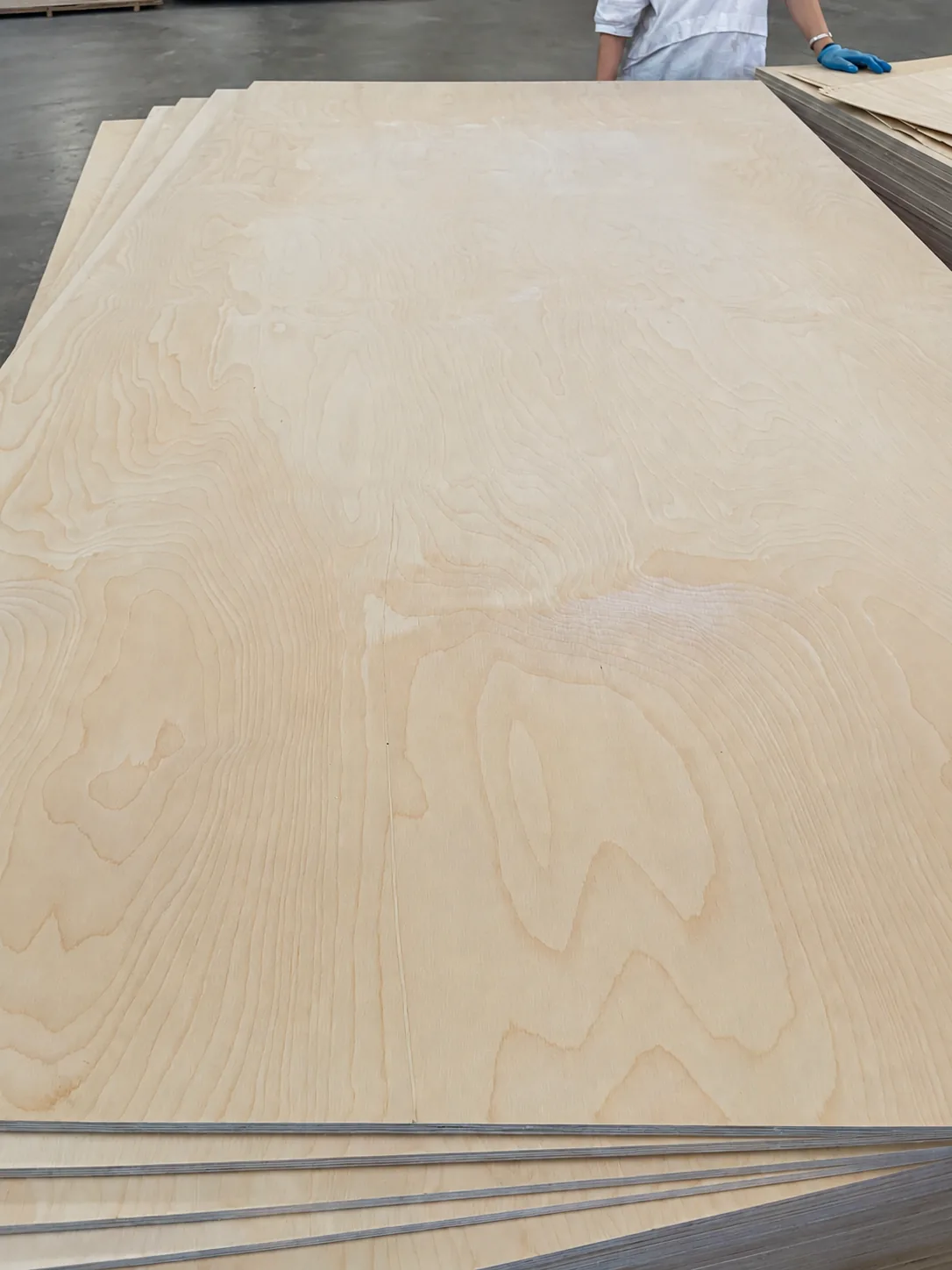
| Visible layered edge | Birch plywood with the selected inner construction and face/back. See birch options. | Cut core, void/repair range, edge joint, preparation and finished appearance. |
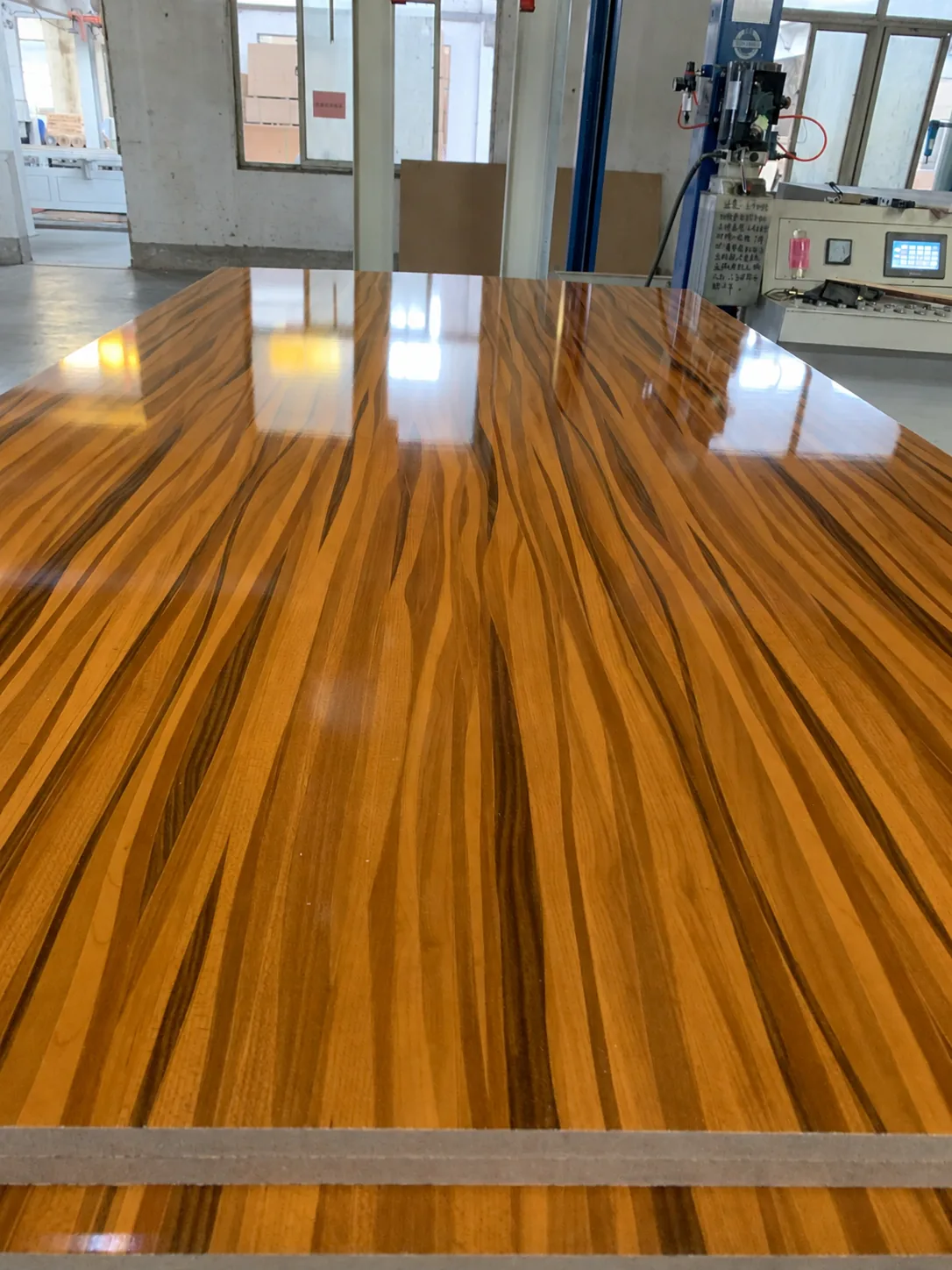
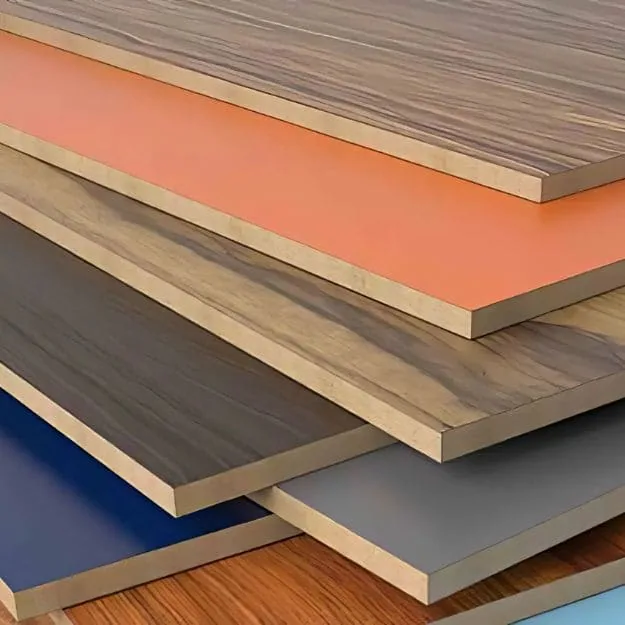
| Decorated interior / work surface | Melamine or HPL faced MDF; a decorated plywood alternative where its construction suits the part. | Complete front/reverse, decor/texture/sheen, matching edge and required surface-use data. Using both substrates? Plan the panel mix. |
Including a particleboard alternative in the shortlist? Continue with MDF vs particleboard for furniture purchasing to compare the three substrates around your component.
START WITH THE RESULT YOU WANT
Choose for the finish your customer sees.
A painted door needs a clean profile and a convincing finish. An exposed-edge cabinet needs attractive veneer layers. A ready-decorated interior needs a face and edge band that work together. Describe that result first, then compare the panel constructions that can deliver it.
Give each alternative the same finished drawing, viewing sides, joint, support, finish and receiving date. A raw panel and a finished component answer different questions: include the operations needed to deliver the customer’s part.
For concealed cabinet parts, focus your budget on machining, fit and assembly. For a visible part, put the finish reference beside the drawing. This makes the conversation about your product, and helps us propose a useful alternative when the first material choice is still open.
How plywood and MDF are made
Plywood is built from bonded wood veneers, typically with grain direction alternating between layers. MDF is made from wood fibres bonded into a panel, with a smooth, uniform surface suitable for machining and decorative finishing. The chosen construction and grade determine the properties to use for your component.
Material references: APA: plywood construction and grades; Composite Panel Association: MDF.
PLYWOOD VS MDF
Compare what matters to your part.
Scroll horizontally to compare all columns.
| Your priority | Plywood route | MDF route |
|---|---|---|
| Painted or routed face | Allow for veneer, repairs and cut edges in the preparation and coating trial. | A useful starting point for profiled fronts. Trial the routed areas, primer and final coating together. |
| Exposed edge | Use the layers as a design feature. Select the core and approve its finished appearance. | Plan a painted edge or edge band; include that work in the finished-part cost. |
| Decorative surface | Choose the veneer species, face/back arrangement and matching for the visible area. | Compare melamine, HPL or PVC facing, including the reverse face and matching edge treatment. |
| Hardware and shelves | Identify the core and trial the fixing. Request the offered construction’s relevant bending/stiffness data and assess the shelf with its actual span, supports, orientation, load and service conditions. | Identify the board grade and trial the fitting, pilot hole and edge detail. Use the proposed grade’s relevant data and assess the complete supported shelf, including any front rail, edge or intermediate support. |
| Moisture exposure | Specify the bond and service conditions. Include edges, openings and the protective finish. | Compare moisture-resistant MDF for the intended interior conditions. Include complete sealing, joints, cut-outs and cleaning/wetting in the assembly design. |
| Handling weight | Use the density of the offered construction, sheet dimensions and finished fittings. | Use the offered grade’s density and the same finished dimensions to compare handling weight. |
| Production cost | Count usable yield, preparation, edging, coating and rejected parts. | Count routing, edge sealing, sanding, facing and rejected parts on the same basis. |
For a shelf, compare stiffness and the assembled design. Record the clear span, supports, actual loading and required deflection with each proposed model. For a fixing, trial the intended screw/insert, edge distance, pilot hole and finished thickness. Keep the same checking basis for both materials.
Plywood construction, veneer arrangement and direction are discussed in APA’s plywood material and design guidance; use the data for the construction being offered.
FROM MATERIAL TO FURNITURE
One cabinet. Several sensible choices.
Painted doors & profiles
Begin with plain MDF. Make a door trial that includes your deepest profile, hinge pocket, sealer and finish on both sides. Keep preparation time with the appearance result.
Plan a routed-door trialCabinets & visible edges
Begin with birch plywood for the layered-edge look. Check the cut core and an assembled corner. For covered cabinet parts, compare commercial plywood around your machining and hardware.
Approve the edge finishMoisture & heavy fittings
For humid interiors, compare MR MDF with plywood selected for the required bond and construction. Tell us where the part will be used and which areas may get wet. For outdoor or prolonged wet exposure, discuss a suitable grade, finish and edge protection. Include finished weight and fittings for larger units.
Compare panel and hardwareMoisture terminology: MEDITE’s MR guidance explains its interior humid-use requirements and the distinction from exterior grades. Specify the proposed board and complete finish for your own component.
Put each part on its own line.
- Painted front
- Plain MDF; record the profile and coating.
- Visible-edge side
- Birch plywood; record the face and core.
- Decorated interior
- Melamine MDF; record decor and edge band.
- Curved skin
- Bending plywood; record radius and support.
Scroll horizontally to compare all columns.
| Item / component | Proposed route | Keep with the item |
|---|---|---|
| FRONT-01 · painted front | Plain MDF; MR alternative if its specified conditions require it. | Drawing/profile, nominal and finished gauge, complete coating, hinge/reverse and approved sample. |
| SIDE-01 · visible-edge side | Birch plywood; actual face/back and full inner construction. | Grain direction, cut-core range, assembled corner, coating and sample/model reference. |
| INSIDE-01 · decorated interior | Melamine MDF; compare HPL or decorated plywood separately where requested. | Physical decor master, front/reverse, matching band, finished gauge and actual fixing. |
| CURVE-01 · curved skin | Bending plywood; radius, direction and layered/support assembly. | Former/support, facing, adhesive, final finish, sample and drawing revision. |
These are selection examples. Assign your own sizes and quantities; one row identifies one chosen construction. Keep substitutes or another gauge as separate alternatives, then use the mixed-panel item schedule to bring the accepted mix together.
Keep the mix manageable. Use a different board where it improves the finished part. Where one panel works across several components, compare the stock simplicity with any extra finishing work.
SET THE PURCHASE PRIORITIES
Meet the component requirements, then compare the cost.
Decide which details are fixed before ranking the alternatives. A painted front with a routed profile, an exposed-edge side and a supported shelf have different buying priorities. Put each proposed panel through the same sequence.
Scroll horizontally to compare all columns.
| Decision | What the part must do | How to compare the offers |
|---|---|---|
| 1 · Intended conditions | Serve the indoor humidity, cleaning and installation conditions in the project brief. | Identify the MDF grade or plywood construction/bond, relevant model data and the complete finish around faces, edges and openings. |
| 2 · Fit and function | Fit the groove, hinge, connector or support detail on the drawing. | Use the actual finished thickness and tolerance. Trial the same hardware and joints; obtain the model properties and design assessment needed for a loaded component. |
| 3 · Customer-facing finish | Deliver the painted profile, visible layers or decorative face the customer selected. | Finish a representative part, including reverse and edges. Record preparation, repairs, colour/sheen, adjoining details and the selected physical reference. |
| 4 · Production economics | Reach the required accepted quantity within the available process and schedule. | Compare the full cost per accepted component, actual yield, machine capacity, finishing time and shipment scope for alternatives that meet the first three requirements. |
Use a mixed specification when it improves the product: MDF for the routed painted front, a selected plywood construction for the exposed-edge side, or a decorated board for the interior. Price the extra stock items and setup alongside the saving in finishing or assembly. The best purchase is the combination your workshop can repeat at the required finished standard.
BUILD YOUR SHORTLIST
Panel options for your comparison.
Use these CUZI supply ranges to choose a starting point, then add the thickness, face or finish you need to your inquiry.
Birch & commercial plywood
- Thickness
- 3–30 mm
- Core choices
- Poplar, birch or eucalyptus
- Face / back grades
- BB/CC or C/D
- Emission options
- E0 or E1
- Regular sizes
- 1220 × 2440, 1250 × 2500, 1525 × 3050 mm
- On request
- 1220 × 3050, 1250 × 3660 mm; other sizes on inquiry
Plain MDF
- Thickness
- 2.5–35 mm
- Board range
- Standard raw MDF: 2.5–35 mm; specialist ranges listed separately below.
- Standard board
- E0, E1 or E2
- Specialist boards
- MR and fire-retardant MDF: 9–25 mm, E0 or E1; choose the board for its required use.
- Regular sizes
- 1220 × 2440, 2100 × 2800 mm
- On request
- 1220 × 3050, 1830 × 3660, 1220 × 3660 mm
Moisture-resistant MDF
- Thickness / emission options
- 9–25 mm; E0 or E1.
- Comparison focus
- Intended humidity/wetting/cleaning, relevant model moisture results, edges/holes and complete finish.
- Sheet formats
- MDF regular and on-request sizes above.
Decorated MDF
- Melamine / HPL
- Melamine MDF for a specified decor; HPL faced MDF in 12–25 mm finished gauge, with 0.5–2 mm HPL.
- Front / reverse
- Single or double sided. A single-sided HPL product can have a melamine reverse.
- What to select
- Actual decor, surface grade, texture/sheen, finished gauge, matching edge and required use.
Match the emission option and test method to your destination requirements. For a decorated board, compare the full facing specification on laminated MDF or decorative plywood.
PRICE THE FINISHED RESULT
Is MDF cheaper than plywood?
Compare the actual offers for your finished component. Sheet price is one input: cutting yield, routing, edge treatment, sanding and coating can change the result. Divide the total cost by the number of accepted parts, using the same drawing and finish criteria for both trials.
A lower sheet cost can leave a higher part cost.
Illustrative costing for 60 finished cabinet fronts.
Scroll horizontally to compare all columns.
| Trial | Recorded cost | Cost per accepted front |
|---|---|---|
| A | $480 material + $360 processing = $840 | $840 ÷ 60 = $14.00 |
| B | $540 material + $240 processing = $780 | $780 ÷ 60 = $13.00 |
B saves $1.00 per front in this example, despite its higher material cost. Add the same transport, fittings and other excluded costs to both trials before choosing.
Record preparation and coating time, consumables, usable yield, recuts and rejected parts against the same finish. If one trial needs an extra facing, edge band or support, include it in that option. Keep sheet price and the operations supplied by CUZI separate from those completed in your workshop.
Use the panel and processing cost guide to build the comparison, and the RFQ exception register to settle differences between offers.
Compare your own trial and quotation figures.
Enter both alternatives in the same currency. Include the material consumed by the trial batch, processing and finishing, plus the other costs you want to compare. Divide by accepted finished parts; the material and process used on rejected parts stay in the batch costs.
Use the actual additional freight, packing or fittings in “other costs” and avoid counting a cost twice. A zero entry means that cost has not been included. Compare the proposed panels’ suitability with the drawing and finished sample alongside these totals.
MAKE THE COMPARISON USABLE
Match the panel data with the part you will make.
Put the proposed board/model, construction and finished gauge beside the physical sample. Request the properties that answer your component question: bending/stiffness for the supported shelf, fixing data for the hardware detail, dimensional/moisture behaviour for the intended conditions, and the required emission documents for the destination.
For plywood, identify actual inner veneers and lay-up as well as the face/back. For MDF, identify the board grade, relevant density/profile and surface condition. The broad material descriptions are a starting point; the supplied model data and your processed component help settle the decision. CPA’s MDF guidance describes its fibre construction, smooth surface and machining uses, while noting that MDF is supplied with differing physical properties and dimensions.
View the RAW MDF test report and results, then identify the report or data required for your selected board. Use the US/EU emission-document guide to name the destination requirement and document scope. Add the proposed panel identity and relevant test conditions to the RFQ, and keep any complete-component observations with the workshop trial.
Ask for painted-front MDF dataAsk for visible-edge plywood dataAsk for humid-use MDF dataAsk for decorated-panel data
TRY IT IN YOUR WORKSHOP
Make the sample answer your biggest question.
Tell us the part you’re making and the detail you want to evaluate. A face swatch can help choose a finish; a machined or assembled trial helps you compare the complete component.
- Choose the detail. Send the routed profile, visible edge, joint or finish reference.
- Run your process. Use the planned tooling, fittings and coating sequence.
- Keep the result. Record appearance, fit, usable yield and preparation time against the labelled sample.
Request the trial that matches your shortlist
Keep the same drawing, finished dimensions and target appearance for the alternatives. Request separate labelled samples and record what each construction needs to reach the finished result.
Trial a painted MDF frontTrial a painted plywood alternative
Trial a layered plywood edgeTrial a finished MDF edge
Trial a plywood shelf detailTrial an MDF shelf detail
Trial a melamine decorTrial an HPL decorTrial a humid-use component
Samples are free. You pay sample freight, which is credited in full against your formal order.
Further fabrication references: Composite Panel Association resources.
Compare alternatives for the same component.
If both routes remain open, send one common brief with a separate line for each proposed panel. Identify which finish, fit, mass, process or delivery feature is fixed and which choice you want to compare. Keep the approved sample and actual supplied work with the chosen item.
Component / drawing revision / intended conditions:
Finished dimensions / visible face, reverse and edges:
Required finish / profile / joint / hardware / support and loading:
Option A — panel construction, gauge, supplied surface and work:
Option B — panel construction, gauge, supplied surface and work:
Common trial / inspection criteria and required product documents:
Quantity by item / sheet or finished-part unit:
Named FOB shipment or CIF destination port / required receiving date:
Start with the fields you know. CUZI can discuss the core, board grade or supplied processing choices that are still open and quote the alternatives separately.
Compare alternatives for my furnitureTURN THE CHOICE INTO AN ORDER
Your panel mix. One clear inquiry.
CUZI’s minimum order is one container, with mixed loads available. Regular production lead time is 10–15 days; add transit time to your delivery plan. Request FOB or CIF pricing with your named loading or destination port.
- The part
- Application, drawing and finish reference.
- The panel
- Product, thickness, sheet size, face/core or board grade.
- The order
- Quantity by item, destination and required date.
If the material choice is still open, send the application and ask us to quote separate alternatives. The RFQ checklist helps you compare the replies. Drawings and photos can follow using the inquiry file checklist.
Discuss your panel mixQuestions buyers ask about plywood and MDF.
Which is better for kitchen cabinets?
Choose by component and exposure. Plain MDF is a useful starting point for painted fronts; birch plywood suits an exposed layered-edge design; melamine MDF offers a decorated cabinet-interior route. Discuss wet areas, sealing and fittings with the chosen grade.
Which is stronger for a shelf?
Share the shelf span, supports, load and panel direction. We’ll discuss the plywood or MDF grade and relevant product data for that design.
Should every component use the same board?
You can use both. Keep a separate item line for each construction, then compare the benefit to finishing or assembly with the extra stock you will manage. CUZI can quote mixed loads from one container.
What if both panels look acceptable as sheets?
Process the detail that matters most: the routed profile, cut edge, fitting or finished corner. Compare the workshop result and the time needed to reach it, then keep the selected sample with your order specification.
Which emission grade should I request?
Tell us your destination and required test method. Birch and commercial plywood have E0 or E1 options; plain MDF options depend on the board type. Include the documents your buyer or project requires.
Can I compare MDF and plywood samples before ordering?
Yes. Use the separate sample links above and describe the same component for each request. Start with the dimensions, finish and question you want the trial to answer.
Is moisture-resistant MDF waterproof?
MR MDF is a distinct option for specified humid interior conditions. Ask for the proposed grade and relevant moisture data, then evaluate the complete coated component, including edges, holes, joints and cleaning. Exterior or prolonged wet-use work needs its own board designation and assembly requirements.
Which panel is lighter to handle?
Compare the proposed models at the same finished dimensions using their actual density or measured mass. Include facing, hardware, finish and support in the completed-unit weight. If handling weight is a priority, you can also discuss lightweight MDF against your part and fitting requirements.