Specifications
Supply specifications
Finished panel formats
Send your required width and length. Available formats are confirmed with the selected panel and quoted scope.
Buying components?
Include part dimensions, visible faces, colour references and quantities by item with your drawing.
| Supply | Coloured MDF available; colour and construction quoted for your project |
|---|---|
| Colour construction | Through-coloured MDF; colour and construction confirmed with quotation |
| Thickness & format | Required thickness, sheet or part dimensions confirmed with quotation |
| Density | Density range and method confirmed for the selected board |
| Emission option | Required option and test method confirmed with quotation |
| Sample & finish | Physical colour reference, cut/routed core and finished appearance evaluated together |
Application-specific specification checks
Panel construction and finishing
| Colour construction | Specify colour through the MDF core or a separate painted/faced surface, with the fresh cross-section included in the sample. |
|---|---|
| Colour reference | Retain a physical master and identify face, edge, routed feature and adjacent-panel appearance under agreed lighting. |
| Machining and finish | Record the profile, depth, sanding, coating system and delivered preparation for the proposed part. |
| Material and service | Confirm board designation, density, thickness, required emissions and application documents for the selected construction. |
| Order reference | Keep colour, thickness, batch, part/set labels and packing connected to the selected sample and item code. |
Specify the colour, core and finished detail together.
Give the colour reference a physical context: a cabinet face, a cut edge, a recessed logo or an adjacent panel. Include the surface treatment and the lighting in which the finished piece will be seen.
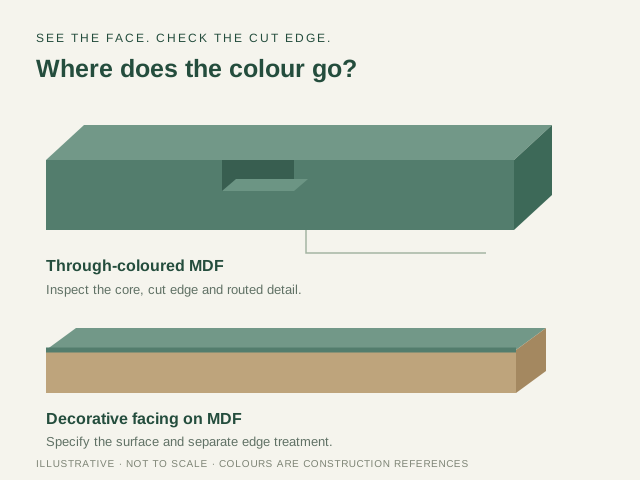
| Colour construction | Through-coloured MDF core, surface coating or decorative facing; state which construction the part requires. |
|---|---|
| Colour reference | Physical master or colour-system reference, desired shade range and matching across faces, edges and adjoining parts. |
| Thickness and density | Requested board and finished thickness, density requirement and supporting data; combinations confirmed for the selected product. |
| Sheet or part format | Width, length, quantity, drawing revision and finished-dimensional tolerance. |
| Surface and edge | Bare or coated delivery, sanding, routed/engraved features, exposed edges and the proposed finish system. |
| Service and documents | Intended use, emission requirement, destination and any required performance standard or test method. |
Compare each colour and thickness as its own order line. Request the material identity, finish reference and sample record for the combination being quoted.
Give each visible area its own colour instruction.
Scroll horizontally to compare all columns.
| Visible location | Put in the brief | Select on the trial |
|---|---|---|
| Flat face | Colour/master reference, surface preparation, finish and sheen. | The finished face beside the retained reference under agreed lighting. |
| Cut edge | Through-core colour requirement, exposed sides and edge preparation. | A freshly cut section and the completed edge meeting the face. |
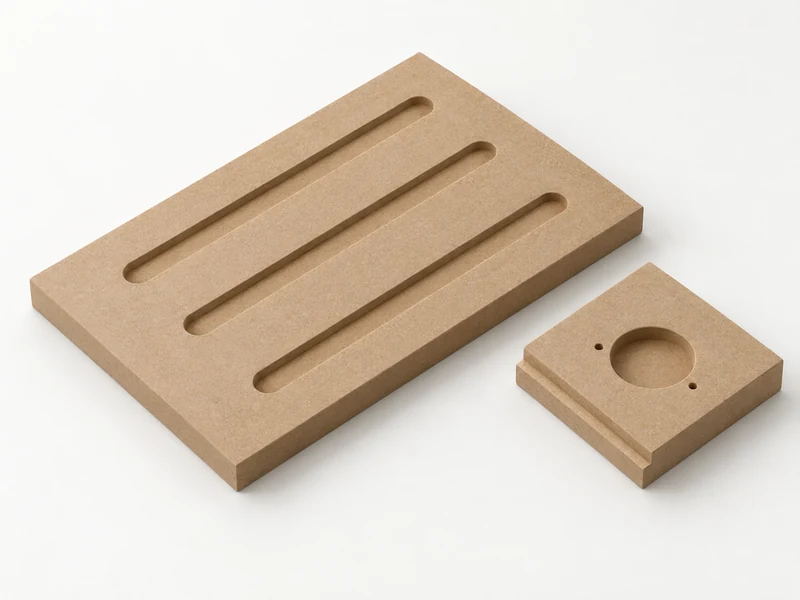
| Routed or engraved area | Feature depth, tool geometry, visible section and finish coverage. | The actual recess or profile, including internal corners and exposed fibres. |
| Neighbouring panels | Positions, set codes, colour relationship and visible joints. | The assembled or adjoining finished set, not only isolated swatches. |
Separate the core colour and the completed appearance. Keep the bare face, machined section and coated detail in the selected reference set, with the preparation, coating and sheen recorded. A colour-system code can start the discussion; retain the physical finished reference for the proposed construction.
Available colours, thickness, density and emission options are quoted for the project. List each combination separately. If an exact matching requirement matters, give its reference, method and permitted range with the intended finish before comparing prices.
CHOOSE HOW THE COLOUR IS BUILT
Coloured core, painted face or decorative laminate?
Through-coloured MDF
The colour is within the MDF core. Request a sample showing the face, fresh cut edge and routed feature, then compare them after the intended sanding and finish.
Prepare the coloured-core trialPainted MDF
A coating defines the visible colour on the prepared surface. Specify coverage, edge sealing, primer, sheen and cured appearance around the complete part.
Explore MDF for finishingMelamine or laminated MDF
A selected facing supplies the decor. Identify the substrate separately and agree edging or lipping where the brown core would be exposed by cutting.
Compare melamine MDFA black or coloured decorative face identifies its surface. To buy a coloured core, specify the colour-through requirement and inspect the cross-section. For a separate laminate or film, compare HPL, melamine and PVC facing options.
Use the selected material’s technical data for density, emissions and service conditions. Core colour is an appearance choice; moisture, fire, strength and finishing requirements need their own specification.
Follow the colour into a fresh cross-section.
Scroll horizontally to compare all columns.
| Construction | Where the colour comes from | What the component brief needs |
|---|---|---|
| Through-coloured MDF | Colour within the fibreboard core. | Face, fresh edge and routed-area references, with preparation and final finish. |
| Painted MDF | The specified coating on the prepared surfaces. | Which faces, edges and recesses receive the coating; primer, finish and sheen. |
| Decorative-faced MDF | A separate decorative layer on the substrate. | The face/reverse construction and treatment of exposed core, cuts and joints. |
For a through-coloured item, inspect enough of the cross-section to identify colour within the board rather than only a coloured film at its surface. Keep density, mechanical properties, service grade and emissions as separate material requirements. A visible colour does not describe those values.
Compare the finishing route as part of the purchase. Colour within the core can serve an exposed-detail design, while the selected finish still determines the surface delivered for use and care. Include preparation and every visible area when comparing a bare board with a coated component.
Compare the surfaces at the stage you will buy.
Scroll horizontally to compare all columns.
| Reference stage | Keep identifiable | Buying decision |
|---|---|---|
| Bare board | Face, fresh cross-section, colour construction and material identity. | Does the proposed core match the exposed-detail requirement? |
| Machined detail | Drawing feature, depth, cut surface and preparation. | What work is needed before the final appearance is reached? |
| Finished component | Finish, sheen, edge treatment, adjoining pieces and selected viewing conditions. | Which complete part becomes the order and repeat-purchase reference? |
Discuss finish compatibility and care for the proposed material with the coating supplier. Include the face, edge and internal feature in the trial. For wet, high-wear or fire-specified use, identify the relevant complete construction and test requirements with the item.
COMPARE OPTIONS
Your selection at a glance
Colour construction
Identify a through-coloured core or a separate painted/faced surface. Compare the cross-section and the actual machined detail.
Project specification
Send the colour master, thickness, density requirement, sheet/part sizes and destination documents for the proposed board.
Finished reference
Evaluate sanding, coating, sheen and adjacent parts under agreed lighting, then retain the sample and batch reference.
SEE THE CORE. TRY THE FINISH.
Choose with a cut and finished sample.
- Send the colour briefShare the master reference, required thickness, application and the part detail you want to evaluate. Mark the visible faces, edges and routed areas.
- Trial the exposed detailCut or route the proposed board using the intended process. Compare the freshly exposed core with the face and note the surface preparation needed.
- Finish and compareApply the proposed finish and review the cured sample under the agreed lighting beside adjoining materials. Retain the selected set for the order.
Samples are free; the buyer pays freight, with a possible freight credit on a later order. Request the sample dimensions and detail needed for your workshop trial.
For profiled parts, use the MDF machining page to describe the feature and the MDF finishing trial to record preparation and cured appearance.
Request a colour set that follows the real detail.
Give the physical colour target and drawing to each request. The 18 mm reference below is a drawing starting point for discussion; confirm the offered colour, gauge and format together. Compare raw and finished stages before fixing the appearance reference for the order.
Scroll horizontally to compare all columns.
| Decision to make | Keep with the selected board | Start the request |
|---|---|---|
| Colour through a fresh cut and recess | Face, cross-section, deepest engraving, remaining section, sanding and exposed joint. Identify through-core and surface-colour proposals separately. | Request the cut and routed colour detail |
| Colour after the intended clear finish | Actual preparation/coating/build-up/cure/sheen, completed face/reverse/edge/recess, adjoining materials and viewing light. Retain the target and permitted range. | Request the finished colour range Request its board and finish data |
| Adjacent parts and later phases | Numbered viewing group, lot/gauge/finish comparison, stage quantities, finished master and replacement/spare pieces. Identify what work remains after supply. | Quote the phased colour set |
Select a finished detail that can be repeated.
Prepare the trial using the intended cutting, routing and sanding sequence. Keep an identifiable bare section alongside the completed face and edge so the team can connect the core requirement with the delivered finish. Record the coating reference, application, curing stage and sheen used for selection.
Compare adjoining pieces together, including the joint or exposed corner. Retain the selected appearance range and surface-care instructions with the trial. Keep the master protected and labelled so the workshop and purchasing team refer to the same finished condition on the next order.
Acceptance worksheet
Keep colour, machining and finish in one trial record.
Record the physical reference and the conditions used for comparison. A finished cut edge gives purchasing and the workshop a shared target for the next order.
Open the coloured MDF sample worksheet
| Check | What to record |
|---|---|
| Board and colour identity | Product designation, through-core or surface construction, colour/master reference, batch and sample code. |
| Dimensions and material data | Nominal/measured thickness, part size, density reference, tolerances and requested emission documents. |
| Cut and routed appearance | Tooling, feature depth, exposed-core colour, chips, marks and preparation needed on the face and edge. |
| Finish and viewing conditions | Sanding, coating reference, application, curing, sheen, lighting and comparison beside the master. |
| Adjoining parts and fit | Colour relationship across the set, joint and hardware arrangement, support and assembled observations. |
| Selected order item | Retained sample set, agreed appearance range, outstanding changes, quantity, batch plan and bundle labels. |
| Colour measurement basis | Physical master, instrument/method if specified, settings, locations, finish stage and viewing conditions. |
| Visible-area schedule | Faces, exposed edges, routed recesses, neighbouring sets and the preparation/finish included in supply. |
KNOW THE BOARD BEHIND THE COLOUR
Connect the colour sample to the proposed material.
Request a technical data sheet for the coloured board being quoted. For a coated or faced item, identify the substrate and finish as parts of the delivered construction.
Keep the colour and finished-sample references with the quotation. Where a project specifies moisture, fire or another performance requirement, name the required method and ask for the relevant documents for that proposed board.
Define colour comparison before setting a numerical limit.
The CIE’s Colorimetry guidance addresses illuminants, viewing conditions and colour-difference calculations. Where an instrument comparison is required, agree the method, settings, finished surface and measurement locations with the physical master. A difference number without its measurement basis leaves the order open to different interpretations.
Keep that instrument record alongside the visual selection of the complete face, edge and routed detail. Inspect under the lighting relevant to the installation, with the selected sheen and adjoining materials. Screen images are useful for discussing a direction; use the finished physical set for the order’s appearance reference.
Request board identity, colour construction, thickness, density requirement, emission method and the application’s material data. Identify any coating, adhesive or facing included in delivery. Keep the technical sheet and appearance reference under the same item code without treating colour selection as a performance classification.
Product data & reports to request
Request a technical data sheet covering:Colour-through or surface construction, board designation, colour/master reference, thickness, formats, density and required emission documents.Include these specification details:- Board designation, colour reference and through-core or surface-colour construction
- Available thickness and format, density data and dimensional tolerance
- Emission requirement, test method and documents for the destination
- Machining, fixing or bending data needed for the component
- Finish system, preparation, application and intended service conditions
- Selected sample, batch identity and repeat-order colour reference
Company documents to view
FSC chain of custody Wood panels · purchase & salesISO 9001 & ISO 14001 Management systems · stated sales activitiesUse these for supplier qualification; match product performance to the proposed panel’s technical documents.Coloured MDF core, colour and finish requirements: what to match
- Proposed board identity
- Colour-through or surface construction, board designation, colour/master reference, thickness, formats, density and required emission documents.
- Machined and finished appearance
- Fresh cross-section, routed feature, sanding and cured coating, with the selected sample and agreed viewing/matching conditions.
- Order and destination
- Application, required test methods, material/finish data, colour and batch references, adjoining sets and packing labels.
BEFORE YOU ORDER
Ordering information
- Minimum order
- 1 container
- Regular lead time
- 10–15 days
- Samples
- Free samples
- Quotation terms
- FOB / CIF
Sample freight & order notes
- Minimum order: Mixed loads available.
- Regular lead time: Production; shipping time is additional.
- Samples: Buyer pays freight; credit available on a later order.
- Quotation terms: Name the port in your inquiry.
KEEP MATCHED SETS TOGETHER
Protect the finish and preserve the item reference.
Discuss face and edge protection, even support, bundle quantities and handling needs for the quoted delivery condition. Label colour, thickness, batch and part or set codes so the warehouse can keep matching items together.
For cut components, identify their receiving and assembly sequence. Supply the final item schedule for pack quantities, dimensions, gross weights and the FOB/CIF delivery quotation.
On arrival, compare item identities, quantity and condition with the packing list before processing. Use the incoming-panel checklist to record the faces, edges and selected colour references.
Preserve the set identity until the parts are installed.
Reconcile colour, thickness, item and set labels with the packing list before separating bundles. Keep matching pieces together through receiving and assembly. Inspect the protected surfaces and edges against the selected finished reference, recording observations by pack and part code.
Store the master and retained detail with the order documents for future supply. When the next project changes the finish, engraved depth or adjacent material, identify the revised visible detail and agree a corresponding finished reference.
COLOUR THAT BELONGS IN THE DETAIL
Make the cut edge part of your design.
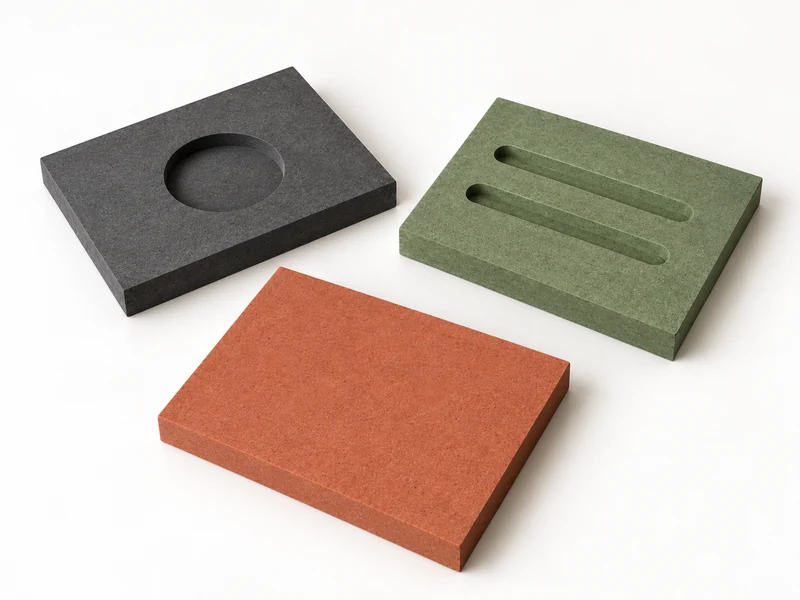
An exposed edge, routed recess or engraved face can become a deliberate detail. Start by choosing where the colour needs to appear.
CUZI supplies coloured MDF for furniture and interior projects. For through-coloured MDF, specify colour within the board as well as the visible face. Send a colour reference, thickness, panel dimensions and intended process; we will confirm the proposed construction and project parameters with your quotation.
The terms coloured MDF, colored MDF and dyed MDF can describe different buying requirements. Identify whether you want a coloured core, a painted surface or a decorative facing. A cut and routed sample makes the distinction easy to evaluate before you choose the order item.
Keep the exposed core intentional. If a shop display shows its perimeter or a furniture front has an engraved recess, specify the colour in those locations at the same time as the face. The buying reference should show the complete detail after the preparation and finish your workshop plans to use.
DESIGN AROUND THE VISIBLE PART
Where will your customer see the colour?
Furniture with visible edges
Describe shelves, fronts or display parts whose cut edges belong in the design. Evaluate the face and edge together, including preparation, joints, hardware and the intended finish.
Routed and engraved features
Send the profile, recess depth or engraved artwork. Inspect the exposed core and tool marks after machining and finishing, using a representative feature from the actual component.
Interior and retail sets
Coordinate neighbouring panels, lettering or joinery around a retained colour reference. Include installation, supports, lighting and surface-care requirements in the project brief.
For shelves, large panels or loaded parts, include the support arrangement and required material data. Select the construction and finish for the complete component and its service conditions.
Make engraving and joints part of the colour set.
Send the actual lettering or routed profile, with a section showing feature depth and the face that remains visible. For small lettering, identify the corner shape and narrow details; agree the proposed process against the drawing rather than choosing a board from a flat swatch alone.
For shelving or adjoining retail panels, number the visible pieces on the elevation. Show exposed ends, mitres, edge junctions and any contrasting material. Keep the selected core and finish with the assembly or support requirements of each part.
A DISPLAY PANEL WITH AN EXPOSED EDGE
Compare the finished feature your customer will see.
For a display panel with an engraved mark and a visible cut edge, prepare the same detail in each proposed construction. Use the actual colour master and final finish when you compare the result.
- Design requirement
- Show the visible face, edge and recess on the drawing. Decide which areas need colour and how they meet adjacent parts.
- Through-core proposal
- Inspect colour within the fresh cut and routed section. Trial sanding and the intended finish before deciding how the edge will be delivered.
- Coated or faced proposal
- Include the coating coverage or separate edge treatment, plus the recess finishing process, in the quoted component scope.
- Buying comparison
- Compare usable finished parts, processing and preparation time, selected appearance, documents and packing on the same delivered basis.
Where colour measurement is required, agree the instrument method, viewing conditions and permitted difference with the physical master. Use the resulting record alongside the visual review of the assembled set.
Count the visible edges as well as the faces.
Plan 120 rectangular display fronts, each 800 × 300 × 18 mm, with all four perimeter edges exposed. The following geometry assumes straight, unprofiled parts and excludes recesses, holes, waste and reserve. The 18 mm gauge is a planning dimension, not a published stock range.
Scroll horizontally to compare all columns.
| Area or length | Per front | For 120 fronts |
|---|---|---|
| One flat face | 0.24 m² | 28.80 m² |
| Both flat faces | 0.48 m² | 57.60 m² |
| Four-edge perimeter | 2.20 m | 264.00 m |
| Four-edge surface at 18 mm | 0.0396 m² | 4.752 m² |
This schedule gives the quotation 264 m of exposed perimeter to describe, rather than leaving the edge requirement inside the face-area price. Specify its preparation and finish, whether the reverse is visible, and the engraved or routed features that need separate coverage.
For shaped parts, use the drawing’s real perimeter and feature surfaces. Agree what preparation, coating and handling are included; the geometry alone does not set coating consumption or labour. Compare each proposed core or surface-colour route against the same completed visible areas.
COORDINATE COLOUR ACROSS THE ORDER
Give every colour and thickness its own item.
Build a distributor or furniture-production schedule by colour, construction, thickness, format and finish. Keep the corresponding physical sample and material documents under the same item code.
Our minimum order is one container, with mixed loads available. Regular production takes 10–15 days, with shipping time additional; confirm the selected colour combinations and project schedule with the quotation. Request FOB or CIF with the named port.
For adjoining panels, identify the sets and discuss batch allocation. For repeat purchases, retain the finished reference and record any proposed material or finish change before the next order.
Use the mixed-panel item schedule for quantities and the repeat-order guide to keep changed references visible.
Order by colour, thickness and finished reference.
Give each combination an item code with its master, board construction, gauge, finish and component drawing. Identify which panels must appear together and discuss allocation and labels for those sets. Keep replacement or spare parts on explicit lines, with their intended colour relationship.
For repeat purchases, compare the proposed material and finish against the retained set before mixing new and earlier panels on one elevation. Record any agreed change to colour construction, material, preparation, coating or sheen. Price the usable completed part with remaining workshop work and the same delivery point visible.
FAQ
Questions before buying coloured MDF.
Does CUZI supply coloured MDF?
Yes. Send the required colour construction, thickness, format, quantity and application. The colour options, density, emission requirements and proposed finish are confirmed for your project quotation.
What is through-coloured MDF?
It has colour within the MDF core. Specify that construction when the cut edge or machined recess needs colour, and compare the face, fresh cross-section and finished detail on the proposed sample.
Is a black melamine face the same as a black MDF core?
Melamine describes a decorative surface system; the core is a separate material specification. Request a through-coloured core explicitly where the design needs colour inside the board, and evaluate a cut section.
Which colours, thicknesses and emission options are available?
Share your colour reference, nominal or finished thickness, required dimensions and emission standard. We confirm the available combination and documents for the selected project.
Does coloured MDF need a finish?
Specify the intended appearance, use and surface-care requirements. Discuss the preparation and finish system for the proposed board, then compare the cured face, edge and routed areas in a representative trial.
Can I request a machined colour sample?
Yes. Include the drawing or feature detail, sample dimensions and desired delivery condition. Agree the machining and finishing scope so the trial addresses the part you plan to buy.
How do I specify colour within the MDF core?
Request through-coloured MDF explicitly, with the colour reference, thickness and intended cutting or routing. Evaluate a fresh cross-section and the finished detail; keep the selected sample with the quotation and repeat-order item.
START WITH YOUR COLOUR AND COMPONENT
Bring us the detail you want to make.
A colour reference, thickness, part sketch and quantity can start the quotation. Add the core, exposed-edge and finish requirements you already know.
Open a coloured MDF inquiry outline
Product: Coloured MDF.
Construction: [through-coloured MDF core / surface coating / decorative facing].
Colour: [physical master or colour reference]; [required appearance across faces, core and adjacent parts].
Material: [nominal / finished thickness]; [density requirement]; [emission class, method and destination].
Dimensions: [sheet or part width × length]; [tolerance]; [quantity by colour and thickness].
Component: [use]; [drawing revision]; [exposed edges, routed / engraved features and depth].
Finish: [bare / coated delivery]; [preparation, coating reference, sheen and viewing conditions].
Visible-area scope: [faces, exposed edges and recesses; included preparation and finish].
Sample: [dimensions]; [cut / routed feature]; [finish trial and adjoining reference].
Colour comparison: [physical master; viewing conditions; instrument method/limits if required].
Order: [selected sample / batch reference]; [item labels, matched sets and packing].
Quotation: FOB or CIF [named port]; [target receiving date].
Download the coloured MDF inquiry (.txt)