Specifications
Supply specifications
Finished panel formats
Send your required width and length. Available formats are confirmed with the selected panel and quoted scope.
Buying components?
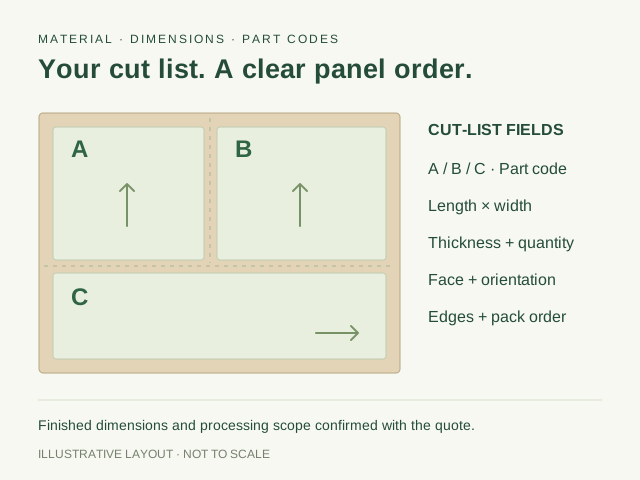
Include part dimensions, grain direction and quantities by item with your drawing.
| Supply | Spruce plywood available; construction quoted for the project |
|---|---|
| Face / inner species | Spruce face/back; inner species and throughout construction confirmed with the proposed item |
| Thickness & format | Confirmed for the proposed spruce construction and delivered item |
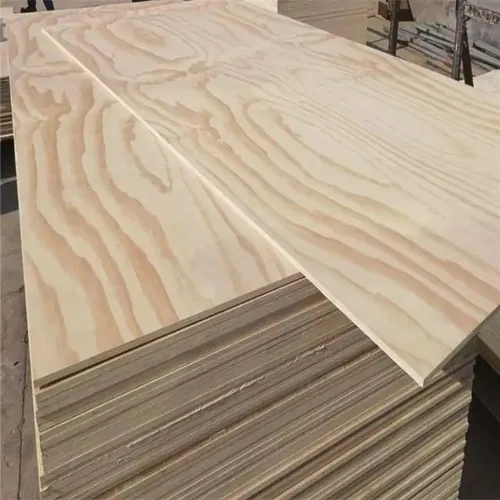
| Face selection | Spruce face selection; grade, knot/repair range, sanding and requested finish confirmed for the item |
| Bond & product data | Required bond and product designation identified with the offered construction and application |
| Component & direction | Grain arrow, cutting/finish, joints/fixings and required sample or design reference |
Application-specific specification checks
Panel construction and finishing
| Spruce identity | Spruce face/back selection, inner species or specified spruce-throughout requirement and layer construction. |
|---|---|
| Face grade and finish | Required grade, knot/repair range, sanding, visible sides and physical appearance reference. |
| Dimensions and direction | Thickness, sheet/cut-part size, tolerances and face-grain arrow matched to the drawing. |
| Bond and product data | Required bond/exposure, structural designation where specified, relevant methods and properties by direction. |
| Working component | Machining, edges/profiles, actual joints/fixings, finish and representative sample. |
Define the spruce panel from face to finished part.
Thickness, format, face grade and inner construction are quoted for the proposed spruce item. Send the required nominal or finished measurements and tolerance so the sample and delivered panel follow the same reference.
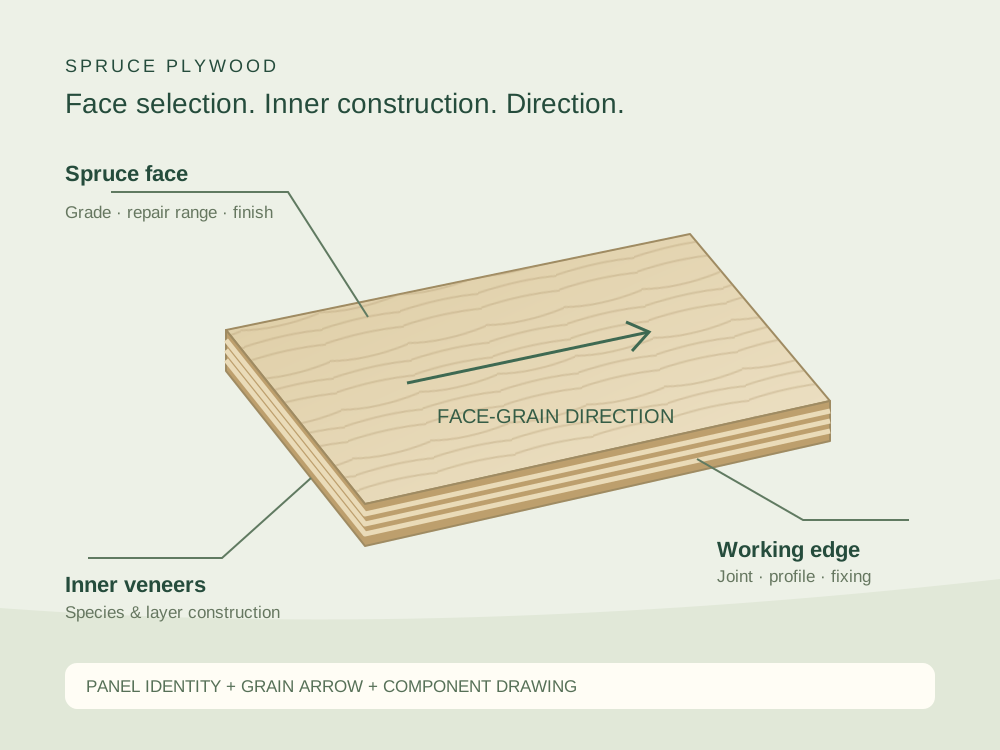
| Face and reverse | Spruce species/appearance reference, required face grade, knot/repair range, sanding and visible sides. |
|---|---|
| Inner veneer construction | Core species, spruce-throughout requirement where specified, layer order, ply count and veneer thicknesses. |
| Thickness and format | Required thickness, length/width, tolerances, grain direction and delivered sheet or cut-part dimensions. |
| Bond and product grade | Required bond standard/class, intended exposure and any structural panel designation with corresponding product data. |
| Surface and processing | Bare or requested finish, edge preparation, cut list, holes, profiles and actual fixing/joint detail. |
| Documents and destination | Required emission, mechanical, fire or other test method; identified construction, conditions and market requirement. |
Use the drawing to distinguish the face-grain direction from the length of the cut part. Keep the direction arrow with the part code, especially where appearance, joining or specified design properties depend on orientation.
Requesting spruce throughout
Ask for the face/back and inner veneer species, layer order and relevant construction data. “Spruce plywood” names a species route; the item description should identify the proposed panel from its visible face through its core.
Full sheets, cut parts and profiled edges
Send full-sheet quantities or a component list with dimensions, grain arrows and tolerances. For requested edge profiles, holes or rebates, include a drawing and fitting reference. The cut-to-size panel service helps organise the delivered operations and part labels.
Turn a visible-face selection into a repeatable item.
Scroll horizontally to compare all columns.
| Detail | Define with the face selection | Review after the intended process |
|---|---|---|
| Visible front and reverse | Which faces remain exposed, with the required grade/reference on each. | Adjacent parts, installed view and selected finish. |
| Knots and repairs | Permitted types, range, repair appearance and location criteria. | Cut part, coating and the broad visual result. |
| Sanding and preparation | Delivered preparation, required surface and remaining workshop work. | Coating build, texture and face/edge junction. |
| Grain and part direction | Sheet arrow, finished-part arrow and matched-group references. | Actual cut layout and installed orientation. |
Keep an appearance reference that represents the permitted face range, rather than choosing only one unusually clear area. Include the proposed repair treatment and sanding with that selection. For opaque or clear coatings, review the completed finish on the face your customer will receive.
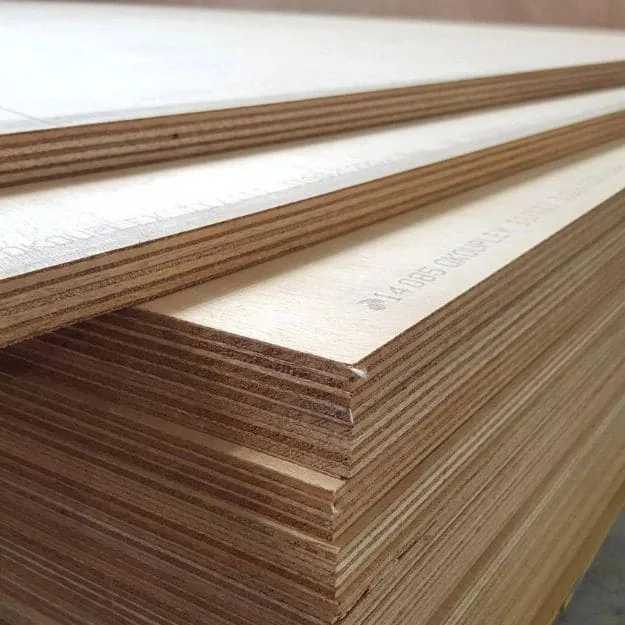
Specify the inner construction independently of the visible spruce face. Keep layer order, veneer gauges and bond requirement with the material identity. For a requested spruce-throughout item, ask for that complete construction and its corresponding data in the technical response.
SPECIES, INNER CONSTRUCTION AND DESIGN REQUIREMENT
Compare softwood panels on the same buying basis.
Scroll horizontally to compare all columns.
| Route | Starting point | Compare with the sample |
|---|---|---|
| Spruce plywood | Spruce face/back selection and the required inner species or throughout construction. | Face/repair range, layer construction, direction, machining and finish. |
| Pine plywood | Pine character with selected core, including the confirmed all-pine option in that range. | The same component, visible surface, finished edge and quoted delivery scope. |
| Structural plywood | A named structural grade and the product data required by the design. | Offered construction, properties by direction, supports, joints and fixing layout. |
Give each offer the same dimensions, grade requirement, finished output and commercial terms. Compare preparation, accepted parts and handling alongside sheet price. Where weight matters, ask for the proposed panel’s density or measured mass with its measurement conditions.
Direction and construction in a spruce specification
Cross-banded plywood combines veneer layers in different directions. The WISA spruce product description illustrates a named manufacturer construction with its own performance documents. For the proposed CUZI item, request the actual layer construction and relevant panel data, and retain the direction used in the drawing and trial.
Keep appearance, mass and design properties on their own references.
A visible softwood face does not identify all inner veneers. Compare the actual proposed lay-ups with the same part, fitting and finish. Keep measured or reported mass information with dimensions and material condition where handling weight affects the selection.
For a floor, roof or wall, use the required structural product designation and design data for the offered panel. Keep direction, thickness, support and loading assumptions with the responsible designer’s specification. A species name and a bond class do not together establish a complete structural grade.
For visible joinery, compare the accepted part after preparation, coating and fitting. Price any changed surface work or fixing detail alongside the board. This keeps an attractive face selection connected to usable output at the next workstation.
COMPARE OPTIONS
Your selection at a glance
Face and inner species
Select spruce face/back appearance and request the actual core species or spruce-throughout construction, with grade and layer information.
Direction and finished detail
Keep face-grain orientation, cut-part dimensions, joint/fixing and planned finish with the component drawing.
Documents and repeat order
Specify relevant panel designation and data, trial the working part and retain the chosen reference for your mixed-container quotation.
FROM A FACE SELECTION TO A WORKING COMPONENT
Try the spruce panel through your actual process.
- Describe the selectionGive the face/back appearance, inner species, thickness and sample dimensions. Include the working direction and required grade.
- Make the relevant detailCut, route, fasten or coat the sample using your intended tools, hardware and finish. Trial the joint or exposed edge that determines acceptance.
- Keep the order referenceRecord the identified construction, working observations and chosen finish with the part drawing and required product data.
Samples are free; buyers pay courier freight, with a later-order credit available by agreement. Ask for representative knots and repairs where they affect the visible selection or coating process.
For structural work, keep the sample and design data together
A working sample helps review dimensions, fitting and processing. Specify the required panel properties and product designation separately with the design documents; include any defined specimen, conditioning and test method when arranging additional checks.
Make the spruce selection part of the request.
Bring the face you want to see and the part your team will make into the same brief. The 18 mm entries below are project targets: the quotation confirms the available spruce construction, format and measured delivered range. A spruce face and a spruce-throughout panel remain separate construction choices.
Scroll horizontally to compare all columns.
| Buying decision | Reference to keep | Start the request |
|---|---|---|
| Clear-finished visible lining | Requested spruce-throughout construction, 18 mm target and clear-finish reference; representative knots/repairs, exposed edge, grain direction and an adjoining-panel joint. Identify who applies the finish. | Request the visible spruce detail Request its construction and finish file |
| 99 direction-constrained parts | 540 × 780 mm parts, requested 1220 × 2440 mm format, 10 mm trim and 3 mm gaps. Compare the two fixed grids below using the permitted grain arrow; confirm actual nesting, face acceptance and reserves separately. | Quote the directional spruce cut list |
| Specified building panel | Required designation and actual product/lay-up, directional properties at the proposed gauge, and drawing for supports, joints, fixings and loads. Keep those documents with the offered panel identity. | Request the specified panel data |
Trial the selected face through cutting and coating.
Include representative knots, repairs and edge construction in the requested material. Cut the intended orientation, use the actual tools and preparation, then finish the visible face and edge. Review the result under the intended lighting beside adjoining pieces.
Use the proposed panel with the actual fixing or joint where fit matters. Keep the working observations and selected appearance range with the sample identity and drawing issue. Retain the corresponding material data separately for any structural or other specified property.
Acceptance worksheet
Record the face, direction and finished detail.
Use the same component and process to compare proposed constructions. Add the methods and agreed limits that your purchasing or production team needs for the selected item.
Open the spruce plywood sample worksheet
| Check | What to record |
|---|---|
| Face selection | Spruce face/back, appearance master, knot/repair range, grade, sanding and visible sides. |
| Inner construction | Species, throughout requirement, layer order, ply count, bond and identified panel/sample. |
| Dimensions and direction | Thickness, length/width, tolerances, face-grain arrow, part code and drawing revision. |
| Machining and joints | Tools/settings, routed/cut edge, holes, actual fasteners, joint fit and agreed criteria. |
| Finish and fitting | Preparation/coating, knot/repair appearance, exposed edges, adjacent faces and installed detail. |
| Required data | Panel designation, methods, test conditions, properties by direction and relevant project reference. |
| Order and receipt | Selected construction/revision, quantities, labels, packing, receiving checks and retained sample. |
| Direction and cut layout | Sheet/part grain arrows, usable dimensions, saw gaps, trim allowances and orientation constraints. |
| Usable-part scope | Ordered and accepted quantities, face range, remaining preparation/finish work and reserve lines. |
PRODUCT DATA THAT FOLLOWS THE PANEL ITEM
Request the species, designation and working properties.
Send the application, destination and required methods with your document request. Identify the proposed thickness, veneer construction, grade and finish so the data stays connected to the panel being quoted.
If a floor, roof or wall requires an assessed construction, include the complete support, joint and fastening detail. Identify any fire or other project requirement with the intended finish and installed arrangement.
Our company certificates support the supplier discussion. Keep your spruce panel’s product and project documents with its selected construction.
Request data at the thickness and direction used in the design.
Identify the offered layer construction, bond, product grade and test method with relevant results. Keep reported properties by direction and thickness where the application uses them. Record tested material identity and conditions rather than applying a value from a different softwood construction.
For mass or moisture information, ask for the reported method and measurement conditions. For a coated item, keep the delivered finish and complete dimensions alongside the substrate data. For a specified structural item, request the applicable destination documents and design information from the proposed product.
The manufacturer reference above describes its own spruce product. Keep your CUZI item’s construction, face selection and required documents identifiable in the quotation. Named grades, certified origins and performance values from another product are not the purchase specification for this item.
Product data & reports to request
Request a technical data sheet covering:Spruce face/back, core species or throughout requirement, lay-up, grade and identified panel thickness/format.Include these specification details:- Face/back and inner species, veneer lay-up, grade, surface preparation and product identification.
- Thickness/format tolerances, moisture or mass information with the measurement conditions.
- Required bond and emission methods, measured results and corresponding tested construction.
- For structural work: specified panel designation, relevant design properties by direction, and destination-specific documentation.
- Machining, finishing, edge preparation, storage and installation guidance for the selected material.
Company documents to view
FSC chain of custody Wood panels · purchase & salesISO 9001 & ISO 14001 Management systems · stated sales activitiesEN 13986 plywood document Non-structural scope · listed modelsUse these for supplier qualification; match product performance to the proposed panel’s technical documents.Spruce construction, direction and application requirements: what to match
- Face and inner construction
- Spruce face/back, core species or throughout requirement, lay-up, grade and identified panel thickness/format.
- Relevant panel and project data
- Required bond/emission/structural or other methods, properties by direction, conditions and destination documents for the proposed construction.
- Component and sample reference
- Grain arrow, drawing, supports/joints/fixings, machining/finish and working sample with storage/installation information.
BEFORE YOU ORDER
Ordering information
- Minimum order
- 1 container
- Regular lead time
- 10–15 days
- Samples
- Free samples
- Quotation terms
- FOB / CIF
Sample freight & order notes
- Minimum order: Mixed loads available.
- Regular lead time: Production; shipping time is additional.
- Samples: Buyer pays freight; credit available on a later order.
- Quotation terms: Name the port in your inquiry.
FROM THE VENEER SELECTION TO THE WORKSHOP STACK
Keep the panel identity visible through delivery.
Specify labels for construction, face grade, dimensions, quantity and drawing or part reference. Include grain direction, matched groups or profiled edges where they determine processing or fitting.
Discuss face/edge protection, bundle limits and unloading access. At receipt, match the labels to the packing list, record damage and dimensions, and keep observations with the pack and item reference before fabrication.
Follow the selected panel’s storage, finishing and installation guidance. Our panel receiving and storage guide helps organise the receiving record.
Keep the grain and grade references with the bundle.
Identify appearance-selected and structurally specified items separately, with their quantities and dimensions. Keep orientation and matched-group information on cut parts. Agree support, separators and protection for visible surfaces or profiled edges with the handling plan.
At receiving, compare the delivered construction and face range with the retained item before allocating stock. Record damaged faces, changed preparation, direction or part counts against the pack label. Keep the selected storage, processing and installation instructions available to the next workstation.
START WITH THE PANEL YOUR TEAM WILL BUILD WITH
Bring the spruce construction into the buying decision.
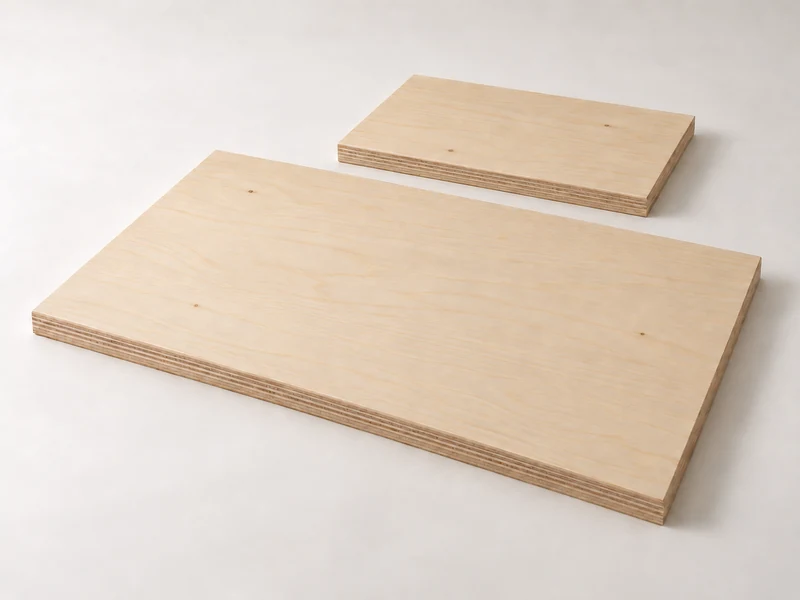
A visible lining, a fabricated part and a specified building panel call for different selections. Make the face, inner veneers and working detail clear before comparing offers.
CUZI supplies spruce plywood for project and distributor orders. Send the component or application, required thickness and dimensions, face selection and quantities. We can work through the proposed construction, sample and FOB or CIF quotation for your next container.
Keep the spruce face and the inner veneer species as separate fields. If the requirement calls for spruce throughout, state that in the item description and request the layer construction. Review the actual face, cut edge and working detail together.
For specified construction work, include the required panel designation and supporting properties with the drawing. That connects the material you buy to its intended direction, supports, joints and fixings.
Give your buying team a reference that reaches the finished job. For a visible interior, that means the face and coating your customer sees. For a specified building component, it includes the actual panel data and installation detail. Keep those choices identifiable when combining the next container order.
CHOOSE A ROUTE AROUND THE FINISHED WORK
Visible surfaces, practical components and specified construction.
Interior lining and joinery
Choose the visible spruce grain and knot/repair selection with the planned finish. Review adjacent faces, exposed edges, joints and the fitting detail your customer will see.
Workshop and packing components
Use the part drawing, cut layout and actual fasteners to compare the proposed constructions. For a packing component, include the contents, case design and handling requirements.
Specified floors, roofs and walls
Bring the required panel grade, design properties and installation drawing into the quotation. Identify orientation, supports, joints and fixings with the offered material.
For a load-bearing application, use the Structural Plywood route to organise the design and product documents. Spruce appearance and a bond description supply part of the brief; the proposed panel designation and relevant properties complete it.
Separate the references even when the loads travel together.
For a lining, identify front/reverse, grain arrows and where the joints will be seen. Include the required finish and appearance range with the cutting schedule. Retain a completed corner or adjacent-panel detail when it determines the selected result.
For workshop or packing components, show the actual fasteners, joints, contents and handling arrangement. For specified building panels, keep the panel designation and installation drawing on their own item line. The same shipment can serve several jobs while preserving the construction each one requires.
ONE SPRUCE PURCHASE, TWO COMPONENT REQUIREMENTS
Keep the visible lining and specified floor item distinct.
A workshop is preparing an order for visible interior linings and a floor component with a defined panel specification. Start the lining item with its face selection, finish and adjacent-panel appearance. Start the floor item with the required designation and installation drawing.
Trial the lining’s cut edge and coating using representative knots or repairs. Review the floor panel’s product data, direction and joint/fixing detail against the drawing. Keep those different checks with their respective constructions.
Combine the purchase quantities into one mixed load, then label the bundles by item and revision. The workshop can receive both materials together while retaining the reference needed for each job.
See how a grain arrow changes a fixed cutting grid.
For a planning layout, use a requested 1220 × 2440 mm sheet with face grain along the 2440 mm direction, 10 mm perimeter trim and 3 mm gaps between parts. The usable rectangle is 1200 × 2420 mm. Each requested part is 540 × 780 mm; these inputs describe the layout, with the actual spruce format confirmed in the quotation.
Scroll horizontally to compare all columns.
| Orientation | Grid footprint | Parts per sheet | Part-area share of full sheet |
|---|---|---|---|
| 780 mm along sheet grain | 1083 × 2346 mm | 6 | 84.9% |
| 540 mm along sheet grain | 780 × 2169 mm | 4 | 56.6% |
The first grid places two 540 mm widths across and three 780 mm lengths along the sheet. The rotated grid places one 780 mm width across and four 540 mm lengths along. Both fit the stated usable rectangle, but they produce different grain directions on the finished part.
For 99 required parts, those fixed grids need 17 sheets or 25 sheets, giving 102 or 100 parts before rejects. Purchased full-sheet area is 50.6056 m² or 74.4200 m²; the 99 requested parts have 41.6988 m² net area. Choose the permitted direction with the design and appearance reference before comparing the layouts.
This is a fixed-grid comparison, not an optimised nesting result or a structural recommendation. Include face selection, defect placement, trim, machining and reserve in the actual production plan. Where the design specifies panel direction, retain that requirement with the material data.
A CLEAR SPRUCE ITEM IN YOUR MIXED ORDER
Build the load around the parts and panels you use.
The minimum order is one container, with mixed loads available. List the spruce construction, face selection, thickness, delivered dimensions and quantities alongside the other plywood or MDF items you need.
For repeat stock, keep the panel designation and physical appearance reference with the item code. Separate visible joinery stock, component material and structurally specified items in the schedule so the receiving team can allocate each bundle correctly.
Regular board production guidance is 10–15 days, with transport additional. Confirm the selected spruce item’s schedule around its construction, sample, documents and processing. Name the FOB shipment port or CIF destination port and target receiving date.
Use the mixed-panel order schedule to connect item codes, quantities, drawing revisions and bundle labels.
Compare the same prepared output.
Scroll horizontally to compare all columns.
| Supplied stage | Confirm included | Price remaining work |
|---|---|---|
| Full sheets | Construction, face range, preparation, gauge, format and documents. | Direction-constrained yield, cutting, machining and finish. |
| Cut or profiled parts | Part code, drawing issue, dimensions, direction and delivered operations. | Any preparation, coating, fittings and assembly outside supply. |
| Finished visible components | Selected appearance, finish scope, final geometry and face protection. | Installation, adjoining work, handling and reserve components. |
Keep the currency, price unit and named delivery point consistent. Compare accepted parts at the same stage, including the selected face range and processing scope. Record spare quantities separately from the net drawing count.
For repeat items, retain the construction, face selection, finish and drawing revision with the order code. Identify a changed inner lay-up, face range or preparation before relying on the earlier trial. Keep any changed structural designation or property requirement with the responsible project reference.
FAQ
Spruce plywood buying questions.
Can CUZI supply spruce plywood?
Yes. Send your application, required thickness and format, face selection, construction and quantity. We can discuss the proposed item, working sample and FOB or CIF quotation.
Does spruce plywood always mean spruce throughout?
Specify the face/back and inner veneer species separately. If your requirement calls for spruce throughout, put it in the item description and request the proposed layer construction.
Which thicknesses, sizes and face grades are available?
Send the target measurements, tolerance and face selection. The quotation confirms the available combination, grade and delivered format for the proposed spruce construction.
How should knots, repairs and sanding be specified?
Give the visible-face requirement and an appearance reference with the planned finish. Request representative knots/repairs and surface preparation in the sample so the coating or exposed-wood trial follows that selection.
Is spruce plywood suitable for a structural floor, roof or wall?
Use a proposed panel with the required structural designation, relevant properties and destination documents for the design. Include panel direction, supports, joints and fixings with that requirement.
Does a bond classification define the complete structural panel?
Keep the bond requirement and structural product designation as separate fields. The design also needs the actual construction, properties by direction and relevant product documentation.
How does spruce compare with pine plywood?
Compare the actual veneer species, face selection and inner construction using the same component, finish and delivery scope. Trial the process that determines appearance, fitting or accepted output for your job.
Can I order cut parts or a requested edge profile?
Include a cut list and drawing with grain direction, dimensions, tolerances, holes/profiles and quantities. The quotation identifies the material and requested operations included in the delivered parts.
What belongs in a spruce plywood sample request?
Give the face/back and core requirement, thickness, dimensions, direction and working detail. Add the finish, actual fasteners and any defined test or product grade needed for the application.
Can spruce plywood share a container with other panels?
Yes. One container is the minimum order and mixed loads are available. Keep each construction, face selection, size and quantity separately listed with the other plywood or MDF items.
What makes a spruce plywood order ready to quote?
The application, spruce face selection, inner species/construction, thickness and format, direction, required bond/product designation, working detail, quantities and destination. Keep the sample, drawing and proposed panel data with the item.
LET’S PREPARE YOUR NEXT SPRUCE PANEL ORDER
Send the component reference and panel list you have.
Start with the application, required dimensions, face selection and quantity. Add the inner construction, finish and product designation so the sample and quotation follow the work your team needs to complete.
Open the spruce plywood inquiry outline
Product: Spruce Plywood for [component/application and destination].
Face / back: [spruce species, required grade, appearance master, knot/repair range and sanding].
Inner construction: [core species or spruce-throughout requirement, layer order and ply count].
Dimensions / direction: [thickness, length/width, tolerances, face-grain arrow and drawing revision].
Cut-layout reference: [sheet/part grain arrows, trim/saw gaps, permitted orientation and reserve].
Bond / designation: [required bond/exposure and structural product grade where specified].
Processing / finish: [cut list, edge/holes/profiles, coating, joints and actual fasteners].
Design / documents: [required methods/properties, direction, supports/fixings and destination requirements].
Sample: [construction, dimensions, representative face and working-detail trial].
Order: one-container minimum; [quantities by spruce item and other mixed-load boards].
Packing / receipt: [labels, matched groups, face/edge protection and receiving limits].
Price scope: [sheets / cut or finished parts]; [face selection, preparation, finish and remaining operations].
Delivery: [FOB shipment port or CIF destination port; target receiving date].