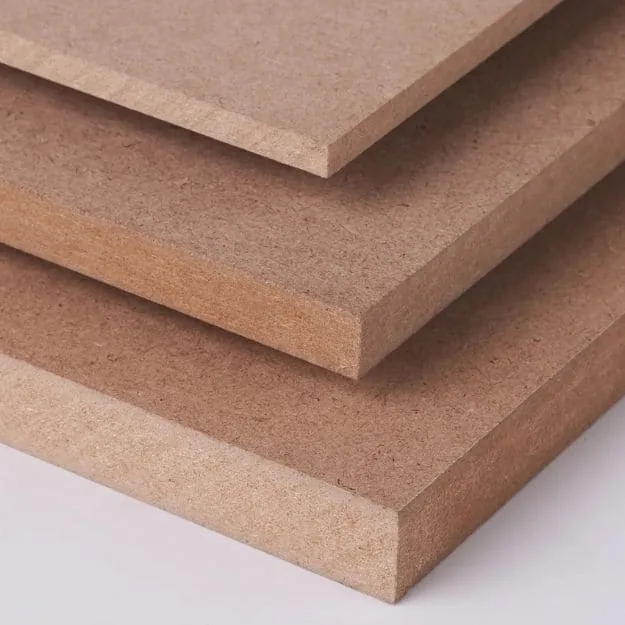
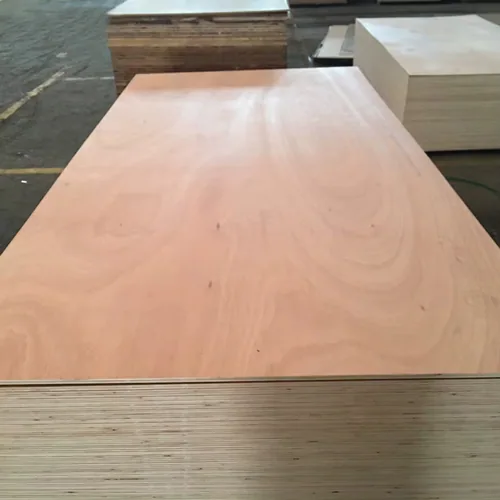
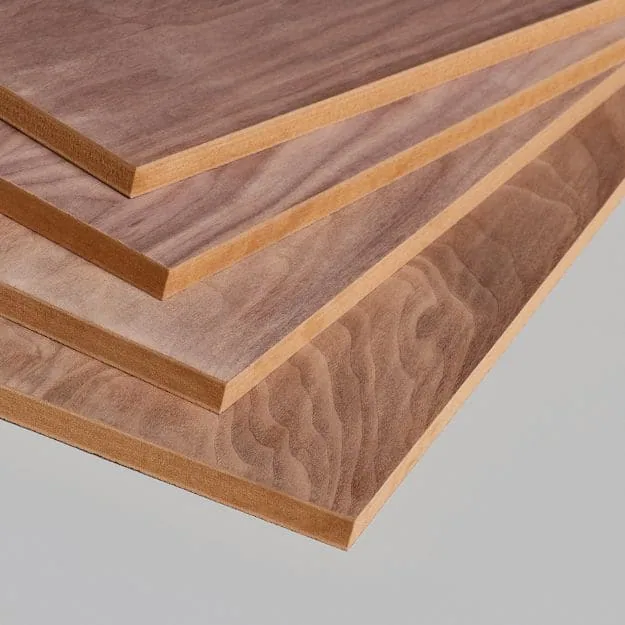
Specifications
Supply specifications
Regular sizes mm · width × length
On request
Other sheet sizes and cut-to-size panels on request.
| Nominal thickness | 9–25 mm |
|---|---|
| Board grade | Fire-retardant MDF |
| Emission grade | E0 / E1 |
| Surface finish | Unfaced; specify the intended coating or facing |
Application-specific specification checks
Panel construction and finishing
| Fire-testing route | European or Chinese national standards; specify the exact standard, required classification and covered construction. |
|---|---|
| Project finish | Coating, veneer or laminate, adhesive and reverse construction identified with the intended item. |
| Technical documents | Product designation, fire-test report scope, density, tolerances and emission method for the selected board. |
| Installation | Backing, fixings, joints and air gap specified with the project drawing and matching report. |
Specify the board your project actually needs.
Choose a nominal thickness from 9–25 mm and an E0 or E1 option. For each item, state the sheet format, quantity, tolerance and required fire test or classification. Include the project location and use so the quotation addresses the right documents.
| Board identity | Selected FR MDF grade, nominal thickness, density requirement and dimensional tolerances. |
|---|---|
| Fire requirement | Exact European or Chinese national standard, required classification and the construction covered by the supporting report. |
| Finished surface | Paint, veneer or laminate proposed by the designer; adhesive, backing and exposed-edge detail. |
| Project schedule | Sheet quantities by item, drawing revision, delivery port and receiving date. |
Take one defined interior detail into the request.
The routes below use an 18 mm starting gauge within the available range. Replace it with your drawing requirement. Keep the board, emission option, finish and installation description under one item reference so the working sample, supporting documents and quotation describe the same delivered construction.
Scroll horizontally to compare all columns.
| Starting item | Detail to retain | Start the request |
|---|---|---|
| Painted routed component 18 mm · 1220 × 2440 · E1 | Deepest profile and remaining section, primer/coating build-up on face/reverse/cuts, fitting and mounting. Add the full EN 13501-1 requirement from the project specification. | Trial the painted profile |
| Perforated or slotted lining 18 mm · 2100 × 2800 · E0 | Opening pattern, remaining geometry, cut edges, facing/adhesive, backing/absorber, air gap and fixings. Name the required fire method and acoustic requirement separately. | Trial the complete lining detail |
| Matched documents and order scope | Proposed board designation, actual finished build-up and applicable report range. Quote full sheets or finished parts with the selected format, operations, trial quantities and spares identified. | Request the matching fire file Quote the cutting schedule |
Trial fit, machining and appearance with the actual finish. Match the fire documents to the proposed construction and the project requirement before ordering. If the specification asks for a rated wall or ceiling assembly, send the complete system detail with the required duration.
Choose the gauge from the finished detail.
For an 18 mm FR MDF panel, include the drawing section and the remaining material after machining. A full sheet, a routed wall panel and a panel bonded to another layer are different item descriptions, even if the nominal board thickness is the same. State whether the requested tolerance applies to the bare board or the delivered finished panel.
Scroll horizontally to compare all columns.
| Gauge band to discuss | Drawing detail | Purchase detail |
|---|---|---|
| 9–12 mm | Inserts, linings or other supported parts: panel dimensions, frame engagement and fixing detail. | The selected gauge and finish, supporting construction and corresponding fire-document scope. |
| 15–18 mm | Routed or fitted components: profile depth, remaining section, pockets and joints. | Finished tolerance, machining operations, surface preparation and item quantities. |
| 20–25 mm | Thicker profiles or joinery details: complete section, connection and handling arrangement. | The proposed board density and part dimensions, plus packing and receiving limits. |
The bands help organise a drawing and inquiry; they do not assign load capacity or a fire class. If a part carries a load, add the span, support, fixing and load requirement to the material specification.
COMPARE THE CONSTRUCTION
Choose the substrate before committing to the surface.
PAINTED AND ROUTED INTERIORS
Fire-retardant MDF
Start with your fire requirement and smooth-surface design. Evaluate machining and the intended coating on the proposed board.
Request an FR MDF sampleVENEER-LAYERED PANELS
Fire-retardant plywood
Compare plywood when the veneer construction, exposed edge or fixing detail suits the component. Request the documents for that complete panel.
Compare FR plywoodOTHER MDF REQUIREMENTS
Standard or MR MDF
Discuss standard board for dry-interior processing, or MR board for humid interiors. Specify any combined fire and moisture requirement explicitly.
Explore MDF board choicesConsider the delivered panel cost together with coating, edge preparation, fabrication and the documentation your project needs. Use the same finished-item description when comparing quotations.
Order the substrate and surface as one defined construction.
Scroll horizontally to compare all columns.
| Proposed delivery | Include with your inquiry | Connect to the project documents |
|---|---|---|
| Bare board for workshop finishing | Nominal thickness, tolerance, density requirement, face condition and the workshop operations. | Board designation, intended coating and the report’s covered product and end use. |
| Painted or routed component | Drawing, profile, cut-outs, paint system, preparation, reverse and edge treatment. | Finished construction and any conditions affecting the specified fire classification. |
| Veneered or laminated panel | Face material, layer thickness, adhesive, reverse construction and completed dimensions. | The faced construction, covered layers and mounting arrangement. |
| Perforated or slotted interior panel | Pattern, open area, remaining section, backing, air gap, fixing and joint detail. | The finished panel and assembly scope, with separate acoustic requirements where applicable. |
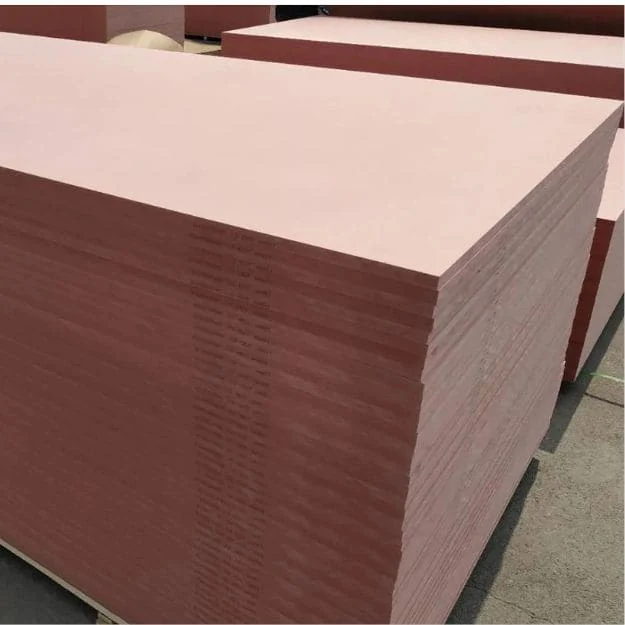
The colour in the board photo helps describe its appearance. Select the FR product through its designation and corresponding technical information. Keep a separately labelled reference for each board and finish combination when several panel types share one container.
COMPARE OPTIONS
Your selection at a glance
Project specification
Send the required fire standard and classification with the thickness, finish and end-use construction.
Sample and fabrication
Trial the intended profile, coating or facing on the selected FR board and retain the finished part.
Product documents
Review the proposed board identity, fire report scope and emission method alongside the item schedule.
TAKE THE DESIGN INTO YOUR WORKSHOP
Try the profile and finish before the project order.
Ask for a sample of the selected FR MDF thickness. Tell us which cut, route, joint or coating you want to evaluate, and include the document requirements for the proposed product.
- Define the sampleIdentify the board thickness, finished part and fire specification. Send the coating reference, drawing and required sample dimensions.
- Make the representative partTrial your tooling, routed edges, adhesive or coating with the workshop process planned for production.
- Connect it to the orderKeep the board identity, finish sample, drawing revision and applicable product documents with the item you select.
Samples are supplied free. Freight is paid by the buyer, and a freight credit can be arranged against a later order. Workshop trials help you assess processing and appearance; use the appropriate testing and documents to assess fire performance.
Separate appearance trials from the document handover.
Use your production cutter, adhesive and coating process on the selected thickness. Inspect routed edges, the deepest recess, corner coverage and the completed joint after the finish has cured. Record preparation and coating references so purchasing can order the same item that the workshop selected.
Keep machining and finish observations with the trial part. Send the required fire standard, construction drawing and document request together when an external fire assessment is needed. Agree the testing or document schedule before it becomes the critical path to your project delivery.
Acceptance worksheet
Give the sample a clear project reference.
Keep fabrication observations and the fire-document review in the same item record. The worksheet makes it easier to pass a complete specification from the designer to purchasing and production.
Open the FR MDF sample and document checks
| Check | What to record |
|---|---|
| Product identity | FR board designation, sample reference, thickness, emission option and technical data sheet. |
| Fire document scope | Required standard and classification; corresponding result, covered thickness, finish and end-use conditions. |
| Finished construction | Coating or facing, adhesive, backing, air gap, joints and fixings from the project drawing. |
| Fabrication trial | Thickness measurements, tooling, routed detail, edge preparation and finished appearance. |
| Item schedule | Drawing revision, selected finish reference, sheets by format, packing marks and outstanding requirements. |
| Fabrication changes | Slots, perforations, routed depth, facing, adhesive, backing or fixing revisions and the corresponding document scope. |
| Delivery identity | Product and item designation, thickness, format, bundle marks, packing list and received condition. |
CONNECT THE REPORT TO THE DESIGN
Build a product document package around your specification.
European and Chinese national fire-testing requirements can be discussed with your order. Send the exact standard, required class and intended construction when requesting the proposed FR MDF information.
For a European project specifying EN 13501-1, include the full reaction-to-fire requirement. For a US specification naming ASTM E84 surface-burning tests, send that requirement separately for discussion. These test routes should be compared against the project’s own specification.
An assembly with a fire-resistance duration needs the appropriate assembly documentation. UL’s fire-rated product and assembly guidance explains how to match a listed construction to the project details.
Identify which fire requirement the specification is asking for.
Scroll horizontally to compare all columns.
| Project requirement | Information to request | Construction detail to keep with it |
|---|---|---|
| European reaction-to-fire classification | The exact required classification and edition of the specified standard, with the classification report and its field of application. | Product, thickness range, finished layers and end-use mounting covered by the report. |
| Chinese national fire requirement | The exact standard, required grade, test report and product designation named by the project. | The board and finished construction described in that document. |
| US surface-burning requirement | The project’s named method, including ASTM E84 where specified, and the required flame-spread and smoke-developed results. | The material, facing and specimen mounting represented by the report. |
| Fire-resistance duration for an assembly | The required assembly rating and applicable tested or listed construction. | The complete wall, ceiling or other assembly, including supports, joints and installation details. |
BSI’s EN 13501-1 overview describes reaction-to-fire classification in relation to end use. UL’s surface-burning guidance explains the flame-spread and smoke-developed indices used in ASTM E84 / UL 723. Request the route named by your project; do not translate one result into a different test classification.
Alongside the fire file, request dimensional tolerances and the density, internal bond and bending data needed for your part. Keep the E0 or E1 emission option with its test method and destination requirements. The full technical package should describe the proposed item, rather than rely on the face colour or the general FR MDF product name.
Product data & reports to request
Request a technical data sheet covering:Identify the proposed FR MDF, thickness and required European or Chinese national test/classification, with the report’s field of application.Include these specification details:- Board designation, thickness, density, tolerances and FR product identity
- Fire test or classification report, achieved result and its field of application
- Covered coating or facing, adhesive, backing, joints, fixing and installation conditions
- E0 or E1 emission option, test method and destination-market documentation
Company documents to view
FSC chain of custody Wood panels · purchase & salesISO 9001 & ISO 14001 Management systems · stated sales activitiesUse these for supplier qualification; match product performance to the proposed panel’s technical documents.Fire-retardant MDF project requirements: what to match
- Fire classification
- Identify the proposed FR MDF, thickness and required European or Chinese national test/classification, with the report’s field of application.
- Finished construction
- Connect the coating or facing, adhesive, backing, joints, fixing and air gap to the covered construction and project drawing.
- Board data & emissions
- Request density, tolerance and E0 or E1 test information; include destination-market documentation and any project-required declarations or marking.
US & EU document checklistProduct + destination
Identify the offered item. Fire-retardant MDF: board identity, thickness, finish and proposed installation.
Thickness: 9–25 mm.
US
MDF category and producer; keep emission and fire documents identified separately.
Request US documentsEU
Fire-retardant board, finish and intended article or installation.
Request EU documentsSpecify the required fire test standard, classification and installed construction with the emission request.
BEFORE YOU ORDER
Ordering information
- Minimum order
- 1 container
- Regular lead time
- 10–15 days
- Samples
- Free samples
- Quotation terms
- FOB / CIF
Sample freight & order notes
- Minimum order: Mixed loads available.
- Regular lead time: Production; shipping time is additional.
- Samples: Buyer pays freight; credit available on a later order.
- Quotation terms: Name the port in your inquiry.
ARRIVE READY FOR THE NEXT PROCESS
Plan identification and protection with your delivery.
Agree bundle labels, unloading limits and corner, edge and face protection before dispatch. In a mixed load, make each FR MDF item easy to identify by board designation, thickness and sheet format.
Plan dry, supported storage and suitable conditioning before fabrication. Link incoming checks to the packing list and technical documents, and record any differences before processing. Use the panel receiving checklist to prepare the handover.
Keep FR identity visible through unloading and fabrication.
Agree pack labels that identify the board designation, item number, thickness, format and sheet quantity. Keep the packing list and technical documents with the purchase reference. In a mixed load, use those labels to separate FR MDF from other MDF grades before the boards enter cutting or finishing.
At receipt, inspect faces, corners, edges, bundle condition and the identification on each item. Record quantities and any damage against the packing list before processing. Store flat on suitable supports under dry conditions, and condition the material for the planned workshop process.
For a repeat order, record any change to the board designation, gauge, finish, adhesive, perforation, backing or mounting detail. Review the affected construction and document scope with the project team before ordering the revised item.
DESIGNED TOGETHER. ORDERED CLEARLY.
Keep the interior you imagined in the purchasing brief.
The visible panel is part of a bigger design: its finish, joints, backing and fixing details all belong in the same specification.
CUZI supplies fire-retardant MDF in 9–25 mm with E0 or E1 emission options. Bring the project’s fire requirement, component drawing and finish reference. We’ll discuss the board and European or Chinese national testing requirements, then build the quotation around your item schedule.
A retail fixture buyer needs the panel to carry three things into production: the right project specification, the intended visible finish and a usable fabrication plan. Put those details into one item reference. Your quotation, trial part and delivered pack can then follow the same construction instead of leaving the finish or installation to a later decision.
YOUR FIT-OUT. YOUR FINISH.
Discuss FR MDF for the parts in your interior package.
Wall and ceiling panels
Share the required classification with the panel layout, finish, backing and fixing arrangement. Match the proposed product to the report’s end-use conditions before choosing the item.
Retail and hospitality joinery
Bring the routed profile, visible surface and component drawing for counters, fitted furniture or display elements. Identify the project-specific fire requirement alongside the appearance you want.
Institutional interior packages
For education, office or other specified interiors, separate the panel items by thickness and finish. Keep the product designation and documents connected to each drawing reference.
Include any humidity, loading or acoustic requirement as a separate specification. Fire-retardant treatment alone does not establish those properties.
A routed or perforated design needs its own item description.
Share slot widths, hole pattern, open area, deepest profile and remaining section with the panel layout. Include any fabric, felt, adhesive or backing behind the visible face. For an acoustic installation, specify the acoustic target and the full build-up alongside the fire requirement; neither follows from the FR board name alone.
For a furniture or display package, mark exposed faces and edges on the drawing. A clear front, a concealed reverse and a machined pocket may need different preparation. The selected finish reference should show the actual corner or profile your customer will see, with the fitting and joint your workshop will produce.
A BRIEF YOUR TEAM CAN WORK FROM
Planning a painted interior panel package.
- Designer
- The panel layout, visible profile, coating reference, joint detail and required fire classification.
- Purchasing
- The selected 9–25 mm board thickness, E0 or E1 option, sheet schedule and matching document request.
- Workshop
- The representative cut and routed part, preparation, finish process, measured fit and retained sample.
- Receiving
- Item and pack labels that connect the delivered boards to the quotation, drawing and product documents.
Keep these references together when changing a finish or placing a repeat order. The panel repeat-order guide provides a practical way to record revisions.
Turn the panel layout into a sheet schedule.
For 600 × 1200 mm rectangular blanks cut from 18 mm board, the calculation below allows 5 mm trimming at each sheet edge and 3 mm between adjoining pieces. It compares one repeated orientation for 120 blanks before production losses or additional machining allowances.
Scroll horizontally to compare all columns.
| Regular format | Repeated layout | Blanks per sheet | Blank area / sheet area | Sheets for 120 blanks |
|---|---|---|---|---|
| 1220 × 2440 mm | 2 across × 2 along; 1210 × 2430 mm after edge trims. | 4 | 2.88 / 2.9768 m² = 96.75% | 30 before production reserve |
| 2100 × 2800 mm | 3 across × 2 along; 2090 × 2790 mm after edge trims. | 6 | 4.32 / 5.88 m² = 73.47% | 20 before production reserve |
The larger sheet gives more blanks per sheet in this arrangement; the smaller format uses a greater proportion of its area. Compare the full cutting list with your machine bed, handling and finishing process before selecting the format. Part rotation, mixed sizes, defects and the reserve you choose can change the purchase quantity.
The calculated nominal net volumes for these schedules are 1.607472 m³ for 30 sheets at 1220 × 2440 × 18 mm and 2.1168 m³ for 20 sheets at 2100 × 2800 × 18 mm. These are dimension calculations, separate from measured pack weights, freight and container loading.
Carry the selected format into your item schedule with the panel drawing, board identity, required fire documents and proposed finish. If the quotation includes processing, send the full list through cut-to-size panel supply and MDF machining.
BUILD ONE CLEAR PROJECT ORDER
Bring your panel schedule into one container.
The minimum order is one container, with mixed loads available. List your FR MDF items separately from standard MDF, faced boards or plywood, including quantities, finish requirements and documents for each line.
Regular production is 10–15 days; allow additional time for shipping. Include any special testing, document or finish requirements when discussing the schedule. Request FOB or CIF pricing with a named port and your target receiving date.
For a broader procurement package, explore MDF container ordering and the mixed-panel item schedule.
Compare the complete project item, including the work still to do.
Use one schedule for competing quotations: same board requirement, format, gauge, tolerance, finish, included machining and document package. Record sheets and net volume by line, the price unit, named FOB or CIF port, pack protection and any separately quoted work.
An offer for bare FR MDF and an offer for finished routed panels cover different production scopes. Compare material, cutting yield, preparation, coating, fitting and the documentation needed to release the item into the project. State the remaining workshop operations in your purchasing record so the lowest sheet price does not hide an additional finishing stage.
FAQ
Questions buyers ask about FR MDF.
What thicknesses and emission options are available?
CUZI supplies fire-retardant MDF in 9–25 mm with E0 or E1 options. Request your selected thickness, tolerance, format and emission test method with the fire specification.
What are the regular sheet sizes?
Regular MDF sizes are 1220 × 2440 and 2100 × 2800 mm. Sizes of 1220 × 3050, 1830 × 3660 and 1220 × 3660 mm are available on request. State quantities for each thickness and format.
Which fire standards can I specify?
European and Chinese national testing requirements can be discussed. Provide the exact standard, required result and project construction so the proposed board and supporting report can be reviewed together.
How do I order fire-rated MDF for a project?
Send the project specification and clarify whether it asks for a material reaction-to-fire classification or a fire-resistance rating for an assembly. Identify the thickness, finish and installation details covered by the required documents.
Can I paint, veneer or laminate the board?
Include the proposed finish, adhesive and reverse-side construction in the sample and document request. Trial machining and appearance in your workshop, and check that the required fire documentation covers the finished construction.
Does the board colour establish its fire classification?
No. Use the product designation and corresponding report to identify the FR board and performance. Colour can assist stock identification, but it is not a substitute for the specified documents.
Can FR MDF also meet a moisture requirement?
Include both requirements in the inquiry. Select the proposed board and documents for the actual conditions; a fire-retardant designation alone does not establish moisture resistance. Compare MR MDF for humid interiors when planning the board choice.
What is the minimum order and normal lead time?
Start with one container; mixed panel loads are possible. Regular production takes 10–15 days, with shipping time added. Discuss testing, documents and any special finish requirements before agreeing the delivery schedule.
What should I send to get a quotation?
Send thickness, sheet quantities, destination port and the required fire standard. Add your drawing and finish details when available. CUZI can discuss the specification and prepare FOB or CIF pricing for the proposed items.
Does fire-retardant MDF make a complete fire-rated wall or door?
A complete wall or door has its own construction and performance requirements. Identify the specified assembly and its supporting documents; connect the chosen board, facing, fixings and installation to that scope.
Request a quote
Bring us your FR MDF project brief.
Start with the thickness, quantity, destination and fire requirement. Use the outline below when your team has a fuller item specification to share.
Open the FR MDF inquiry outline
Product: fire-retardant MDF for [interior project / component].
Thickness: [9–25 mm; selected thickness and tolerance].
Regular formats: 1220 × 2440 or 2100 × 2800 mm.
Formats on request: 1220 × 3050, 1830 × 3660 or 1220 × 3660 mm.
Quantity: [sheets or m³ by thickness, format and item; other mixed-load panels].
Fire specification: [exact European / Chinese national standard; required classification].
Construction: [coating / facing, adhesive, backing, fixings, air gap and installation drawing].
Emission: [E0 or E1; test method and destination requirement].
Processing: [bare board / cut or routed part / finished panel; included workshop operations].
Packing: [item references, bundle marks, protection and unloading limits].
Revisions: [drawing, finish, adhesive, backing and mounting references].
Documents: [technical data, fire report and its covered construction, emission documents].
Sample: [part dimensions; machining and finishing trial].
Delivery: FOB or CIF [named port]; [required receiving date and packing labels].
Download the FR MDF inquiry outline (.txt)