FROM DESIGN REFERENCE TO FINISHED PANEL
Give your design a complete specification.
For a choice among HPL, melamine and PVC, use the three-surface MDF furniture guide to compare the full construction, model data and finished sample.
The finish draws the eye. The core, reverse face and edge make it a component your team can work with.
Bring CUZI a decor reference, physical sample or furniture drawing. Choose HPL, melamine or PVC, with single-sided and double-sided options. We can help organize the facing, MDF substrate, sheet size and edge requirements into one inquiry for your cabinet, furniture or interior project.
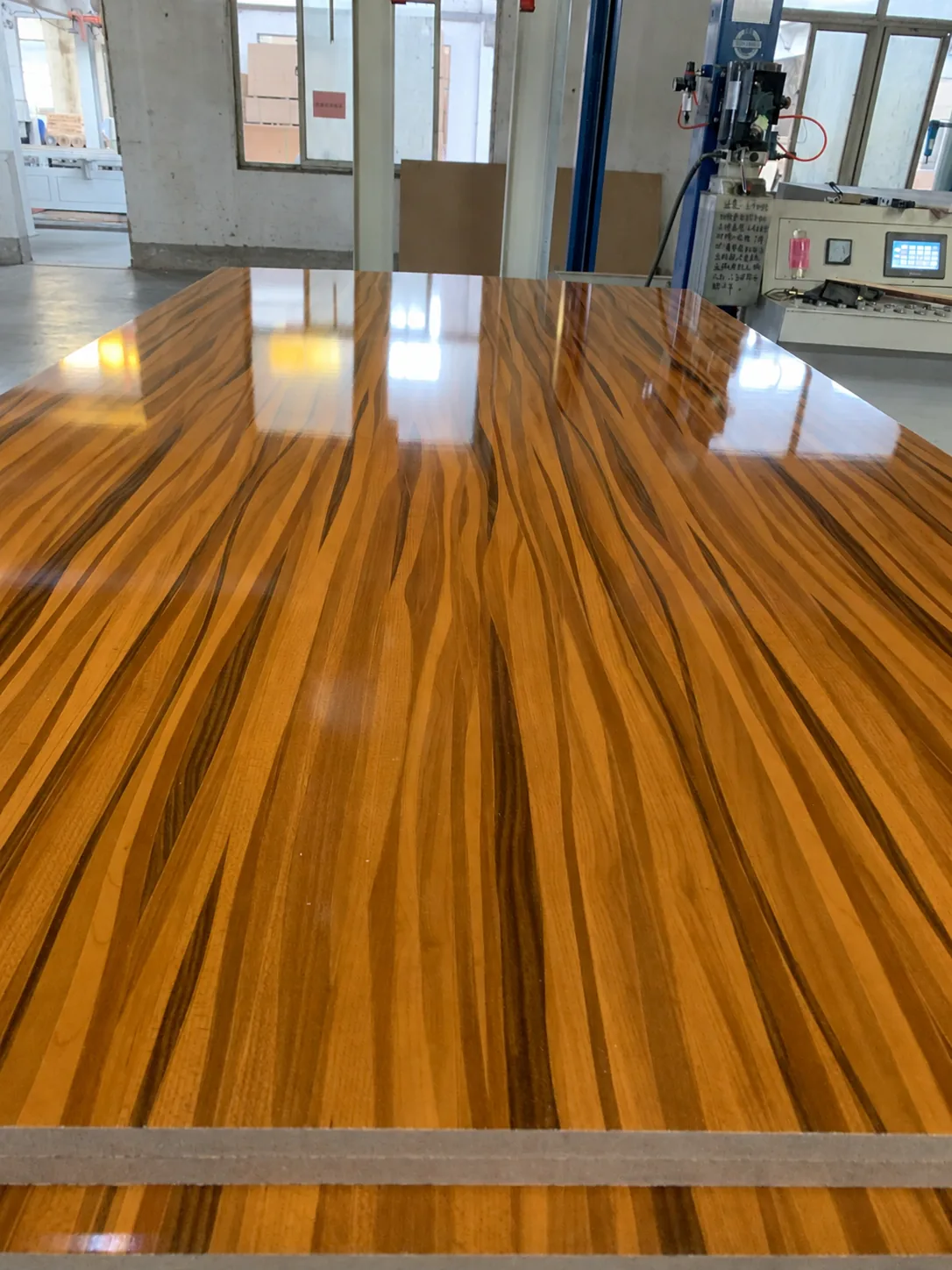
For a finish that catches the light, explore our high gloss MDF options. Match the selected surface to your colour reference, reverse and edge, then compare a complete sample in the setting where your customer will see it.
Laminated MDF combines an MDF substrate with a specified decorative facing. A laminate sheet, film, veneer and melamine surface describe different constructions. The Composite Panel Association describes HPL as a separate laminate bonded to a substrate; the European Panel Federation describes melamine surfaced MDF as MDF faced with resin-impregnated papers.
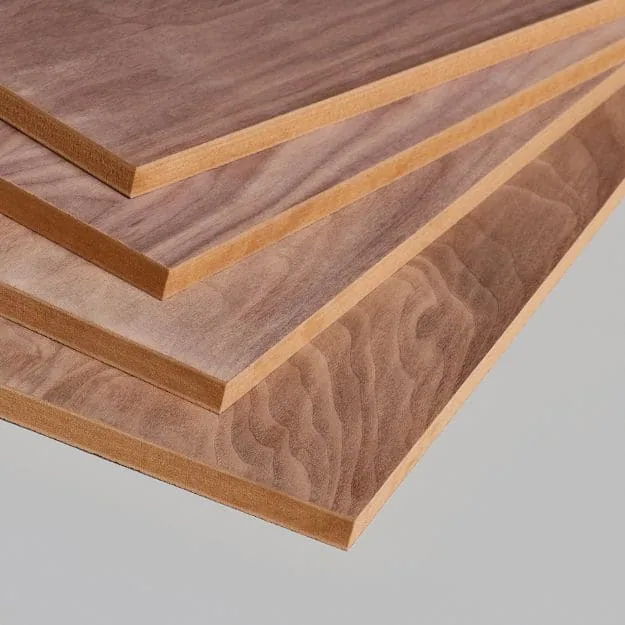
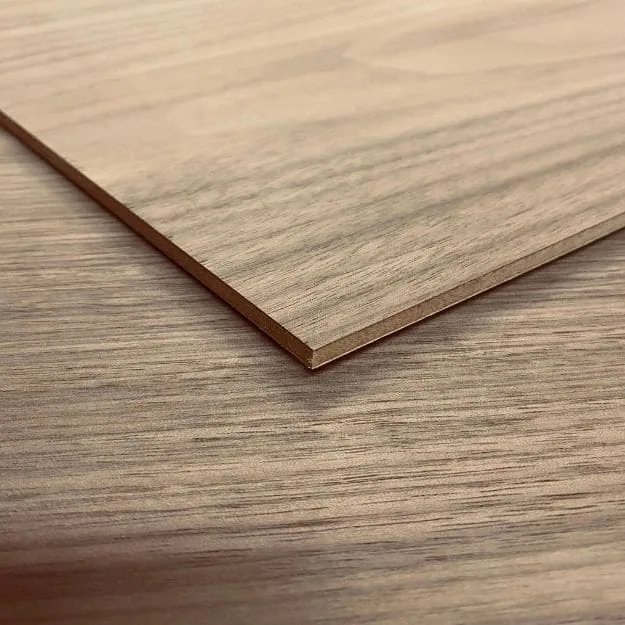
For matching furniture decors, compare melamine MDF and prepare an edge-band approval sample. Considering a wood face on MDF? Use the veneered MDF supply options to specify the requested construction.
What a decor image can tell us
An image helps start the colour and texture discussion. A physical reference makes sheen, grain and adjoining edges easier to compare. For a large door, also trial the front, reverse, bonding, edging and hardware together before selecting the order construction.
Planning a visible cut edge or machined recess? Compare through-coloured MDF with a decorative facing and separate edge treatment, using the finished detail your customer will see.
Choosing plain-colour furniture fronts or interiors? Explore black and white melamine MDF with the selected decor, reverse and matching edge specified together.
For a PET film face, explore our PET laminated MDF requirements. PET material identity, surface appearance, finished thickness and face/reverse arrangement are confirmed for the proposed board.
Start with the board behind your finish: our MDF vs melamine board comparison helps you separate substrate, surface and finished-part costs before choosing a construction.
DESIGNED AROUND YOUR COMPONENT
Make the finish work for the whole piece.
Cabinet fronts & doors
Specify the front and reverse, door dimensions, edge detail and hinge layout. Evaluate a full component where fit and flatness influence the finished cabinet.
Furniture & storage
Coordinate drawers, shelves and adjoining panels around the chosen finish. Mark visible faces, directional grain and hardware positions in the component schedule.
Interior fit-out
Organize wall panels, reception fronts and joinery by room or assembly. Include the fixing method, facing reference, edge treatment and requirements for the intended location.
Tell us which operations your workshop will perform and which you want included in the quotation. This makes sheet stock, cut panels and edged components easier to compare on the same delivered scope.
Specifications
Supply specifications
Regular sizes mm · width × length
On request
Other sheet sizes and cut-to-size panels on request.
| Nominal thickness | Finished thickness confirmed with facing and reverse constructionDiscuss finished thickness and tolerances → |
|---|---|
| Core / substrate | MDF substrate; grade specified for the project |
| Surface finish | HPL, melamine or PVC; high-gloss finish and decor confirmed with quotation |
Details for your application
Panel construction and finishing
| Substrate | MDF for furniture, cabinet fronts and interior fit-out. |
|---|---|
| Facing | HPL, melamine or PVC; specify decor, facing thickness, sheen and the selected high-gloss surface reference where required. |
| Faced sides | Single-sided or double-sided options; identify the front and reverse or backer construction. |
| Edges | Matching edging, visible-edge positions and finished component sizes detailed separately. |
| Processing | Cutting, routing and drilling coordinated with the lamination and finishing sequence. |
Quote the face, core and reverse together.
Start with the finished thickness and facing reference you need. Specify substrate thickness separately where your drawing requires it, and include the reverse treatment in the same item.
| Finished thickness | Nominal total panel thickness and tolerance, including the front and reverse layers. |
|---|---|
| Decorative front | HPL, melamine, PVC or project-specified PET film; exact reference, colour, texture, sheen and facing thickness. |
| MDF substrate | Board grade, core thickness and intended environment; include the required emission class and test method. |
| Reverse & bonding | Single-sided or double-sided; backer or reverse-facing reference, layer thickness and proposed adhesive or surfacing process. |
| Visible edges | Banding or lipping reference, thickness, visible-edge map, corner details and finished dimensions. |
| Fabrication scope | Full sheets or components; cutting, routing, drilling and edging requested, with drawing revision and grain arrows. |
| Surface requirements | Intended service, cleaning procedure and any specified test method and acceptance level for the proposed facing. |
Plan sheet sizes and finished part sizes
Use the regular and on-request MDF formats above to plan your cutting layout. For component quotations, list finished dimensions, quantities and exposed edges by item. The quotation identifies the facing construction and available finished thickness for the selected panel.
CHOOSE WHAT YOUR WORKSHOP RECEIVES
Choose the facing. Complete the panel.
Compare HPL, melamine and PVC, or specify PET film for your project. Bring the facing, reverse, trimming and edge work into one construction when you compare the complete panel cost.
HPL faced MDF
12–25 mm finished panels with 0.5–2 mm HPL, single-sided or double-sided. A melamine reverse is available for a single HPL front.
Explore HPL MDF specificationsMelamine faced MDF
For flat furniture components with a selected melamine decor. Compare the colour, texture, face/back arrangement and matching edge band.
Compare melamine MDFPVC faced MDF
A decorative film finish with single-sided or double-sided options. Discuss the film reference, texture, sheen, reverse and component requirements.
Explore PVC MDF optionsA facing reference identifies the look; the surface grade and complete panel construction determine what to evaluate for your application. Include any required wear, heat, cleaning or impact test method in the inquiry.
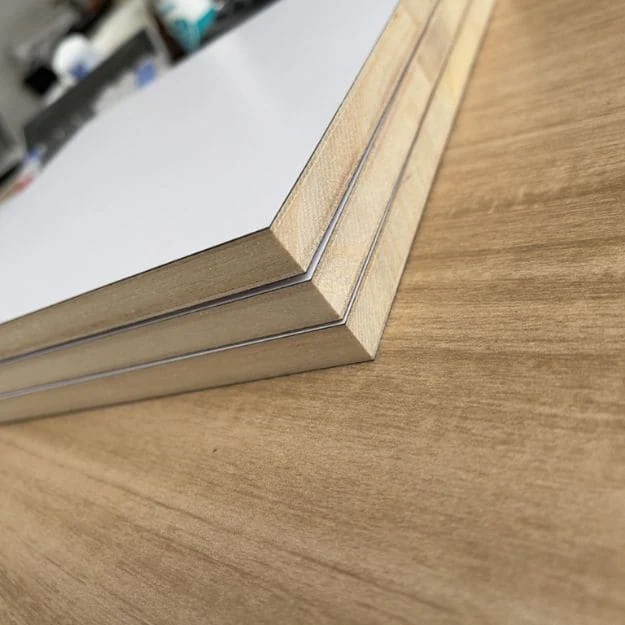
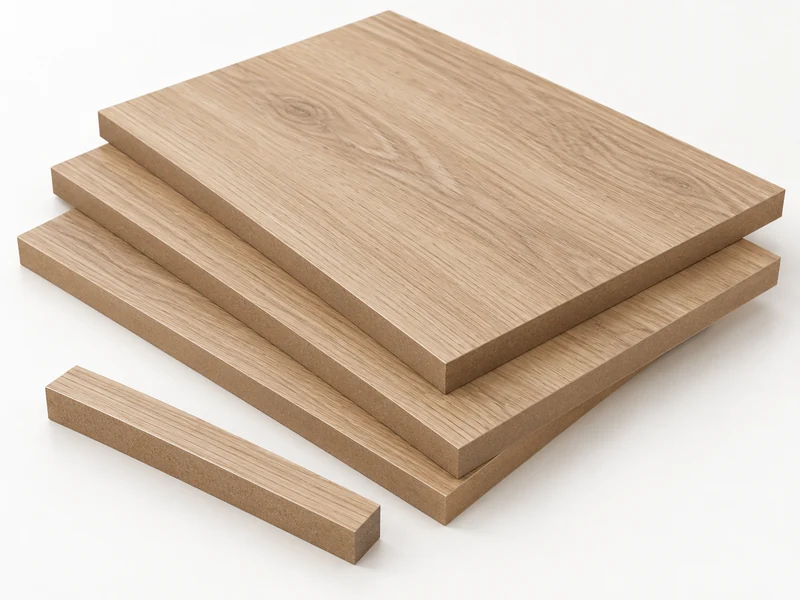
Three surface systems. Compare the complete item.
Scroll horizontally to compare all columns.
| Facing system | Available / quoted construction | Compare the sample |
|---|---|---|
| HPL | 12–25 mm finished panels; HPL 0.5–2 mm. Single/double HPL, or one HPL front with a melamine reverse. | Laminate grade, decor/texture/sheen, front and reverse gauges, MDF and finished edge. Request an HPL construction sample |
| Melamine | Decorative melamine surface on MDF, with one/two faced sides. Finished thickness and reverse selected for the item. | Physical decor master, texture/sheen, reverse and matching edge band. Request a melamine MDF sample |
| PVC | Specified PVC film, single/double sided. Film gauge, MDF core, finished thickness and reverse quoted for the selected construction. | Film/decor identity, bonding, reverse and cut/formed edge with the intended processing instructions. Request a PVC construction sample |
A matching decor name can be supplied through different surface systems. Compare the same finished dimensions, reverse, edge and delivered operations when comparing prices.
Request comparable facing and panel dataGive the reverse a place on the drawing.
Single-sided describes the decorative face count. Include the proposed reverse/backer in the construction, especially for a long door or a component that will be seen from both sides.
Scroll horizontally to compare all columns.
| Arrangement | Specify both surfaces | Component trial |
|---|---|---|
| Single decorative face | Front reference plus the proposed reverse/backer material, gauge, bonding and balancing arrangement. | Finished panel, back treatment, size, conditioning, flatness/fit and actual hardware. Request a single-face build sample |
| Two decorative faces | Decor, sheen, texture and layer identity on each visible side; directional grain and matching edges. | Both surfaces and the complete edge/corner detail beside adjoining parts. Request a double-face build sample |
| HPL front / melamine reverse | Available mixed-facing option; HPL and melamine references, layer gauges, MDF and finished thickness in one item. | The selected complete build at the intended component size, including the back and edge. Request an HPL/melamine build sample |
Request the selected surface system’s balancing and conditioning instructions. Compare the completed part for the flatness and fit your drawing requires.
Request long-door construction dataStart with the component and keep its whole construction.
Use the same physical decor reference, finished dimensions and visible-edge detail when comparing surfaces. The requests below retain the selected facing, reverse and component route; add the drawing and acceptance criteria that your workshop will use.
Scroll horizontally to compare all columns.
| Item to compare | Keep with the reference | Start the request |
|---|---|---|
| HPL front / melamine reverse 18 mm finished · 1220 × 2440 mm | Complete MDF/front/reverse/bonding build-up, measured total thickness, edge/corner and actual hardware fit. The 18 mm figure describes the finished panel. | Trial the 18 mm HPL build Request its thickness and construction data |
| PVC on both faces 2100 × 2800 mm sheet reference | Film identity/gauge, MDF, bonding, front/reverse, edges and the long-door drawing. Set the finished gauge and conditioned flatness/fit criteria for that component. | Trial the PVC door construction |
| Competing finished corner details | Same decor target and adjoining material, viewing light, banding/lipping, joint and included machining. Compare the delivered item and the work remaining. | Quote the comparable finished items |
Measure the core, facing and finished panel separately.
Scroll horizontally to compare all columns.
| Measurement | What the figure describes | Keep with the item |
|---|---|---|
| MDF core thickness | The MDF substrate before the decorative front and reverse are added. | Board grade, core tolerance, conditioning and required substrate data. |
| Facing / backer gauge | Each laminate/film or backer layer. HPL is available in 0.5–2 mm; other gauges follow the selected surface reference. | Front and reverse material, nominal layer thickness and bonding construction. |
| Finished panel thickness | The complete bonded panel, including both surfaces and the bonding build-up. | Finished tolerance, measurement locations/conditions and component fit; HPL finished range 12–25 mm. |
A required 18 mm finished part and an 18 mm MDF substrate describe different order lines. State which your drawing requires and request the measured finished range for the selected construction.
Request core and finished-thickness dataHIGH GLOSS MDF · SEE THE COMPLETE FRONT
As a calculation example, an 18 mm MDF core with two 0.8 mm HPL layers totals 19.6 mm before adhesive. An 18 mm finished target leaves 16.4 mm for the core and bonding layers. Ask us to propose an available core and finished tolerance. Use a separate calculation for a melamine reverse.
High gloss MDF that catches the light.
CUZI supplies high gloss MDF for furniture and interior components. Send the colour or decor reference, finished thickness and intended use. We will identify the facing system, surface reference and complete board construction in your project quotation.
High gloss describes the appearance you want. HPL, melamine and PVC identify different decorative surface systems. Select the proposed finish and its material data together, including the front, reverse and edge work your workshop will receive.
- Finish and reference
- Retain a physical decor sample. Specify colour, sheen and the viewing conditions; include the required gloss method and measurement angle where an instrument value is part of the order.
- Complete board
- Quote finished thickness, MDF grade, front-facing identity, reverse/backer and dimensions as one construction. Confirm the available high-gloss combination for your project.
- Edge and corner
- Match the edge colour and sheen beside the front. Include banding or lipping, trimming, corner detail and the appearance of the joint in the finished sample.
- Use and care
- State the intended cleaning procedure and any scratch, stain or heat requirement. Request the relevant surface data, care instructions and a trial for the proposed finish.
How to compare a high-gloss door or furniture front
- Review the exposed finished surface beside the retained decor master under the intended lighting. Record whether a protective film is fitted and follow the proposed surface’s removal instructions.
- Inspect a representative front with light across the surface. Note reflections, visible waviness, haze or marks, alongside the agreed viewing distance and appearance criteria.
- Cut, edge and fit the proposed component. Review chips, edge joints, corners, reverse, dimensions and assembled fit with the selected hardware.
- If gloss readings are specified, retain the method, angle, locations and instrument record with the sample. Compare those readings with the agreed visual reference and surface-care trial.
For a long door, include the front and reverse build-up in the component trial. Keep the selected sample, quoted surface reference and item code together for adjoining panels and repeat orders.
PET LAMINATED MDF · SPECIFY THE FACING
A PET finish for your next furniture range.
CUZI supplies PET-film laminated MDF for project orders. Bring your colour or finish master and the component you want to make. We will connect the selected PET film, MDF substrate, reverse and edge detail in one proposed construction for your quotation.
- PET film identity
- Specify PET explicitly, with the proposed film designation, thickness, decorative surface and any protective-film arrangement. Keep the film material separate from its gloss or matte appearance.
- Complete panel
- Confirm the MDF grade and core thickness, adhesive/bonding construction, finished dimensions, face/reverse combination and matching edge. PET panel formats and tolerances are quoted for the selected construction.
- Finished component
- Trial the visible face, cut or routed detail, reverse, edging and fittings together. Compare the chosen sheen and colour beside adjoining parts under the intended lighting.
PET and PVC identify different film materials. A high-gloss appearance identifies the finish you want to compare. Keep both the facing identity and surface reference in the order; use the PVC faced MDF route when PVC is specified.
Choosing a glossy or matte PET surface
Send a physical reference and identify the desired sheen, colour and viewing conditions. If a measured gloss target matters, include its method, angle and locations. Surface/care properties are compared using the proposed film and finished-board data.
For a gloss brief, review the high-gloss component checks and keep PET in the request.
Film, bonding, reverse and care information to request
- PET film designation/thickness, decorative layer, surface treatment and protective-film instructions
- MDF grade/thickness, adhesive/bonding construction, reverse and finished panel dimensions
- Required appearance and surface/care data with the method and proposed material scope
- Cutting, routing or forming requirements for the selected film and intended part
- Finished-board emission and project documents, with the constituent material reports identified
- Matching edge, sample/colour master, item references and protected packing
Agree supplied faces, reverse, preparation and included operations in the quotation. Keep the proposed film’s processing and care instructions with the accepted sample.
COMPARE OPTIONS
Your selection at a glance
Facing options
HPL, melamine or PVC. Specify the exact decor reference, colour, texture and sheen; high-gloss surface identity and complete construction confirmed with your project quotation.
Single or double sided
Choose one or two faced sides, with the MDF grade, reverse treatment and finished thickness in the same quoted item.
Delivered scope
Identify full sheets or the cutting, routing, drilling and edge work you want quoted for your components.
DOCUMENT THE CORE AND THE FACE
Match the data to your finished panel.
Request the MDF substrate data, facing information and construction details for the panel proposed in your quotation.
The RAW MDF report gives you substrate test information. For the finished laminated board, also request the facing data and any specified component assessment that your project requires.
Product data & reports to request
Request a technical data sheet covering:Facing system, decor reference, MDF grade, total thickness, reverse and project emission/destination requirements.Include these specification details:- MDF grade, emission class, test method and board identification
- Facing/backer references, layer thicknesses and complete panel construction
- Specified surface data, care instructions and selected edge/component reference
Company documents to view
FSC chain of custody Wood panels · purchase & salesISO 9001 & ISO 14001 Management systems · stated sales activitiesView our company certificates alongside the technical data for your selected panel.Laminated MDF surface and high-gloss requirements: what to match
- Proposed facing and core
- Facing system, decor reference, MDF grade, total thickness, reverse and project emission/destination requirements.
- Finish and component record
- High-gloss master, selected surface identity, edge/corner reference and viewing conditions; gloss method, angle and locations where specified.
- Use, protection and care
- Surface performance documents for the quoted finish, agreed care/cleaning procedures, protective-film instructions where applicable and finished-component trial.
- PET facing construction
- PET film designation/thickness, surface/master, MDF/adhesive/reverse, finished dimensions, processing/care data and complete-board emission/project documents.
US & EU document checklistProduct + destination
Your panel specification. Laminated MDF: select HPL, melamine or PVC, then identify the MDF, bonding system, reverse and finished thickness.
Thickness: Finished thickness confirmed with facing and reverse construction.
US
Covered MDF substrate and fabrication records for the named HPL, melamine or PVC facing.
Request US documentsEU
Proposed facing system, adhesive, reverse and finished article construction.
Request EU documentsName the facing material explicitly. For wood veneer, use the Veneered MDF document route.
BEFORE YOU ORDER
Ordering information
- Minimum order
- 1 container
- Production time
- 7–15 days
- Samples
- Free samples
- Delivery terms
- FOB Qingdao / Lianyungang
Sample freight & order notes
- Minimum order: Mixed loads available.
- Production time: Made to your order; sea transit is additional.
- Samples: Buyer pays freight; full credit on a formal order.
- Delivery terms: Container shipping by sea.
SEE THE FINISH. TRY THE COMPONENT.
Move from a reference to a working sample.
Request a sample around the component you plan to make. Samples are free; the buyer pays courier freight. Sample freight is credited in full against your formal order.
- Share your finishSend the facing reference or physical sample, finished thickness and front/reverse requirements. Include the intended use and sample size.
- Trial the complete buildInclude the proposed edge, corner and machined feature. For a long door, discuss a full component with its back treatment and hardware.
- Keep the order referenceRetain the selected facing, board and edge set with the drawing revision. Use the same references in your quotation and repeat orders.
Choosing high gloss? Include a finished face and the proposed edge in the sample request. Compare the complete front, its reflections and corners under your planned lighting, and retain the selected high-gloss finish reference with the quotation.
How to evaluate more than the colour
Inspect the assembled component under the intended lighting. Compare the front, reverse, grain direction, edge joint and corners beside the retained finish reference. Record dimensions and fit after the agreed conditioning period, using the machining and hardware planned for production.
For cleaning or other surface assessments, use the specified procedure and the proposed facing supplier's instructions. Keep the sample identity and construction with the observations.
PROTECT THE FINISH AND IDENTIFY THE PART
Make every pack easy to receive.
Discuss interleaving, removable face protection, corner protection and support for long components with the shipment plan. Label each bundle by facing, thickness, quantity and item code; distinguish sheet stock from cut or edged parts.
Keep matched sets, grain direction and room or drawing references identifiable on component packs. Share handling limits and receiving requirements before the packing schedule is agreed.
Request FOB with the shipment port or CIF with your destination port. Include your destination and receiving requirements to connect the quotation with the proposed shipping and unloading plan.
PLAN YOUR NEXT CONTAINER
Build the order around your product mix.
One container is the minimum order, and mixed loads are available. Separate sheet stock and component requirements by facing, size, thickness and quantity so the quotation follows what your team plans to manufacture or stock.
Regular production takes 7–15 days, with shipping time additional. Share the destination port and target receiving date; the quotation confirms the schedule for the selected facing and fabrication scope.
For furniture ranges or fit-out packages, keep the decor references and drawing revisions against the item codes. Use wholesale MDF ordering to organize laminated, melamine and plain MDF in a coordinated purchasing schedule.
A DOOR BRIEF THAT GOES BEYOND THE FRONT
Specify the whole cabinet door.
A long decorative door brings the finish, reverse, edge and hardware into one assembly. Send a simple door schedule so the sample and quotation describe the same component.
- Door & drawing
- Finished dimensions, total thickness, tolerances, hinge positions and drawing revision.
- Front & reverse
- Exact facing and backer references, layer thicknesses, texture, sheen and grain direction.
- Edge & process
- Visible-edge map, banding/lipping sample and which cutting, drilling and edging operations are included.
- Component trial
- Complete door with intended hardware, agreed conditioning and the fit and appearance criteria for selection.
Compare quotations for the same finished scope, including the reverse and edge work. Keep the chosen component or its documented measurements and material references for the production order.
A REFERENCE YOUR TEAM CAN REUSE
Keep the selected construction together.
Use this worksheet to connect appearance, build-up and component fit. Add your criteria and observations before selecting the panel for the order.
| Check | Record during evaluation |
|---|---|
| Facing identity | Front/reverse references, facing type, colour, texture, sheen, grain direction and retained physical sample. |
| PET facing and construction | PET film identity/thickness, sheen/master, MDF/adhesive/reverse, finished size, edge, processing/care data and complete-component observations. |
| High-gloss appearance | Decor master, surface identity, film removal/preparation, lighting and viewing distance; visible reflections, haze or marks. If specified, gloss readings with method, angle and measurement locations. |
| Complete build-up | MDF grade and thickness, facing/backer thicknesses, proposed bonding process and measured finished thickness. |
| Edge & corner | Banding/lipping reference, visible-edge map, joint appearance, trimming quality and corner detail. |
| Conditioned component | Drawing revision, component dimensions, conditioning period, flatness criteria and fit with intended hardware. |
| Surface in service | Required cleaning or performance procedure, test criteria, relevant facing data and observations on the selected construction. |
| Order reference | Selected sample set, item code, remaining changes, documents, fabrication scope and pack identification. |
If the component needs another trial
The long door differs from the finish chip
Record the full front, reverse, dimensions, edge and hardware. Compare the complete build-up and conditioning history, then repeat the component with the agreed change.
A corner or edge separates
Identify the location and sample reference. Review the facing, bonding and edge-processing details together, and repeat the same evaluation on the revised component.
FAQ
Laminated MDF buying questions.
What is laminated MDF board used for?
Cabinet fronts, furniture components and interior fit-out panels with a selected decorative facing. Choose the substrate, reverse and edge treatment for the finished component and its intended location.
Which sheet sizes can I request?
Regular MDF formats are 1220 × 2440 and 2100 × 2800 mm. Request 1220 × 3050, 1830 × 3660 or 1220 × 3660 mm for larger layouts. Include the selected facing and required finished thickness when requesting a format.
How do I specify the thickness?
State the required finished panel thickness and tolerance. Where relevant, identify MDF substrate and facing/backer thicknesses separately so the proposed construction fits your drawing and hardware.
Which decorative facings are available?
HPL, melamine, PVC and project-specified PET film facings are available. Send your exact decor reference, image or physical sample with the texture, sheen and grain direction you need. Request a board and edge sample for comparison beside neighbouring components.
Does CUZI supply PET laminated MDF?
Yes, for project orders. Specify PET film, colour/sheen reference, finished dimensions, MDF grade and face/reverse arrangement. The proposed construction, sample and supply scope are confirmed with quotation.
Is PET MDF the same material as PVC faced MDF?
PET and PVC identify different films. State the required facing material and its designation separately from the MDF substrate, adhesive, reverse and desired finish.
Does high gloss identify the PET film?
High gloss describes a surface appearance. Specify the facing material, film grade and finish independently, then compare the completed sample and relevant proposed-material data.
Which thicknesses, sizes and sided arrangements can I request for PET MDF?
Send the required finished thickness and format, with the front, reverse and edge detail. These parameters are quoted for the selected PET film and complete board construction.
Does CUZI supply high gloss MDF boards?
Yes. Send the decor or colour reference, finished thickness, size and component requirements. The quotation identifies the proposed high-gloss surface, MDF substrate, reverse and edge scope. Request a finished sample to compare under your intended lighting.
Is high gloss a separate MDF core grade?
It describes a surface appearance. Specify the facing or finishing system separately from the MDF grade, core thickness and emission requirement. Keep the complete construction in the quotation and material documents.
How should I specify a gloss level?
Start with a physical reference and agreed viewing conditions. If your project uses a numerical gloss requirement, include the test method, measurement angle, target range and measurement locations. Compare the finished front and edge as well as any recorded values.
Can I match high-gloss fronts and edges?
Provide the decor master, edge reference and corner detail. Trial the proposed combination on a complete part, inspect it beside adjoining panels, and keep the chosen colour and sheen references in the item schedule.
Can the front and reverse be different?
We supply single-sided and double-sided options. Describe the finish on each face and any visible reverse side. Keep the proposed backer or reverse-facing construction in the quotation and component trial.
Does pre-laminated MDF mean one particular surface?
It describes MDF supplied with a decorative surface. Name HPL, melamine, PVC or the selected PET film in the order, with front/reverse, MDF core and finished thickness. Use melamine MDF for a melamine decor and edge-band specification.
Is finished thickness the same as MDF substrate thickness?
Finished thickness describes the complete bonded panel. The MDF core, each facing/backer and the bonding construction are separate parts of the item. Use the thickness schedule to state which dimension your component drawing requires.
What should I compare in a laminated MDF price?
Keep the facing/decor grade, MDF grade/core thickness, finished dimension, reverse, visible edge and supplied operations the same. Separate full-sheet prices from cut/routed/edged component prices, with quantities, packing and FOB/CIF port on each offer.
Can I request cut, routed or edged components?
Include the drawing, quantities, edge map and requested operations. CUZI will quote the proposed fabrication scope alongside the facing and substrate; distinguish it from a full-sheet quotation.
Does the decorative face make MDF waterproof?
For humid interiors, specify an appropriate moisture-resistant core with the facing, joints and edge protection. Discuss an exterior grade separately for outdoor or prolonged wet exposure.
How do I specify emissions for my destination?
Include the destination, emission class, test method and documents your buyer requires. Request information for the proposed board and facing construction so the quotation follows your project specification.
Are laminated MDF samples free?
Samples are free; you pay courier freight. Sample freight is credited in full against your formal order. Include the desired finish, thickness, sample size and edge detail in your request.
What is the minimum order, and can I mix items?
The minimum is one container, with mixed loads available. List quantities by facing, thickness, size and delivery scope so the order mix can be organized.
How long does production take, and can you quote CIF?
Regular production takes 7–15 days; transport time is additional. The quotation confirms the schedule for your selected construction. Request FOB with a shipment port or CIF with a destination port.
Is laminated MDF the same as melamine MDF?
Laminated MDF is a broader description. Melamine faced MDF is one type of surfaced panel. Name the specific overlay and construction in the quotation to avoid substitutions.
Which guides can help me choose this panel?
For this product, read HPL vs Melamine vs PVC Faced MDF for Furniture Orders or MDF vs Melamine Board. Use the panel comparison to compare your shortlist before requesting samples or a quotation.
START WITH THE DETAILS YOU HAVE
Turn your finish reference into a quotation.
Send the intended use, facing reference, thickness, quantity and destination to get started. Use the detailed outline when your drawing or component schedule is ready.
Open the laminated MDF inquiry outline
I would like a quotation for Laminated MDF Board.

Application / destination:
Thickness / sheet or finished part size:
Facing type / decor / texture / sheen:
MDF grade / reverse / edge:
Finished part drawing / processing needed:
Quantity / mixed-load items / spares:
Samples or product documents needed:
Packing / FOB or CIF port / required date:
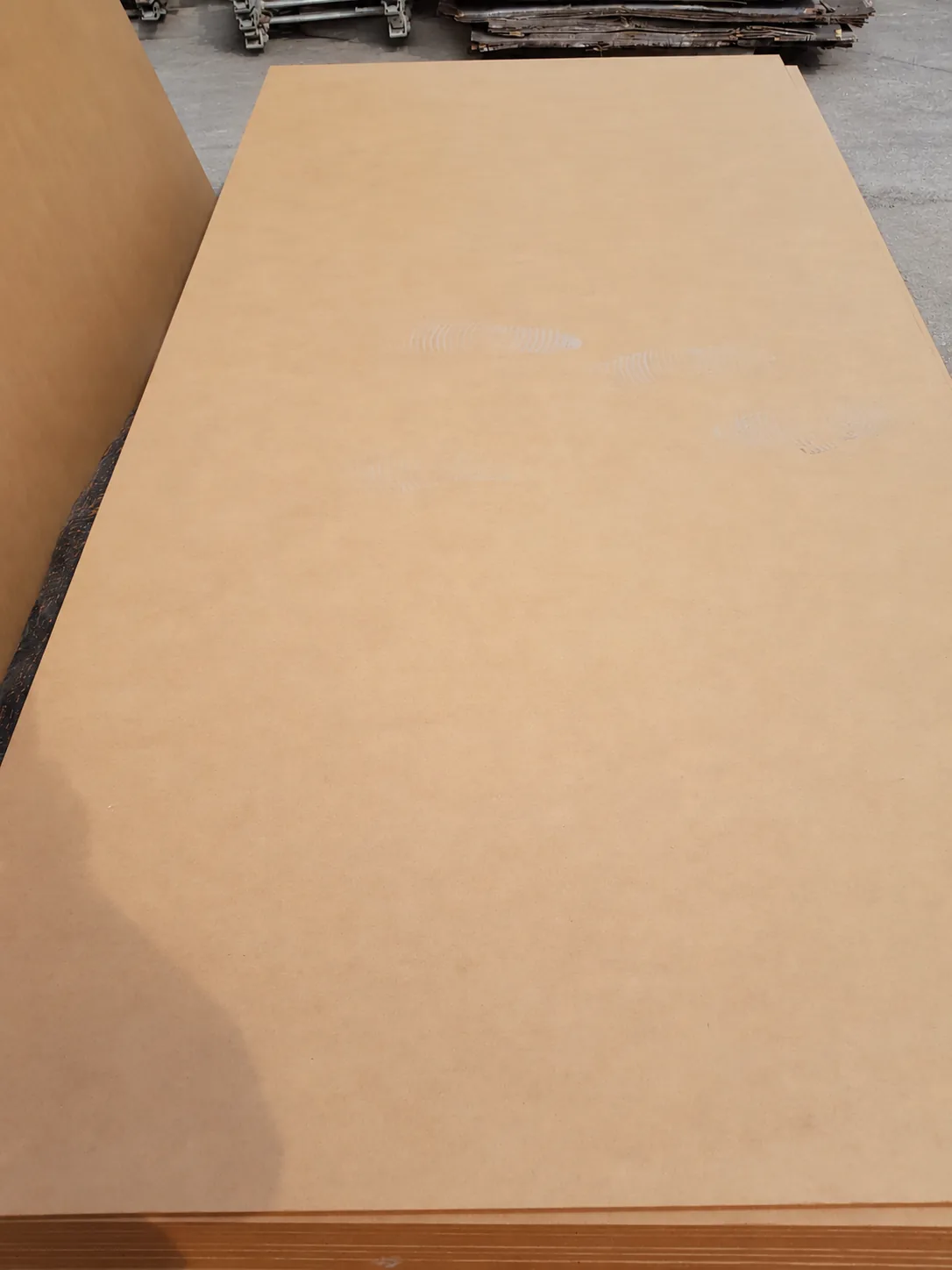
For a melamine-facing route, compare melamine MDF. If your workshop will apply the finish, start with the substrate specification for plain MDF.