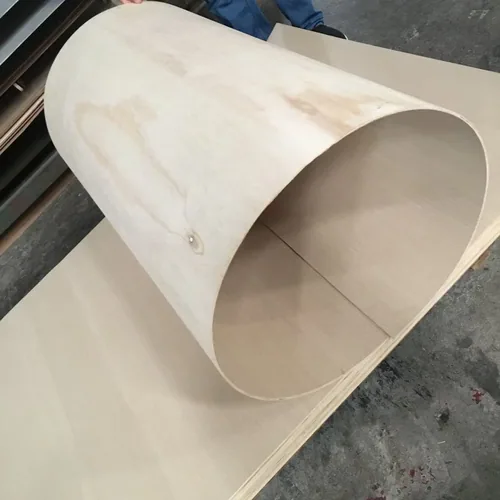
Specifications
Supply specifications
Finished panel formats
Send your required width and length. Available formats are confirmed with the selected panel and quoted scope.
Buying components?
Include part dimensions, grain direction and quantities by item with your drawing.
| Supply | Flexible MDF available; construction quoted for your curve |
|---|---|
| Panel thickness & structure | Confirmed for the proposed forming panel and layer build-up |
| Radius reference | Inside, outside or former radius; forming information matched to the selected construction |
| Direction & format | Bend arrow, face/reverse orientation and dimensions confirmed with the proposed panel |
| Surface & support | Facing, seams, adhesive, former/frame and final thickness in the drawing |
| Trial & delivery | Representative formed sample, measurement conditions, supply scope and packing agreed with quotation |
Application-specific specification checks
Panel construction and finishing
| Curve reference | Inside, outside or former radius; arc, component height and straight transitions. |
|---|---|
| Construction proposal | Panel availability, structure, individual thickness, layers, backing and final build-up confirmed with project quotation. |
| Direction and format | Bend arrow on the sheet and cut-part layout, face/reverse orientation and requested dimensions. |
| Forming and finish | Former or frame, adhesive, support, decorative surface, seams and edge details for the component trial. |
| Trial and delivery | Formed profile after agreed release/measurement conditions; quantities, delivery condition, protection and labels. |
Describe the curve so every team works to the same shape.
Identify whether the drawing gives an inside radius, outside radius or former radius. Add the component height, arc or section, straight returns and the final build-up that sets the visible surface.
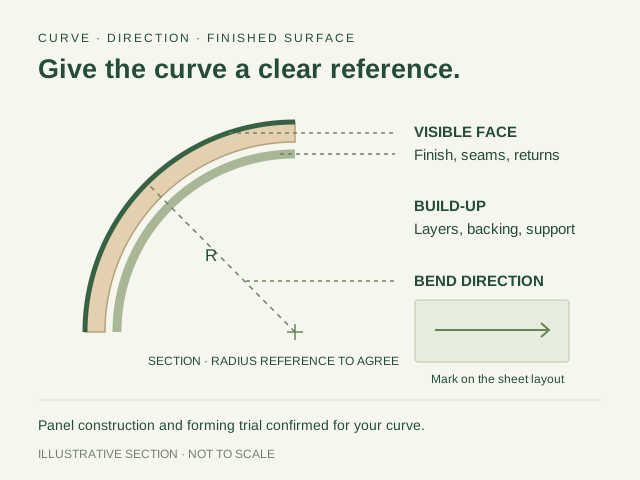
| Curve reference | Radius definition, section drawing, arc, height, straight transitions and part revision. |
|---|---|
| Panel construction | Requested slotted or other forming structure, individual panel thickness, layer count and proposed finished thickness. |
| Orientation | Bend-direction arrow on each full sheet and cut piece; face, reverse, slots and part-code references. |
| Forming process | Former or supporting frame, adhesive, backing, holding arrangement and release/measurement conditions to agree. |
| Decorative surface | Paint, veneer or laminate, including face direction, seams, returns, edge detail and any requested preparation. |
| Delivery scope | Flat boards, cut parts or requested formed components; construction, samples, quantities and packing confirmed with quotation. |
Send the tightest required curve with the construction you intend to make. Available sheet formats, thickness, forming direction and radius information are confirmed for the proposed panel; use the complete trial to evaluate your actual part.
Name the surface that carries the radius.
Scroll horizontally to compare all columns.
| Drawing reference | Define | Connect to |
|---|---|---|
| Inside radius | The radius to the inside surface at the specified finished stage. | Frame clearance, adjoining parts and any layer added inside. |
| Outside radius | The radius to the outside visible or completed surface. | Front alignment, overhangs and decorative facing thickness. |
| Former radius | The supporting tool or frame surface that the build-up contacts. | Layer order, adhesive, holding and release arrangement. |
| Arc and returns | Angle or full section, tangency points, straight legs and joint positions. | Blank planning, seam locations and the installed component. |
| Height and orientation | Component height, bend arrow, sheet direction and which face carries slots. | Cutting schedule, grain/decor direction and the pack label. |
Show the entire cross-section, including MDF layers, adhesive, backing and finish where they affect the shape. Put dimensions on the same finished stage. A former sized to an inside surface and a dimension taken on a decorative outer face describe different locations.
For several curved parts, identify the tightest radius and any reverse curvature, straight transition or opening. Keep mirrored pieces on their own codes. Available thickness, sheet direction and forming guidance are agreed for the selected structure; send the section before choosing a stock thickness by name alone.
CHOOSE HOW THE CURVED PART WILL BE MADE
A formable panel, layered sheets or a different substrate?
Flexible MDF discussion
Define the requested forming-board structure and direction. Confirm the panel construction, thickness, the curve reference and what the proposed sample can demonstrate for your workshop.
Prepare the MDF curve briefLayered MDF construction
If the design uses thin layers, specify each layer, final thickness, adhesive and former. Include your forming sequence and surface preparation in the trial proposal.
Review MDF base-board supplyBending plywood comparison
Compare the proposed plywood lay-up and MDF construction on the same shape and finish. Discuss bend direction, layer arrangement, exposed edges and the workshop’s production route.
Explore bending plywoodThe European Panel Federation’s guidance on laminated MDF shapes describes thin-layer and formable-board approaches. Formable designs may use parallel cuts on one face; request construction and forming information for the specific board being proposed.
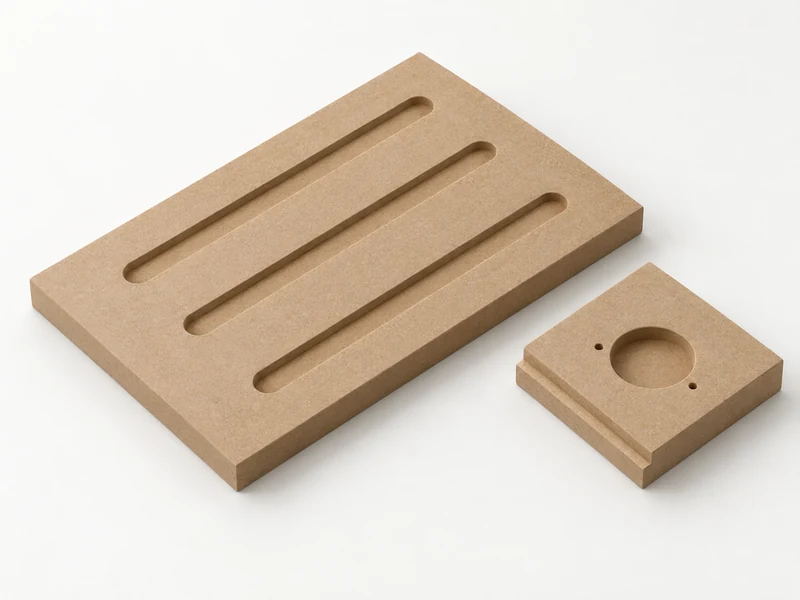
For slots or cut-outs that belong to a detailed component drawing, use the MDF machining inquiry. Keep decorative grooves, forming cuts and any acoustic pattern identified by their intended function.
Keep the forming route visible in the quotation.
Scroll horizontally to compare all columns.
| Route under discussion | Specify before pricing | Evaluate on the trial |
|---|---|---|
| Slotted forming board | Board identity, slot direction, delivered thickness, layer order and the supplier’s forming instructions. | Curve in the intended direction, joint, released profile and visible surface. |
| Thin-sheet lamination | Individual layers, adhesive, former, holding process and completed thickness. | Complete bonded build-up, shape, thickness and facing after the agreed release. |
| Formed component request | Finished drawing, support, facing, operations, quantity and delivered condition. | The installed part, its straight junctions, edges and pack arrangement. |
The European Panel Federation describes thin MDF lamination and forming-grade board with parallel cuts as distinct processes. Its general process descriptions do not set the construction for your item. Request the forming information for the selected board and connect it to the proposed adhesive, former and surface.
With a slotted board, identify the cut face and permitted bend direction on the actual sheet layout. Keep that arrow on each component after cutting. With a layered construction, show the layer order and seams rather than quoting only the sum of nominal board gauges.
Design the decorative surface for the same curve.
Scroll horizontally to compare all columns.
| Surface route | Selection detail | Finished-part check |
|---|---|---|
| Painted face | Surface preparation, filling, coating system, sheen and visible edge treatment. | Curved face, seams and transitions after the specified finishing sequence. |
| Wood veneer | Veneer identity, direction, matching, adhesive and edge or lipping detail. | Appearance continuity across the curve and its straight neighbours. |
| Laminate or film | The specific facing’s forming instructions, thickness, joint location and adhesive. | Fit to the curve, bond, seams and complete edge construction. |
Discuss the exact facing with its supplier; a decorative material name alone does not identify its forming limits or process. Keep the selected face and reverse with the full curve trial, including the point where the surface terminates or changes direction.
COMPARE OPTIONS
Your selection at a glance
Curve and direction
Define the radius reference, arc, height and transitions; mark the bend direction on the sheet and cut-part drawing.
Forming construction
Specify thickness, slots or layer build-up, former/frame, backing, adhesive and the intended decorative surface with the proposed panel.
Complete trial
Agree the formed-part sample, release and measurement conditions, fit, seams, surface and packing with the proposed supply.
TRY THE CURVE WITH ITS FINAL SURFACE
A useful sample reaches the shape you intend to build.
- Define the forming referenceSupply the section, radius definition and direction arrow. Include the chosen former or frame, layer arrangement and proposed facing.
- Agree a representative trialSelect the proposed material and a sample large enough for the critical curve, seam or return. Confirm the operations and delivered condition.
- Evaluate the formed assemblyRecord the profile after the agreed forming and release conditions, then inspect the seam, edge and finished surface on the complete component.
Board samples follow our free-sample arrangement, with buyer-paid freight and a possible credit on a later order. Confirm the proposed flexible panel, cut sample or formed trial’s construction and scope as part of the project discussion.
Use the panel storage and process-readiness guide to record the conditions before trial. For painted details, include the preparation and finish sequence with the workshop record.
Choose the curve detail that should decide the purchase.
Start with the drawing feature that matters in the finished component. Bring its material proposal, complete facing and measurement stage into the same request. The 90° counter route uses the geometry explained below; the 175 mm inside radius and 12 mm completed build-up are project references for discussion, with the individual board gauges and feasible forming process to be proposed.
Scroll horizontally to compare all columns.
| Part to compare | Keep with the trial | Start the request |
|---|---|---|
| 90° painted counter section | Inside/outside surface reference, component height, two straight returns, slot direction, support, adhesive and complete painted seam. Review the actual blank and released profile. | Discuss the 90° counter trial Request the curve construction file |
| Veneered curve beside a straight panel | Numbered elevation, matching and grain arrows, layer/adhesive proposal, seam and lipping, complete finished pair and agreed released or installed measurement stage. | Request the curved and straight pair |
| Complete laminated curved component | Exact facing and its forming instructions; full support, edge and finished section. Compare the same delivered stage, included operations and usable parts, then retain the selected construction. | Quote the complete curved component |
Try the complete curve and its most visible seam.
Choose a trial height and arc that show the critical curve, straight transition or closure seam. Include the actual facing, adhesive and support, rather than evaluating only a short bare strip. Agree the forming sequence and the stage at which dimensions and surface appearance will be assessed.
Record the profile while held and after the agreed release, with the measurement time, support and room conditions. Inspect the face under the intended lighting for lines showing through, local unevenness, cracking or a visible seam. Trial an adjacent straight panel too when their junction controls the appearance.
Acceptance worksheet
Record the curve, the conditions and the surface you accepted.
Use the part drawing as the reference for each observation. Keep the proposed board, formed build-up and decorative surface connected to one trial code.
Open the flexible MDF forming worksheet
| Check | What to record |
|---|---|
| Panel and direction | Board identity, structure, thickness, sample size, face/reverse and bend arrow on the sheet. |
| Curve geometry | Drawing revision, defined radius, arc, height, transitions and target finished profile. |
| Forming build-up | Layers, former or frame, adhesive, facing, support and forming/release conditions. |
| Released shape | Agreed measurement stage, profile or radius observations, springback, joints and assembly fit. |
| Finished surface | Coating or facing reference, seam/edge appearance, any telegraphing or damage and viewing conditions. |
| Purchase reference | Selected formed part, remaining changes, quotation scope, packing and repeat-order code. |
| Straight junctions | Tangency points, return dimensions, adjoining panels, closure seam and installed fit. |
| Repeat construction | Selected layer order, forming direction, former, adhesive/facing references and revised details. |
THE BOARD, THE FORMER AND THE FINISHED BUILD-UP
Ask for forming information that matches your proposed panel.
Include the intended use and destination with the curve drawing. Request material data and forming instructions for the exact construction, including the direction and conditions behind any stated radius information.
Retain the construction reference with the selected sample and drawing revision. Where the project requires fire, moisture or other performance, request documents for the proposed build-up and use, including its decorative surface and installation.
Discuss the adhesive and finish with their suppliers alongside the panel proposal. Identify the work your workshop will complete so the quotation describes the component and material scope you are purchasing.
Ask what a radius statement was measured on.
Request the board identity, gauge, slot or layer structure, forming direction and radius reference behind any supplied curve guidance. Include whether the stated shape is held on the former, released or installed, and which surface is measured. Keep the proposed adhesive and process conditions with that description.
Add material designation, emission method and the project’s finish or system requirements. A change to the facing, adhesive, backing or fixing belongs in the construction description and document discussion. Keep available technical information tied to the proposed item and destination.
Product data & reports to request
Request a technical data sheet covering:Proposed flexible panel identity, structure, thickness, formats and material documents for the destination and intended curved component.Include these specification details:- Panel identity, structure, thickness, sheet format and intended service conditions
- Bend direction, face/reverse orientation and the stated radius reference
- Layer arrangement, former, support, adhesive and finishing requirements
- Material test methods, emissions and any documents specified by the project
- Trial dimensions, release and measurement conditions, seams and surface criteria
Company documents to view
FSC chain of custody Wood panels · purchase & salesISO 9001 & ISO 14001 Management systems · stated sales activitiesUse these for supplier qualification; match product performance to the proposed panel’s technical documents.Flexible MDF construction and forming requirements: what to match
- Material and project
- Proposed flexible panel identity, structure, thickness, formats and material documents for the destination and intended curved component.
- Curve and forming scope
- Radius reference, bend direction, layers, former/frame, adhesive and facing; match any radius information to the proposed construction and conditions.
- Formed trial and receipt
- Selected formed sample, agreed release/measurement conditions, fit, surface, delivery condition, protection and orientation labels.
BEFORE YOU ORDER
Board-order reference
Use these regular board terms to begin planning. Flexible MDF construction, quantities, forming sample and the project schedule are confirmed with your quotation.
- Minimum order
- 1 container
- Regular lead time
- 10–15 days
- Samples
- Free samples
- Quotation terms
- FOB / CIF
Sample freight & order notes
- Minimum order: Mixed loads available.
- Regular lead time: Production; shipping time is additional.
- Samples: Buyer pays freight; credit available on a later order.
- Quotation terms: Name the port in your inquiry.
DELIVER THE PANEL IN THE AGREED CONDITION
Specify flat boards, cut parts or a formed-part proposal.
Describe the delivered condition you want considered, with orientation labels, item quantities and handling needs. Formed-component supply is a separate scope to discuss with the drawing and quotation.
For flat or cut panels, agree even support and protection for faces, cut edges and slots. For a formed proposal, include nesting, supports, overall pack dimensions and unloading constraints in the packing discussion.
At receiving, check item identity, quantity, pack condition and the agreed dimensions before forming or installation. Record observations against the bundle and part code using the receiving checklist.
Carry direction and component identity into receiving.
Use part and bend arrows that remain readable after cutting and unpacking. Reconcile each code and quantity with the ordered structure and delivered condition before forming. For an already formed part, check the section and support arrangement without forcing it into the receiving fixture.
Agree protection around slots, exposed ends, visible surfaces and projecting returns. Keep pack size, gross weight and handling access with the delivery proposal. On repeat orders, record changes to the former, layer structure, adhesive, facing or release process with the next drawing issue.
FROM A ROUNDED DESIGN TO A DEFINED PART
Give your curved design a material and a forming brief.
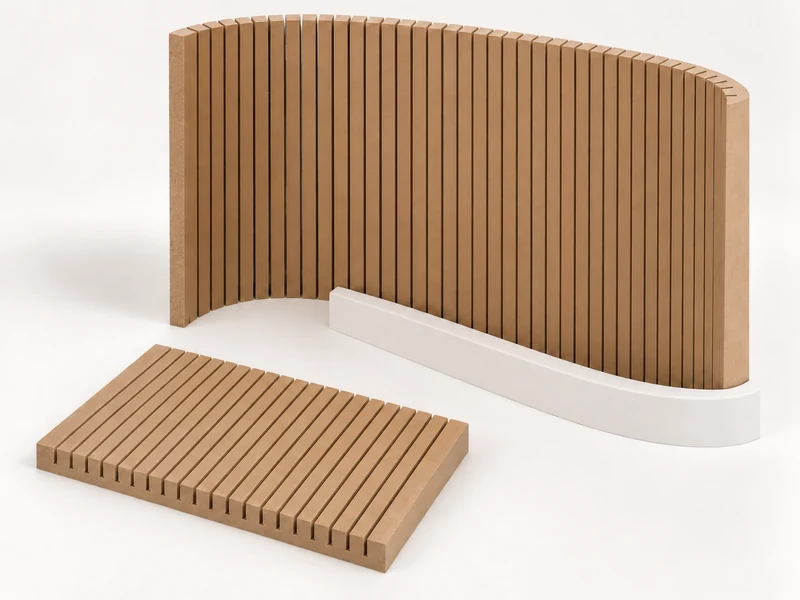
The curved face your customer sees starts with a clear section drawing. Describe the shape, surface and workshop process together when discussing flexible MDF.
Bring CUZI the component drawing, radius reference, height and intended finish. We supply flexible MDF around your curved project, with panel structure, thickness, forming direction, layer arrangement and trial format connected to the quotation.
Flexible MDF and bending MDF are buying terms used for formable MDF requirements. Specify the actual board structure you want considered: a slotted forming board, a thin-sheet build-up or another documented construction. The selected structure and finished assembly belong in the same purchasing discussion.
A curved cabinet end or reception front should meet its straight neighbour cleanly, with a continuous surface and the intended edge detail. Make those junctions part of the first inquiry. The curve section, finish and delivered condition let the board discussion follow the finished design.
PLAN THE SURFACE AND THE SHAPE TOGETHER
What will your curved component become?
Rounded cabinet details
Show the curved end, its junction with straight fronts and the visible edges. Include the final facing and the way the workshop will hold the component during forming and assembly.
Counters and display features
Provide the plan curve and elevation, with working height, returns, seams and top connections. Coordinate the facing reference with the supporting frame and repeated units.
Column wraps and wall details
Describe the wrap section, panel height, joint positions and installation support. Identify access openings, corner returns and the sequence for neighbouring panels.
Specify loads, exposure and project performance requirements for the complete construction. Identify the structural support separately from the curved decorative surface in the drawing and quotation.
Detail the junction, not only the round face.
On a cabinet end, show where the curve meets the front, side and top, plus any lip or exposed end. On a counter, include toe-space, access panels and the connection to the frame. On a column wrap, include closure seams, openings and the sequence for fitting neighbouring sections.
Separate the supporting structure from the decorative forming layer. Keep loads and fixings with the complete design, including any openings that interrupt it. Match the quoted board and facing to that section so the workshop can trial the installation the buyer intends to receive.
A CURVED COUNTER FRONT, READY FOR A TRIAL
Give the workshop the complete front detail.
- Shape reference
- Plan radius with its inside/outside/former definition, component height, straight returns and drawing revision.
- Construction proposal
- Formable or layered MDF approach, individual thickness, bend direction, support and adhesive arrangement to discuss.
- Visible finish
- Paint, veneer or laminate reference, seam position, top junction and exposed-edge treatment.
- Trial decision
- Formed profile after the agreed release, installed fit, surface observations and selected part linked to the proposed supply.
Compare the finished front against its drawing and neighbouring parts. Retain the successful construction and identify any later change to the former, board or facing before arranging repeat production.
One curve has different inside and outside lengths.
For a 90° section with a 175 mm finished inside radius and a stated uniform 12 mm finished build-up, the outside radius is 187 mm. A geometric path halfway through that build-up has a radius of 181 mm. The arc length for each path is radius × π ÷ 2.
Scroll horizontally to compare all columns.
| Defined path | Radius | 90° arc length | With two 75 mm straight returns |
|---|---|---|---|
| Inside surface | 175 mm | 274.89 mm | 424.89 mm |
| Halfway geometric path | 181 mm | 284.31 mm | 434.31 mm |
| Outside surface | 187 mm | 293.74 mm | 443.74 mm |
The outside arc is 18.85 mm longer than the inside arc. This explains why the drawing must identify its surface reference. These geometric path lengths are not flat blank-cut dimensions or a bending-radius recommendation: slot closure, layer forming, adhesive, facing, trimming and the real forming process belong in the proposed layout and trial.
Add the component height and return junctions to the section, then ask for a construction and blank proposal. Record the completed shape at the agreed released or installed stage. Keep the accepted former, layer order and surface reference with the repeat-order item.
REPEAT THE CHOSEN CONSTRUCTION
Keep the curve specification with the purchase schedule.
List items by panel structure, thickness, format, bend direction and intended part. Identify any cut orientation, paired sections or facing sequence that must stay together through packing and workshop use.
For repeat projects, use the chosen trial, former reference and drawing revision to describe the next order. Record substitutions and changed layer, adhesive or finish requirements before comparing quotations.
Regular CUZI board supply starts at one container, with mixed loads and regular production of 10–15 days before shipping. Flexible MDF construction, proposed quantities, forming scope, samples and the project schedule are confirmed with its quotation. Request FOB or CIF with the named port and target receiving date.
Coordinate the material lines with the mixed-panel purchase schedule and retain the accepted construction for the repeat-order revision record.
Compare complete curved components at the same delivered stage.
List the panel structure, forming direction, individual layers, adhesive, facing and finished section for each offer. Show whether the quote covers flat boards, oriented blanks or a formed component. Include the workshop’s forming, preparation and finishing operations that remain after delivery.
Compare cost per usable finished part, with the same quantity, decorative surface and installation detail. Allow for the agreed trial, tooling or former work, handling and protective packing where included. Retain the successful construction so a repeat purchase can describe more than a generic flexible MDF sheet.
FAQ
Questions before specifying bending MDF.
Is flexible MDF the same as bending MDF?
These buying terms point to a forming requirement. Identify the actual board construction, thickness and direction in the inquiry so the proposed material and trial suit your curved component.
What is the minimum bending radius?
Request radius information for the specific panel structure, thickness, direction and forming conditions. Give the reference used on your drawing and evaluate the proposed build-up on your former, including the final surface.
Can the sheet bend in both directions?
Confirm the forming direction for the proposed construction. Mark it on the sheet layout and each cut part; keep any restrictions with the cutting and quotation records.
Can I paint, veneer or laminate the curve?
Describe the facing and finish you intend to apply. Agree the proposed panel, adhesive, preparation and layer build-up, then trial the seams, edges and surface on the formed component.
Will standard MDF or grooved MDF do the same job?
Compare the specified structures and workshop processes. A decorative groove describes an appearance detail; a forming-board proposal needs its own construction, direction and curve information. Discuss the actual section with the supplier.
Do ordinary MDF dimensions and grades apply automatically?
Specify the finished project requirements and request available formats, thickness and material data for the proposed flexible construction. Ordinary MDF supply figures describe the base-board range; the flexible panel proposal is confirmed separately.
Can I request a finished curved part?
Include its drawing, support, facing, finished condition and quantity. Formed-part construction, scope, trial and packing are confirmed for the specific project.
What should I send first?
Send a curve section or readable drawing, radius definition, height, planned finish, approximate quantity and destination. Follow the drawing and file-sharing guidance to connect the files with your inquiry.
What bending radius should I specify?
State whether the drawing gives an inside, outside or former radius. Include panel construction, thickness, direction, layers and finish; discuss radius information and a representative forming trial for the proposed part.
Request a quote
Show us the curve you want to make.
A drawing, finish reference and approximate quantity can start the project discussion. Add the workshop process and trial detail as you define the proposed construction.
Open the flexible MDF project outline
Flexible MDF project: [curved component and intended application].
Curve: [radius and inside / outside / former reference; arc; height; returns].
Drawing: [part code, revision, section and bend direction on the sheet layout].
Panel proposal: [requested forming structure; thickness; formats; selected construction to confirm].
Build-up: [layers, final thickness, backing, support and adhesive].
Workshop process: [former/frame; forming and release conditions; operations to agree].
Finish: [paint / veneer / laminate; face, seams and edge details].
Junctions: [straight returns, tangency, closure seam and adjoining parts].
Trial: [sample dimensions, target profile, fitting and surface checks].
Documents: [destination, use and required material/system information].
Measurement stage: [held / released / installed; time, support and selected surface reference].
Delivery condition: [flat panels / cut parts / formed part to discuss].
Quantity and packing: [item lines, orientation labels, protection and handling limits].
Quotation: [project construction and included scope]; FOB or CIF [named port]; [receiving date].
Download the curve inquiry (.txt)