Specifications
Supply specifications
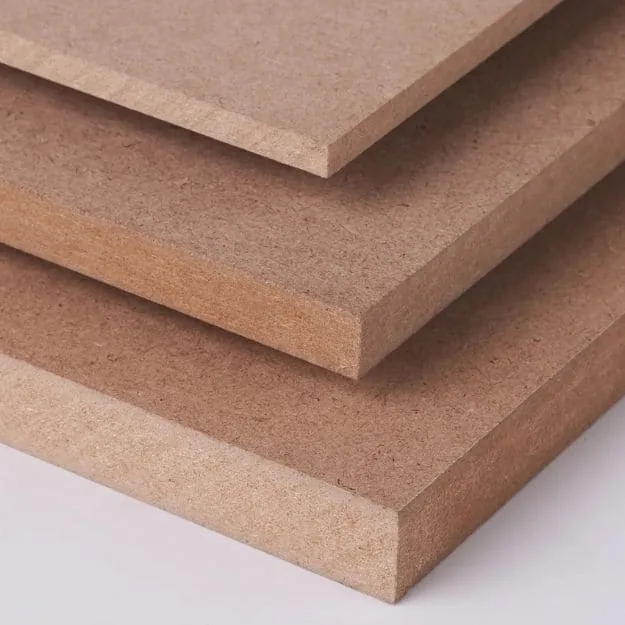
Finished panel formats
Send your required width and length. Available formats are confirmed with the selected panel and quoted scope.
Buying components?
Include part dimensions, grain direction and quantities by item with your drawing.
| Supply | Lightweight MDF available; parameters confirmed for your project |
|---|---|
| Thickness & format | Required size and thickness quoted for the proposed board |
| Density | Quoted density range and method for the selected board |
| Weight basis | Bare panel, cut part or finished assembly identified in the mass target |
| Emission option | Required option and test method confirmed with quotation |
| Process & finish | Machining, coating/facing and fitting requirements specified for the trial |
Application-specific specification checks
Panel construction and finishing
| Project specification | Lightweight MDF supply confirmed; available thickness, density range, formats and emission options quoted for the required application. |
|---|---|
| Weight basis | Bare sheet, cut part or complete finished assembly; dimensions and the source/method of density data retained with the mass comparison. |
| Workshop response | Machining, face/edge preparation, coating, fixing and support evaluated on the selected board and complete part. |
| Technical requirements | Request density, dimensional, bending/internal bond/fixing and emission information relevant to the intended use. |
| Packed delivery | Separate material/finished-part mass from bundle gross weights, external dimensions and the logistics-provider loading review. |
Make weight, thickness and the finished scope comparable.
State the target for a bare sheet, a cut part or the complete finished assembly. Identify the dimensions and any facing, edging or hardware included in that target.
| Board and use | Lightweight MDF designation, intended component, service conditions and required material documents. |
|---|---|
| Thickness and format | Required nominal or finished thickness, sheet/part dimensions, tolerance and quantity; available combinations confirmed with quotation. |
| Density and mass | Target density range or component weight, measurement method and whether the figure covers bare, faced or finished supply. |
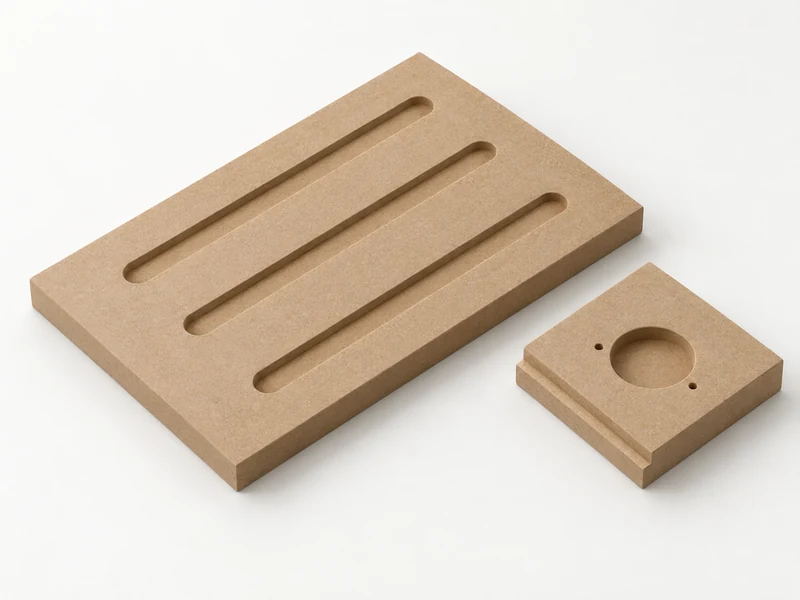
| Workshop process | Cutting, routed profile, edge preparation, fixing, coating or lamination that the selected board will undergo. |
| Emission requirement | Required class, test method and destination documents for the proposed lightweight board. |
| Packing and delivery | Bundle quantity, item labels, handling limits, packed gross weight and FOB/CIF port. |
Send your target before asking for a density figure alone. The quotation connects the available board to the thickness, surface and processing requirements of the part you intend to use.
Specify where the weight target applies.
Scroll horizontally to compare all columns.
| Target stage | Include | Record separately |
|---|---|---|
| Bare board | Actual board dimensions, thickness and the stated material condition. | Density reference and test method; nominal versus measured dimensions. |
| Machined blank | The completed geometry after cutting, grooves, profiles or holes. | Material removed, dimensional limits and remaining operations. |
| Finished component | Facing, adhesive, coating, edging and hardware included in the target. | Measured stage, component code and the retained assembled reference. |
| Packed shipment | Delivered parts, protective materials, pallets and other pack contents. | Pack dimensions, measured gross weights and unloading requirements. |
For a maximum component weight, identify which items are included and the condition at measurement. Use measured thickness and geometry when comparing trials. If one proposal is a bare board and another includes a decorative surface or fixing, their weights do not yet describe the same purchase.
Give the density requirement as a range or target with its method and thickness, rather than assuming the word ultralight sets one numeric grade. Keep dimensional tolerances, emission method and the material properties needed by the application alongside that requirement.
COMPARE A COMPLETE PART ON THE SAME BASIS
Lightweight MDF, standard MDF or a faced component?
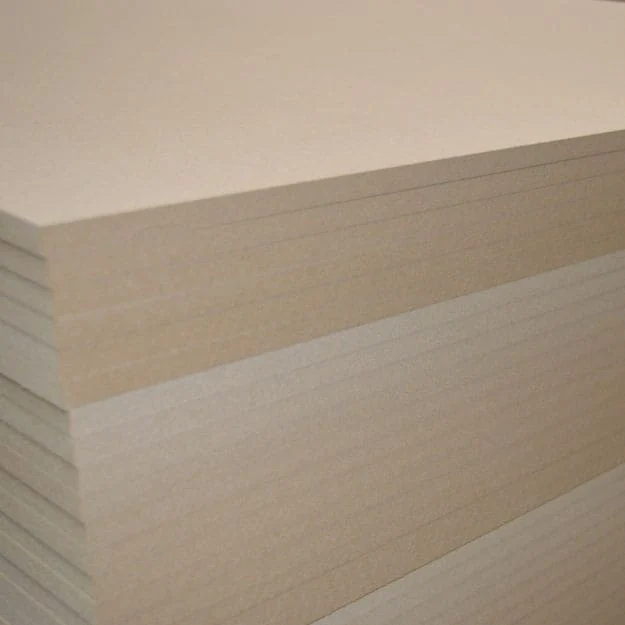
Lightweight board
Use your mass or density target with the thickness and dimensions. Confirm the proposed board’s technical data, process response and complete-component trial before fixing the order reference.
Set the lightweight specificationStandard MDF comparison
Choose a standard-board reference with the same geometry and intended finish. Compare measured mass, machined edges, coating preparation and the fitting or support arrangement.
Review Plain MDF supplyDecorative finished part
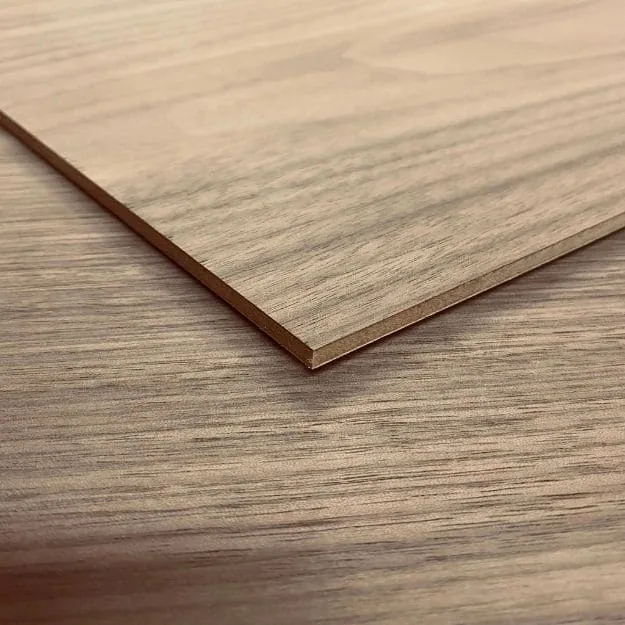
Include laminate, veneer, coating, adhesive and edging in the delivered scope. Discuss the lightweight substrate and finish combination, then evaluate the actual face, reverse and edges.
Explore facing requirementsDensity is one specification to compare alongside board performance. The European Panel Federation’s MDF property guidance treats density, screw holding, internal bond and bending properties as separate checks. Request the data that matters to your assembly.
Where routing or edge fixing decides the result, trial that detail on both board proposals. For painted work, keep profile preparation and the cured finish in the comparison; for hardware, record the complete joint and fitting.
Trial the detail that changes when the board changes.
Scroll horizontally to compare all columns.
| Production detail | Compare on both boards | Retain with the order |
|---|---|---|
| Routed or exposed edge | Actual profile, cut surface and preparation before the chosen finish. | Profile section, board identity and completed edge appearance. |
| Hinge or connector | Intended hardware, hole detail, installation and complete joint. | Hardware reference, dimensions and application-specific fitting checks. |
| Paint or facing | Surface preparation, adhesive or coating and the finished face/reverse. | Finish system, delivered scope, appearance and completed mass. |
| Supported panel | Actual span, support, load and use required by the component design. | Relevant material data and the selected complete construction. |
Keep a weight benefit connected to the part that delivers it. A changed thickness, fitting, extra backing or different finish can alter both mass and cost. Compare the finished arrangement after those choices, with the proposed board’s data and component observations together.
COMPARE OPTIONS
Your selection at a glance
Density and part mass
Give the target density or weight with dimensions, thickness and bare/finished scope. Available parameters are confirmed for your project.
Process and assembly
Evaluate machining, edges, coating and the actual fitting/support arrangement on the proposed board.
Order and shipment
Separate net board mass, finished-component weight and packed gross weights when planning item quantities and FOB/CIF delivery.
WEIGH THE PART. TRY THE PROCESS.
Make the sample answer your production questions.
- Define the comparisonUse the same part size and thickness where possible. Identify the density or mass target, material condition and finishing scope.
- Run the workshop detailCut or route the representative feature, prepare the surface and test the intended fixing or support with the selected board.
- Record the completed partWeigh it at the agreed stage, inspect the final finish and retain its data and fitting observations with the buying reference.
Samples are free; the buyer pays freight, with a possible freight credit on a later order. Send the required sample dimensions and component details so the proposed lightweight board can be evaluated in your workshop.
Use the MDF finishing trial for painted profiles and the hardware sample guide for connectors, hinges and joints.
Weigh the completed comparison at the same stage.
Use the same dimensions, finishing scope and fittings for both trials. Record the scale, measurement stage and component condition, then compare the machining and finished appearance alongside the weight. Include any extra preparation or altered fitting needed to reach the selected result.
Retain one completed part with its board data and drawing issue. For repeat orders, identify changes to density requirement, thickness, facing, coating or hardware before using the earlier trial as the purchase reference.
Acceptance worksheet
Keep the mass and performance observations with the same part.
Record the source of each density figure and the measured stage of each weight. Use the trial record to connect the proposed material with the process and finished output.
Open the lightweight MDF trial worksheet
| Check | What to record |
|---|---|
| Board identity | Lightweight board designation, thickness, density data/method, format and sample reference. |
| Geometry and mass | Measured dimensions, bare-panel mass, calculated basis, material condition and target weight. |
| Machining and edges | Cut/routed detail, edge condition, face breakout and preparation needed for the selected process. |
| Fixing and assembly | Actual hardware, joint, support/load arrangement, trial method and complete-part observations. |
| Finish and final weight | Coating/facing/edging reference, cured appearance, mass after finishing and viewing conditions. |
| Order and shipment | Chosen item, document requirements, outstanding changes, quantity, labels and packed gross weight. |
| Weight target scope | Maximum or target mass, included layers and fittings, measurement stage, scale and material condition. |
| Usable-part comparison | Delivered quantity, machining and finish work, fitting changes, usable output and cost at the next operation. |
DATA FOR THE LIGHTWEIGHT BOARD YOU ARE BUYING
Connect the density figure to the material and test method.
Request a technical data sheet identifying the proposed board, thickness and relevant methods. Include the requirements for your destination, machining process and intended component.
Keep the technical sheet with the selected sample, item code and quotation. For a faced or coated part, request the information for the complete construction alongside the lightweight substrate data.
A product name such as ultralight does not specify the density band, fixing performance or emission method by itself. Put the proposed figures and the relevant test references on the item schedule.
Keep calculated and measured values identifiable.
EN 323 is a method for determining the density of wood-based panels. Request the method used for the offered board, its material identity, thickness and reported conditions. A board density calculation and a weighing record for a finished component answer different questions.
For a rectangular piece, mass divided by measured volume gives a density calculation for that stated piece and condition. Identify whether it contains facing or hardware and whether routed areas have changed its volume. A rough whole-sheet estimate should not be presented as a formal material test.
Keep the proposed density range with the required fixing, bending, internal bond, emission and service-grade information. Review each relevant result against the actual board and use. Do not transfer a conventional MDF technical sheet to a lightweight item simply because both are MDF.
Product data & reports to request
Request a technical data sheet covering:Board designation, thickness, formats, quoted density range and method; dimensional, emission and destination documents.Include these specification details:- Board designation, available thickness/format and quoted density range
- Density method, dimensional tolerance and the conditions used for reported values
- Bending properties, internal bond or fixing data required by the application
- Moisture or other service requirements and the appropriate product documents
- Emission class, test method and destination-market documentation
- Facing, finish or adhesive requirements where included in the proposed supply
Company documents to view
FSC chain of custody Wood panels · purchase & salesISO 9001 & ISO 14001 Management systems · stated sales activitiesUse these for supplier qualification; match product performance to the proposed panel’s technical documents.Lightweight MDF density and component requirements: what to match
- Proposed board data
- Board designation, thickness, formats, quoted density range and method; dimensional, emission and destination documents.
- Component performance
- Machining, internal bond, bending or fixing data needed for the assembly; retain the process, finish, hardware and support reference.
- Mass and shipment record
- Density source and calculation basis, measured bare/finished sample mass, agreed conditions and actual bundle gross weights for transport.
BEFORE YOU ORDER
Ordering information
- Minimum order
- 1 container
- Regular lead time
- 10–15 days
- Samples
- Free samples
- Quotation terms
- FOB / CIF
Sample freight & order notes
- Minimum order: Mixed loads available.
- Regular lead time: Production; shipping time is additional.
- Samples: Buyer pays freight; credit available on a later order.
- Quotation terms: Name the port in your inquiry.
KEEP THE MATERIAL AND PACKING WEIGHTS CLEAR
Plan the load with bundle data you can use.
Request pack quantities, external dimensions and gross weights for each item. A mixed container can include different sizes, board densities and finishes; reconcile them with the actual shipment schedule.
Discuss even support, face and edge protection, pack labels and your unloading limits. For cut parts, identify the component codes and the sequence in which your warehouse or workshop will receive them.
On arrival, check the item and bundle references, quantity, condition and agreed dimensions before processing. The incoming-panel checklist helps connect observations with the shipment.
Build shipment planning from the delivered packs.
A bare-material mass estimate is useful for the item schedule. Loading also needs actual pack sizes, gross weights, support, route and unloading constraints. A container may reach a volume, handling or weight constraint; lower board mass alone does not determine the freight price or how many finished parts fit.
At receiving, keep the lightweight board code and bundle identity with agreed dimensions and condition checks. Connect any measured component mass to its actual thickness, geometry, finish and fittings before comparing it with the retained trial.
LESS WEIGHT TO MOVE. A PART TO EVALUATE.
Choose the lighter board around the component you make.
Include standard and higher-density fibreboard alternatives with your weight target. The MDF vs HDF component guide shows how thickness, density and the finished arrangement enter that comparison.
A lighter panel can change the way your team handles a part. The finished surface, fittings and assembly still belong in the buying decision.
CUZI supplies lightweight MDF for project-specific requirements. Share the part dimensions, target weight or density, planned finish and quantity. We will confirm the available thickness, density range, emission option and proposed board in your quotation.
Use lightweight and ultralight MDF requirements to describe the board you want considered, then compare its actual data and trial. Keep the density reference, thickness and delivered finish together so each offer follows the same component.
Compare the proposed density with your part volume and finished mass target. Use the MDF density, thickness and format guide to organise the calculation and dimension-specific inquiry.
Set a weight target your production and handling teams can use. For a front or removable display panel, the useful number may be the complete fitted part rather than a bare board. Bring that target into the first inquiry so the material, finish and hardware proposal work toward the same result.
BUY FOR THE WAY YOUR TEAM MAKES AND MOVES IT
Where does component weight matter to your business?
Furniture and cabinet components
Identify doors, carcass parts or decorative elements where handling or assembled weight is part of the brief. Include hinges, connectors, supports and the final face and edge treatment.
Interior features and displays
Describe panel dimensions, installation supports, visible surfaces and the way the component will be moved or fitted. Trial fixings and finished appearance with the proposed construction.
Repeat workshop production
Compare the same cut part through machining, finishing, assembly and handling. Keep usable output and preparation time with the material and sample reference for repeat orders.
For a loaded shelf, long span or specified structural use, include the design loads, supports and required material data. Evaluate the complete construction and its intended conditions in the component trial.
Use a target that matters at the next workstation.
For removable fronts or display components, identify the complete part and how it will be carried, fitted or serviced. For hinged furniture, include the fixing and support arrangement. For batch production, compare the same component through machining, finishing and assembly before deciding the board line.
Describe the intended benefit in the inquiry: a maximum finished mass, easier handling of a defined part or a reduction in the weight of a complete unit. Record the trial observations your team uses to make that decision, with the finish and hardware already included.
CALCULATE THE BOARD. MEASURE THE FINISHED PART.
How do you compare MDF panel weight?
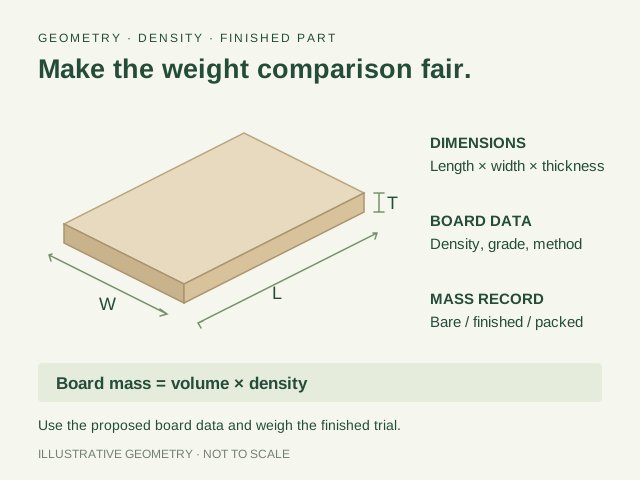
For a rectangular bare panel, calculate material mass from its volume and the density used for the proposed board. Convert length, width and thickness into metres first.
- Panel volume
- Length (m) × width (m) × thickness (m) = volume (m³).
- Calculated board mass
- Volume (m³) × proposed density (kg/m³) = material mass (kg). Record the source and conditions of the density figure.
- Like-for-like comparison
- At identical bare-panel volume, the mass ratio follows the density ratio. Recalculate when geometry, thickness or delivered scope changes.
- Finished and packed weight
- Weigh the finished trial with its facing, edging and fittings as specified. Request bundle gross weights for shipping and handling.
Use the panel volume guide to keep units and quantities consistent. A material-mass estimate covers its stated board assumptions; packaging and the freight provider’s loading review are separate.
Have density data for the board? Use the sheet-volume and mass calculator with your dimensions, count and density, then keep the result with your item list.
Compare the full purchase around usable finished parts, including machining, coating preparation, fittings and any rework. Record an observed handling benefit in the trial; confirm transport costs against the actual packing and route.
Keep the mass saving separate from the finished-part percentage.
Consider an unmachined 900 × 450 × 18 mm rectangular component: its board volume is 0.00729 m³. The two densities below, 500 and 650 kg/m³, are calculation inputs for comparison, not CUZI stock specifications. Assume the same facing, edging and fittings add 1.20 kg to each part.
Scroll horizontally to compare all columns.
| Density input | Bare board mass | Other layers and fittings | Calculated finished mass |
|---|---|---|---|
| 500 kg/m³ | 3.65 kg | 1.20 kg | 4.85 kg |
| 650 kg/m³ | 4.74 kg | 1.20 kg | 5.94 kg |
Using the unrounded values, the board mass difference is 1.0935 kg per part. The lower-density input reduces calculated bare-board mass by 23.1%, while the same change reduces the complete calculated part mass by 18.4%. The unchanged added items make those percentages different.
For a 6.00 kg finished target with that 1.20 kg addition and the same unmachined board volume, the available board-mass budget is 4.80 kg. Dividing it by 0.00729 m³ gives a density input of about 658 kg/m³. This is a target calculation to discuss with the actual board, measured dimensions and finished trial, not a guaranteed component result.
For shaped or routed parts, use the actual geometry and the included layers, then weigh the completed trial. A lighter bare substrate can be useful even when its reduction is a smaller percentage of the finished unit. Keep the target stage visible when your purchasing team compares offers.
Carry the finished-weight budget into your inquiry.
Start with the calculation above: a 900 × 450 × 18 mm rectangular blank, a 6 kg completed-part limit and 1.2 kg for non-board items. The requests keep those inputs, the 4.8 kg board budget and the calculated density ceiling together. Replace them with your real drawing and weighed finish/fitting allowance; the offered board and completed trial still need to meet your component requirements.
Have different dimensions, hardware or a weight limit? Calculate your own finished-part budget, then use its sample or quotation request. Keep the machining drawing, required fixing/finish checks and actual measured mass stage with that brief.
A LIGHTWEIGHT LINE IN YOUR NEXT CONTAINER
Separate the board choices in one clear order.
Combine lightweight MDF with other panel items in a mixed load. List the thickness, density requirement, size, finish and quantity for each lightweight line so it stays identifiable in the quotation and bundle labels.
Our minimum order is one container. Regular production is 10–15 days, with shipping time additional; confirm the quoted board combination and schedule for your order. We quote FOB or CIF with the named port.
For distributor stock, retain the material data and sample under the same item code. For furniture production, link each item to the component drawing and trial so purchasing and the workshop can review the same board.
Build the schedule with the wholesale MDF guide, and use the mixed-panel item list to coordinate quantities and deliveries.
Price the weight target with the work needed to reach it.
Compare the same finished dimensions, usable quantity and delivered surface. Add your machining, edge preparation, coating, fitting changes, handling and protective packing to the quoted board cost where they are outside supply. Keep the same currency and named delivery point.
For a repeat line, identify the chosen board and density requirement with the retained component, finish and fitting. If the proposed material changes, compare the resulting weight and production detail again. Ask for the board combination and schedule that match the confirmed item rather than treating every lightweight designation as interchangeable.
FAQ
Questions before selecting lightweight MDF.
Does CUZI supply lightweight MDF?
Yes. Send the thickness, dimensions, target density or weight, emission requirement and application. Available combinations and technical details are confirmed for your project quotation.
What is the difference between lightweight and ultralight MDF?
Ask for the proposed board designation and density range. These buying names do not provide one universal numeric grade; compare the supplied data and a representative finished-part trial.
Which thicknesses, sizes and emission grades can I order?
List your required thickness, sheet or cut format and emission standard with the quantity. We confirm the available lightweight MDF combination, documents and delivery scope in the quotation.
How much lighter will the part be?
Compare the same geometry using each board’s density data, then weigh the finished trial at the same stage. Include the surface layers, edging and fittings that belong to the actual part.
Can I route, paint or laminate lightweight MDF?
Describe the tool/profile, coating or facing system and required finish. Trial the relevant process on the proposed board, including exposed edges, preparation and the complete fitted component.
Is a lower density enough to choose the board?
Include the material properties and component tests that matter to the use, such as fixing, bending or internal bond requirements. Keep the density, process response and finished-assembly result in the same comparison.
Is lightweight MDF automatically moisture-resistant or flexible?
Identify each required property in the specification. Discuss the board’s documented service grade and construction; for a forming project, use the flexible MDF curve brief with the radius and direction.
Does lower board weight guarantee a cheaper shipment?
Request pricing against the actual packed dimensions, gross weight, route and shipping terms. Compare the complete delivered order with the logistics provider’s loading and freight basis.
How can I compare lightweight MDF weight?
Use identical panel geometry with each proposed density to estimate bare-board mass. Record the source of the density data, then weigh the finished trial including the facing, edging and fittings specified for the actual part.
Request a quote
Tell us the weight target your part needs.
Share the application, thickness, approximate quantity and destination. Add the density or component-weight target and finish to start a comparable quotation.
Open the lightweight MDF inquiry outline
Lightweight MDF inquiry: [component and intended use].
Dimensions: [sheet / part length × width; nominal or finished thickness; tolerance].
Target: [density range and method / bare or finished component mass].
Mass scope: [included facing, coating, edging and hardware; measurement stage and condition].
Board requirement: [grade, emission standard, service conditions and destination documents].
Process: [cut/routed profile; face/edge preparation; fixing or support].
Finish: [coating / facing / edging; reverse and delivered scope].
Trial: [sample dimensions; measured mass stage; machining, finish and assembly checks].
Quantity: [items by thickness, density, format and finish; other panels for mixed load].
Cost comparison: [usable finished parts; remaining machining, finishing and fitting work].
Packing: [bundle quantities, protection, item labels, gross weight and handling limits].
Quotation: FOB or CIF [named port]; [target receiving date].
Download the lightweight MDF inquiry (.txt)