On this page
GET THE EMISSION FILE READY WITH THE PANEL ORDER
Give your buying team documents they can use.
For a US order, identify the applicable TSCA Title VI product category and certification route. For an EU order, describe the article and ask for the assessment relevant to REACH Entry 77. Put the required method and documentation beside an E0 or E1 supply option, then keep that information with the agreed construction.
A furniture importer, panel distributor and cabinet manufacturer may buy the same sheet for different markets and finished products. Start the emission discussion with the board you intend to buy, where it will be sold and how it will be processed. That connects the technical file to the quotation, the factory item and the shipment.
A useful file should let your importer and technical team answer three questions quickly: which material is being supplied, which destination requirement it addresses, and how the delivered items link to that information. Begin that discussion with the quotation so any additional assessment and document work has a place in the order schedule.
SELECT THE PRODUCT, THEN THE MARKET
Choose your panel. Get the right file moving.
Open the product you plan to buy. Match its board, facing and intended use to your destination, then send the document request with the proposed item.
US file
Request the producer/product certification or applicable documented basis, labels and shipment references for the covered material. Keep California requirements named where relevant. Build the US file.
EU file
Request the identified article’s assessment against Entry 77 and Appendix 14, with test conditions or a scientifically valid correlation and the covered finish/construction. Check the EU conditions.
Plain MDFProduct + destination
- Panel to identify
- Standard raw MDF: selected grade, nominal thickness, format and producer.
Thickness: 2.5–35 mm.
US
MDF or thin MDF category, matched to the selected thickness and producer.
Request US documentsEU
Unfaced board and intended article, with the selected grade and machining or finishing route.
Request EU documentsMoisture-resistant MDFProduct + destination
- Panel to identify
- Moisture-resistant MDF: selected grade, thickness, format and producer.
Thickness: 9–25 mm.
US
MDF category and producer; include the requested emission option.
Request US documentsEU
Moisture-resistant board, facing or coating and the intended indoor article.
Request EU documentsFire-retardant MDFProduct + destination
- Panel to identify
- Fire-retardant MDF: board identity, thickness, finish and proposed installation.
Thickness: 9–25 mm.
US
MDF category and producer; keep emission and fire documents identified separately.
Request US documentsEU
Fire-retardant board, finish and intended article or installation.
Request EU documentsCommercial plywoodProduct + destination
- Panel to identify
- Commercial plywood: selected face/back grade, named core and lay-up, bond, gauge and producer.
Thickness: 3–30 mm.
US
Applicable hardwood-plywood category for the proposed construction and intended use.
Request US documentsEU
Selected face/core construction, finish and intended wood-based article.
Request EU documentsBirch plywoodProduct + destination
- Panel to identify
- Birch plywood: birch face, selected poplar/birch/eucalyptus core, lay-up, grade, gauge and producer.
Thickness: 3–30 mm.
US
Applicable hardwood-plywood category for the selected birch-faced construction.
Request US documentsEU
Quoted birch face/core construction and the intended component or finished article.
Request EU documentsMelamine MDF boardProduct + destination
- Panel to identify
- Melamine MDF: MDF grade and producer, decor, front/reverse construction, adhesive and finished thickness.
Thickness: Finished thickness confirmed with the selected facing construction.
US
Covered MDF substrate and the records for the melamine-faced product supplied.
Request US documentsEU
Finished melamine-faced panel, reverse and edges, plus the intended furniture or component.
Request EU documentsLaminated MDF boardProduct + destination
- Panel to identify
- Laminated MDF: select HPL, melamine or PVC, then identify the MDF, bonding system, reverse and finished thickness.
Thickness: Finished thickness confirmed with facing and reverse construction.
US
Covered MDF substrate and fabrication records for the named HPL, melamine or PVC facing.
Request US documentsEU
Proposed facing system, adhesive, reverse and finished article construction.
Request EU documentsHPL-faced MDFProduct + destination
- Panel to identify
- HPL-faced MDF: selected MDF grade, HPL identity and thickness, adhesive, reverse and total panel thickness.
Thickness: 12–25 mm (finished panel).
US
Covered MDF substrate and fabrication records for the HPL-faced construction.
Request US documentsEU
Finished HPL/MDF construction, backing, edges and intended article.
Request EU documentsPVC-faced MDFProduct + destination
- Panel to identify
- PVC-faced MDF: film reference, MDF grade and producer, adhesive, reverse and finished panel thickness.
Thickness: Confirmed with your quotation.
US
Covered MDF substrate and fabrication records for the PVC-film construction.
Request US documentsEU
Selected film, bonding system, reverse, edge treatment and intended article.
Request EU documentsVeneered MDFProduct + destination
- Panel to identify
- Veneered MDF: wood veneer species, MDF platform and producer, adhesive, reverse and coating.
Thickness: Confirmed with the proposed construction.
US
Wood-veneer laminated-product route, including the applicable producer certification or documented exemption basis.
Request US documentsEU
Veneer/MDF/adhesive construction, reverse, coating and intended finished article.
Request EU documentsName the requested emission class with its standard and method. Keep the reported result, product identity and destination assessment together in your order file. Read the RAW MDF method and scope.
Start with the market and the item your customer will receive.
Send the country of sale, intended application and your customer's document requirements with the material inquiry. If you sell into both the US and EU, keep a separate document requirement for each market on the same item schedule. Include California when it forms part of the sales territory.
Scroll horizontally to compare all columns.
| Purchase | Identify the construction | Bring into the document discussion |
|---|---|---|
| Raw MDF sheets | Board grade, producer, thickness, dimensions and proposed emission option. | Destination, panel test/certification requirements and identification on the supply documents. |
| Plywood sheets | Face/back, core and lay-up, bond, thickness and product designation. | Applicable product category, intended use and the required emission file for that construction. |
| Faced panels | Substrate, adhesive, face/reverse layers, finished thickness and processing. | Substrate records and the assessment needed for the offered finished construction. |
| Furniture or cut components | Material list, finishes, edge treatment, assembly and component references. | Importer/customer requirements, finished-product scope and the link to the purchased panels. |
Use Plain MDF and Commercial Plywood to choose the material range. The RFQ checklist helps keep those choices, quantities and documents on one purchasing brief.
Give the material and the finished article separate identities.
Name the raw or faced panel on the purchase line, then identify the furniture or component it will become. Keep substrate grade/model, front/reverse, adhesive and process references with the finished construction. Your board supplier, fabricator and importer can then address their parts of the same file.
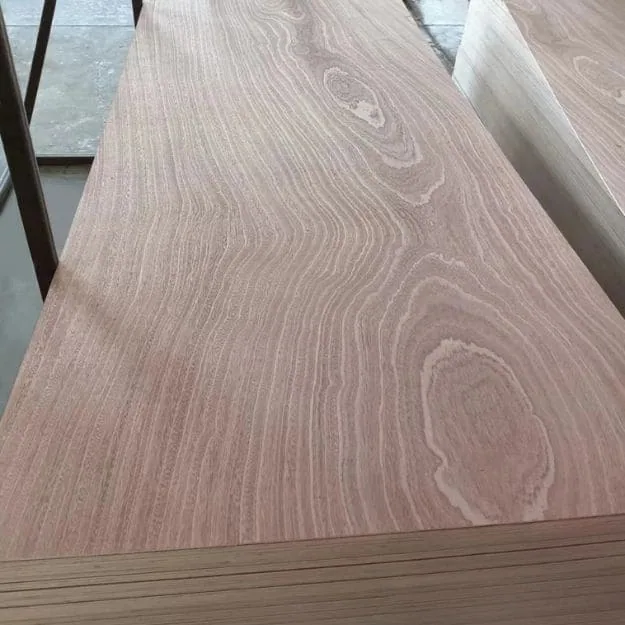
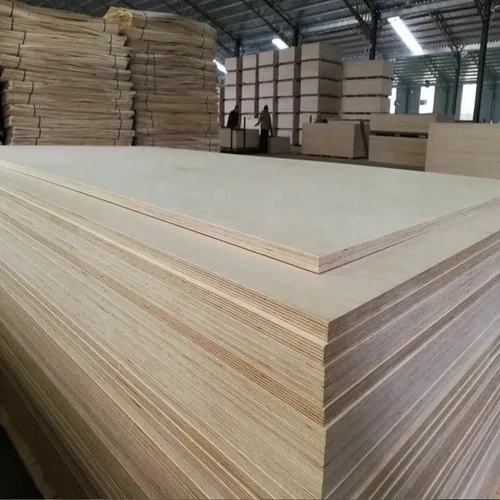
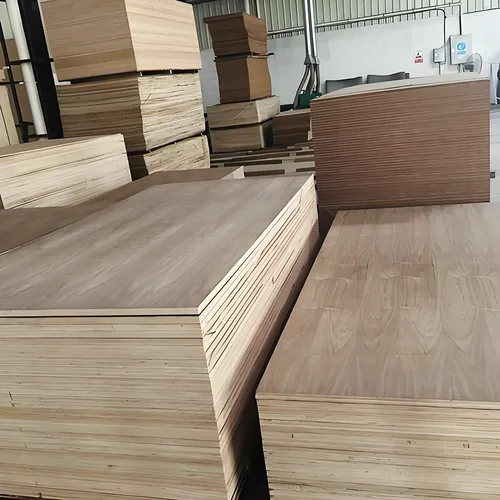
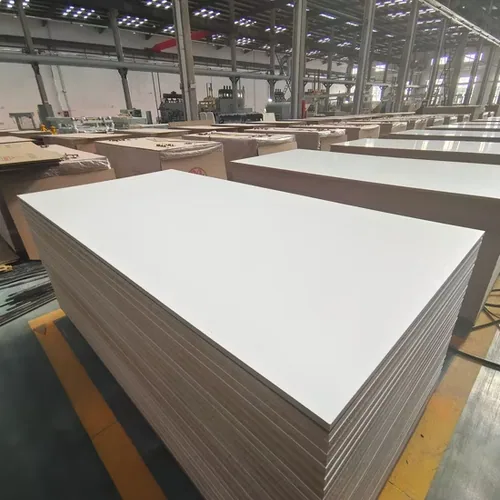
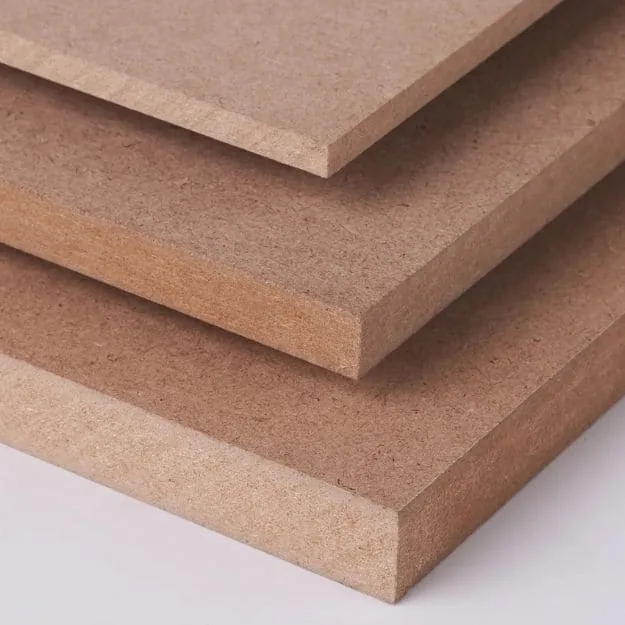
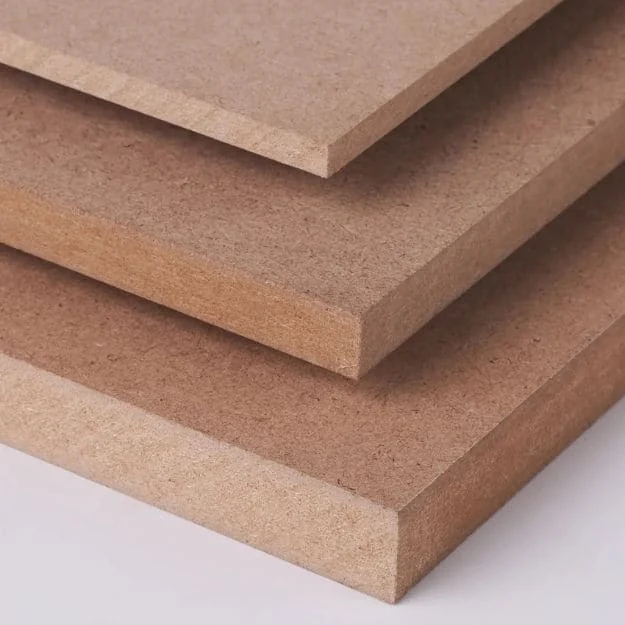
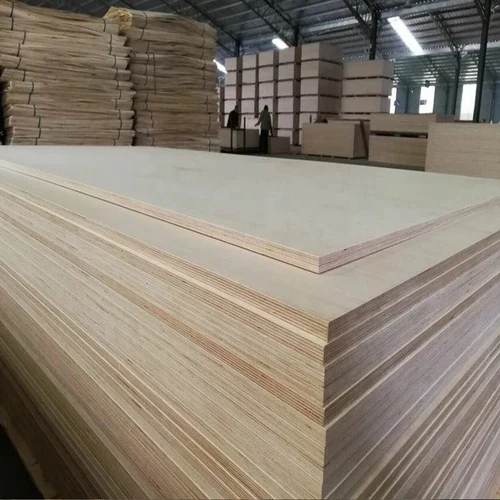
The photographs show MDF and plywood constructions. Their faces and cut edges help identify the material route; emission classification and destination compliance come from the corresponding product information and market assessment.
US orders: identify the covered composite wood product.
TSCA Title VI covers regulated hardwood plywood, MDF and particleboard, including finished goods containing them. Certification, labelling and import records follow the applicable product and supply-chain role. See the EPA rule summary.
Scroll horizontally to compare all columns.
| Covered product | Limit | Category detail |
|---|---|---|
| Hardwood plywood | 0.05 ppm | Veneer or composite core. |
| MDF | 0.11 ppm | Other than thin MDF. |
| Thin MDF | 0.13 ppm | Thickness up to 8 mm. |
| Particleboard | 0.09 ppm | Covered particleboard product. |
The rule has defined exclusions, including qualifying structural plywood. Confirm the actual category and any claimed exemption with the importer. EPA describes the testing framework using ASTM E1333 or qualifying ASTM D6007 testing in its regulated-stakeholder questions.
When requesting “TSCA Title VI MDF” or “CARB MDF”, provide the producer and product information needed to establish the offered item. Carry the resulting document reference into the order so the purchasing, logistics and receiving teams can recognise the same board.
Confirm the category before selecting a document route.
Use the actual panel construction and relevant definition when discussing a regulated category or exclusion. A face-species name, density description or marketing label is only part of that identification. Record the producer, board/platform and supplied stage with the item your importer will review.
If the planned order combines several board types, keep their category and supporting file on separate material lines. Retain the material used in each finished component so a replacement board can be reviewed without confusing it with another item in the container.
Build the US file around the producer, certification and shipment.
For covered panels, request the applicable certification or documented exemption and the proposed labelling. Panel labels identify the producer, lot, recognised third-party certifier and TSCA Title VI compliance. Importers retain invoices, bills of lading or comparable compliance records for three years and must be able to supply specified producer, manufacture and purchase information. Import certification also applies. The EPA importer guide explains these responsibilities.
Scroll horizontally to compare all columns.
| File item | What to request | How your team uses it |
|---|---|---|
| Product identification | Producer, product category and the offered grade/construction. | Match the certification scope to the quotation line. |
| Certification route | Relevant certifier, product coverage or the stated exemption basis. | Review the named producer/product and current certifier status. |
| Test information | Method, product identification, result, units and test conditions. | Read the result within its method and construction. |
| Label arrangement | Panel/bundle or finished-goods label appropriate to the shipment. | Check the expected identification before loading and at receipt. |
| Shipment records | Order reference, relevant compliance statement and lot/production linkage. | Keep the purchased material connected to the import file. |
| Importer instructions | Required import certification and customer/broker document format. | Assign who prepares each part before the shipment is booked. |
Check the certifier against the EPA recognised TPC list and status information. Where California requirements apply, also request the relevant CARB ATCM documentation and consult the CARB approved-certifier records. The US federal route requires TSCA Title VI certification and labelling for covered products; keep the California requirement named separately. See the EPA compliance timeline.
Before booking freight, ask your broker which document fields are needed for the proposed shipment. Agree how item and lot references will appear across the invoice, packing information and product records. If the proposed producer or construction changes, review the affected file with the replacement item.
Build a readable item-to-shipment index.
Use one order reference to connect the quotation line, agreed producer/product, applicable certification or exemption record, label arrangement and shipment documents. Keep the actual lot or production reference where it belongs in the relevant supply records. Identify who will provide each document and who will hand it to the importer or broker.
Before shipment, compare the selected construction and proposed labels against that index. If a supplier or product changes, record the replacement and obtain the relevant file for the changed item. Keep the original purchase reference with the change so the receiving team knows what was delivered.
EU orders: connect the article to Entry 77 and Appendix 14.
For articles placed on the EU market after 6 August 2026, REACH Entry 77 sets a 0.062 mg/m³ formaldehyde limit for furniture and wood-based articles under Appendix 14 conditions. Furniture assessment concerns the whole complex product. The regulation also defines exemptions; document any applicable basis for the intended use. See Regulation (EU) 2023/1464, Annex.
| Condition | Reference |
|---|---|
| Chamber temperature | 23 ± 0.5 °C. |
| Relative humidity | 45 ± 3%. |
| Panel loading factor | 1 ± 0.02 m²/m³; the appendix addresses other product loading arrangements. |
| Air exchange | 1 ± 0.05 h⁻¹. |
| Result | Steady-state concentration; test duration up to 28 days. |
Appendix 14 permits non-reference test conditions where a scientifically valid correlation establishes the relationship to its reference conditions. Request that basis when relevant.
Include specimen sampling and analytical procedures in the assessment file. The appendix requires at least two measurements a day, separated by at least three hours, until sufficient steady-state data are available. Review the ECHA Entry 77 restriction text with the regulation’s test conditions and intended-use scope.
Send the article description and its production route to the supplier and testing team together. For furniture, include the board, facing, adhesive, coating and assembly references your technical team needs to define the assessment. Agree who supplies the material documents and who arranges any finished-article work, then put those responsibilities and timing into the purchasing file.
Define the article that the assessment describes.
For a cabinet or other furniture product, list the board constructions, faces/reverses, adhesive systems, coating, edging and assembly that your technical team needs to identify the article. Retain the material records as part of that description and ask which assessment addresses the complete product.
For a submitted chamber result, keep the actual specimen preparation, loading, conditioning, temperature/humidity, air exchange and steady-state information with the method. Where a correlation is used, request its scientific basis and the construction it covers. Review the proposed article and supporting information together instead of selecting a result by its number alone.
Put a named test method beside E0, E1 or E2.
CUZI standard MDF is available in 2.5–35 mm with E0, E1 or E2 options. Moisture-resistant and fire-retardant MDF are offered in 9–25 mm with E0 or E1. Commercial plywood offers E0/E1 options in its 3–30 mm range. Include the grade and method required by the buyer alongside the selected board.
Make an emission line usable by recording the standard and edition, test method, units, limit, material identity and destination requirements. A class name and a reported number answer different purchasing questions: the class states the requested category; the report identifies what was tested and how its result was obtained.
Keep chamber concentrations, extracted formaldehyde content and other reported measurements in their original units and methods. Ask the technical team to explain any proposed equivalence between methods. That gives your buyer a basis for comparing the submitted material with the stated requirement.
- Supply option
- The board grade and emission option requested for the item.
- Test record
- Identified material, method, conditioning and reported results.
- Market file
- The applicable product certification, assessment, labels and shipment documentation for its destination.
Put three different references in their proper fields.
Scroll horizontally to compare all columns.
| Reference | What it identifies | Complete the buying record with |
|---|---|---|
| E0 / E1 / E2 supply option | Requested commercial board option under its named method/basis. | Offered grade/model, method, units and the destination requirement. |
| RAW MDF: 0.038 mg/m³, EN 717-1 | The recorded result and method for the identified interior MDF. | Report scope, measured construction and relevant chamber/assessment information. |
| US or EU market file | The applicable product certification or article assessment and its coverage. | Producer/product or article identity, relevant scope and delivery linkage. |
Keeping the units readable helps, while the method and tested construction determine how a result can be used. A chamber concentration, an extracted-content measurement and a commercial option should remain identifiable in the submitted file. Do not turn a unit conversion alone into a certification or assessment statement.
Read CUZI's RAW MDF report with its method and construction.
The available RAW MDF test report identifies interior MDF for dry conditions at nominal 1220 × 2440 × 12 mm. It reports formaldehyde at 0.038 mg/m³ using EN 717-1, together with physical and mechanical results.
Keep the reported value with its EN 717-1 method and identified board. For EU assessment, request the chamber temperature, humidity, loading, air exchange, specimen preparation and steady-state result, with an Appendix 14 comparison or scientifically valid correlation where applicable. Match the assessment to the proposed board, facing and intended article. For US orders, request the applicable producer/product certification and shipment file alongside the emission option.
You can review the thickness, density and measurement information in the MDF density and thickness guide. A useful inquiry attaches the material requirement and asks which report references will accompany the quotation. That gives the supplier a clear list to address before you approve the order.
Use the report to prepare a precise next request.
Identify the board you want quoted, its grade/gauge and the process or facing you will add. Ask for the relevant material records and destination file for that item. Keep the original reported value in its stated units and method when submitting it to the technical team.
For a faced or assembled route, retain the substrate report with the complete construction description. Ask which additional assessment or certification scope is needed for the intended product rather than renaming a raw-board result as a finished-furniture result.
Describe the facing and the finished product.
For Melamine MDF, Laminated MDF or wood veneer faced plywood, include the base board, adhesive, decorative face, reverse and edge arrangement. Identify the part or finished article your customer will use, and keep any substrate documents linked to that construction.
Under the EPA definition, a laminated product involves wood or woody-grass veneer affixed to a covered composite wood platform as a component of a finished good. Since 22 March 2024, non-exempt laminated-product producers have hardwood-plywood producer requirements. Certain phenolic or no-added-formaldehyde resin arrangements have specified exemption conditions. Review the actual construction against the EPA laminated-product guidance.
Write the layer material explicitly when discussing HPL, melamine, PVC or wood veneer. The supplier can then address the material you mean and the technical team can select the appropriate document route. Where you add a coating or assemble a cabinet after importing sheets, retain the purchased-board references with your own process and finished-product records.
Keep the layer materials explicit.
Write whether the face is wood veneer, HPL, melamine or PVC, along with the base panel and bonding arrangement. Identify the reverse, edging and any further coating your workshop supplies. A general “laminated board” line leaves these details open.
For repeat furniture production, keep the selected layer materials and process references with the component code. Review an adhesive, facing or substrate change against the affected document route and the finished article description before carrying the earlier file into the next order.
Use each company document for its stated role.
Our certificate library brings company, supply-chain and product documents together. Read the holder and scope with the item you are purchasing, then request the specific emission documents for its destination.
- FSC chain of custody
- Supply-chain certification; identify the required FSC claim and purchasing arrangement in the order.
- ISO management systems
- Quality, environmental or sales management within the stated company scope.
- Plywood conformity file
- The listed EN 13986 non-structural models and uses, with applicable performance declarations and supporting product information.
- Historical MDF document
- An archived conformity document; current-order document requests follow the proposed material and market.
Place the relevant company documents and product file in separate parts of the order folder. Retain a simple index connecting the quotation line, agreed material reference, document title and the person responsible for any further information. Your receiving team can use that index when the container arrives.
Keep company credentials beside the product file.
A buyer can use company and supply-chain documents to understand the supplier relationship while the product file addresses the selected material and market. Keep the holder/scope and the item-linked records readable in that folder. Avoid using a management-system certificate as the sole emission record for a board or finished article.
SEND THE MATERIAL AND MARKET TOGETHER
Request the emission file for your proposed order.
The market-specific links carry the selected product and destination requirements into the inquiry. Add the board grade, dimensions, face/core or facing construction, intended application and your customer's document list. Include California or a named EU sales country where relevant.
CUZI orders start at one container, with mixed loads available. Regular production takes 10–15 days; shipping and any additional agreed testing are scheduled separately. Request FOB or CIF with the named port. Samples are free; the buyer pays freight, with a later-order freight credit available by agreement.
Before confirming the order, agree the supplied document list, any remaining testing, label/lot arrangements and the importer handover. Keep the same material reference through the quotation, sample, order and receiving records.
Agree the handover while there is time to complete it.
Scroll horizontally to compare all columns.
| Stage | Material and file task | Who to coordinate |
|---|---|---|
| Quotation | Identify item/construction, market, requested documents and any further assessment. | Buyer, supplier and the customer’s technical contact. |
| Before production or fabrication | Retain the selected materials/processes and arrange item-specific document work. | Supplier, fabricator and testing/assessment team where involved. |
| Before freight booking | Match offered material, label arrangement, document list and shipment instructions. | Buyer/importer, supplier, broker and logistics contact. |
| Receiving and repeat order | Match delivered references with the file; retain changes alongside the item. | Receiving, purchasing and technical teams. |
Send your customer’s requested file list with the panel quantities and named FOB/CIF port. State the intended receiving date and any document deadline. This lets the commercial and technical work develop together and makes a mixed-material order easier to review.
MDF and plywood emission-document questions.
What should I request for MDF entering the US?
Identify the MDF producer and applicable category, then request the TSCA Title VI certification or documented exemption, required labels and shipment records. Include California documentation when your sales territory requires it.
Are CARB and TSCA documents interchangeable?
Keep the federal TSCA Title VI route and any California CARB requirement named in the order file. Check the relevant producer, product coverage and certifier status for the material being supplied.
What EU formaldehyde reference should the inquiry name?
Request the applicable REACH Entry 77 assessment with Appendix 14 conditions for the described article and intended use. Include the offered material and finished-product construction.
Does E0 or E1 establish US or EU compliance?
Use E0 or E1 to specify the supply option. For US or EU sales, request the applicable product certification or article assessment with the method, result and identification relevant to the offered construction.
What does the RAW MDF report state?
It reports 0.038 mg/m³ by EN 717-1 for the identified interior MDF construction, with physical and mechanical test results. Request the board grade, emission option and market file relevant to your order.
How should I request documents for a faced MDF panel?
Include the MDF substrate, adhesive, decorative face, reverse, finished thickness and intended article. Ask for the material records and finished-construction assessment needed by your technical team.
Which certificate should I include with the emission request?
Send the product and destination document requirements. Use the company certificate library to review the management, supply-chain and product scopes, and keep those references with the relevant material file.
What should happen if the material changes before shipment?
Record the changed producer, grade, thickness, adhesive or facing on the item schedule. Review the affected reports, certification, assessment and labels with the technical and importing teams before approving the replacement.