
On this page
CABINET DOORS / BOARD TO FINISHED COMPONENT
MDF for cabinet doors: choose the board around the finished door
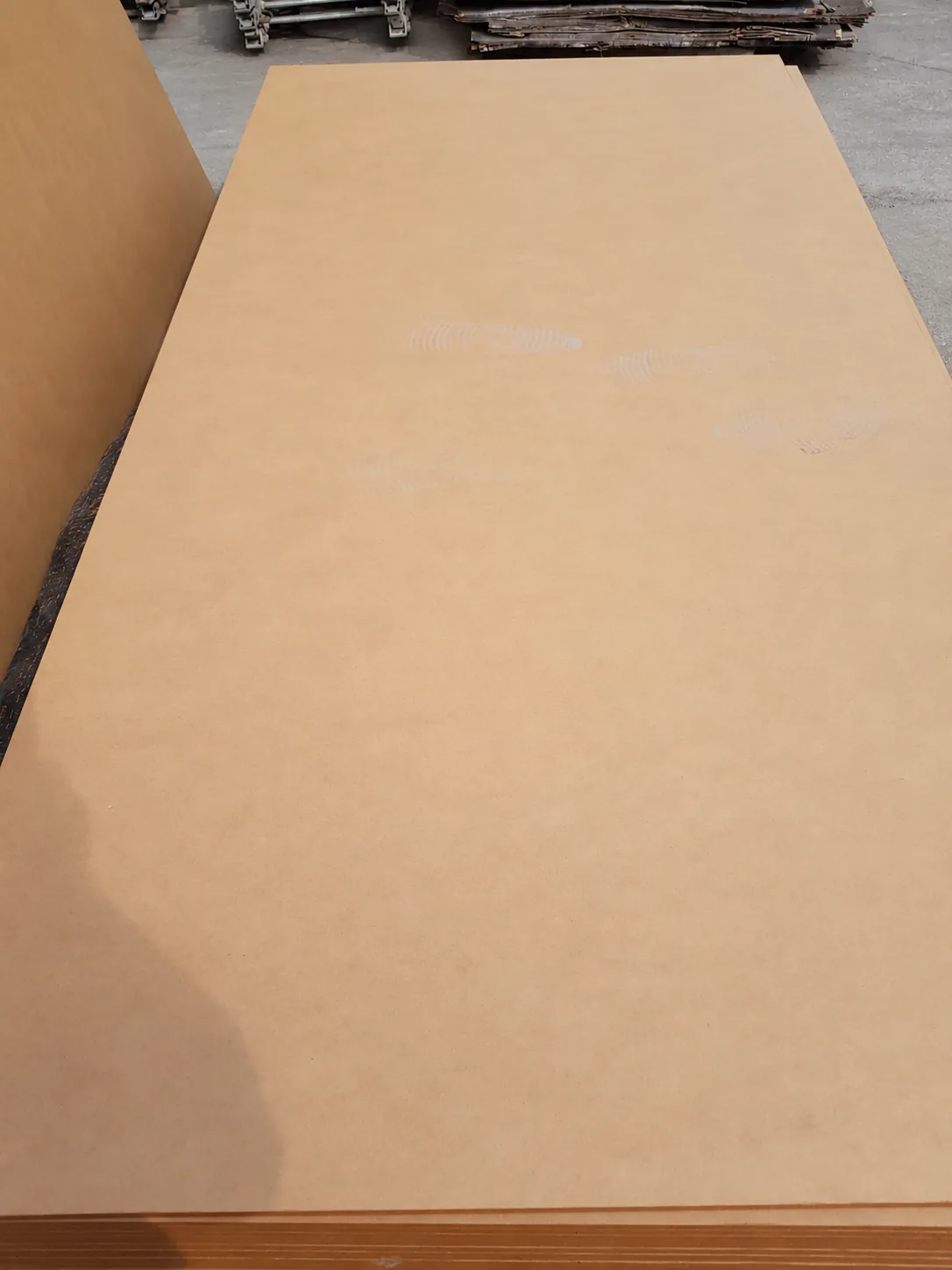
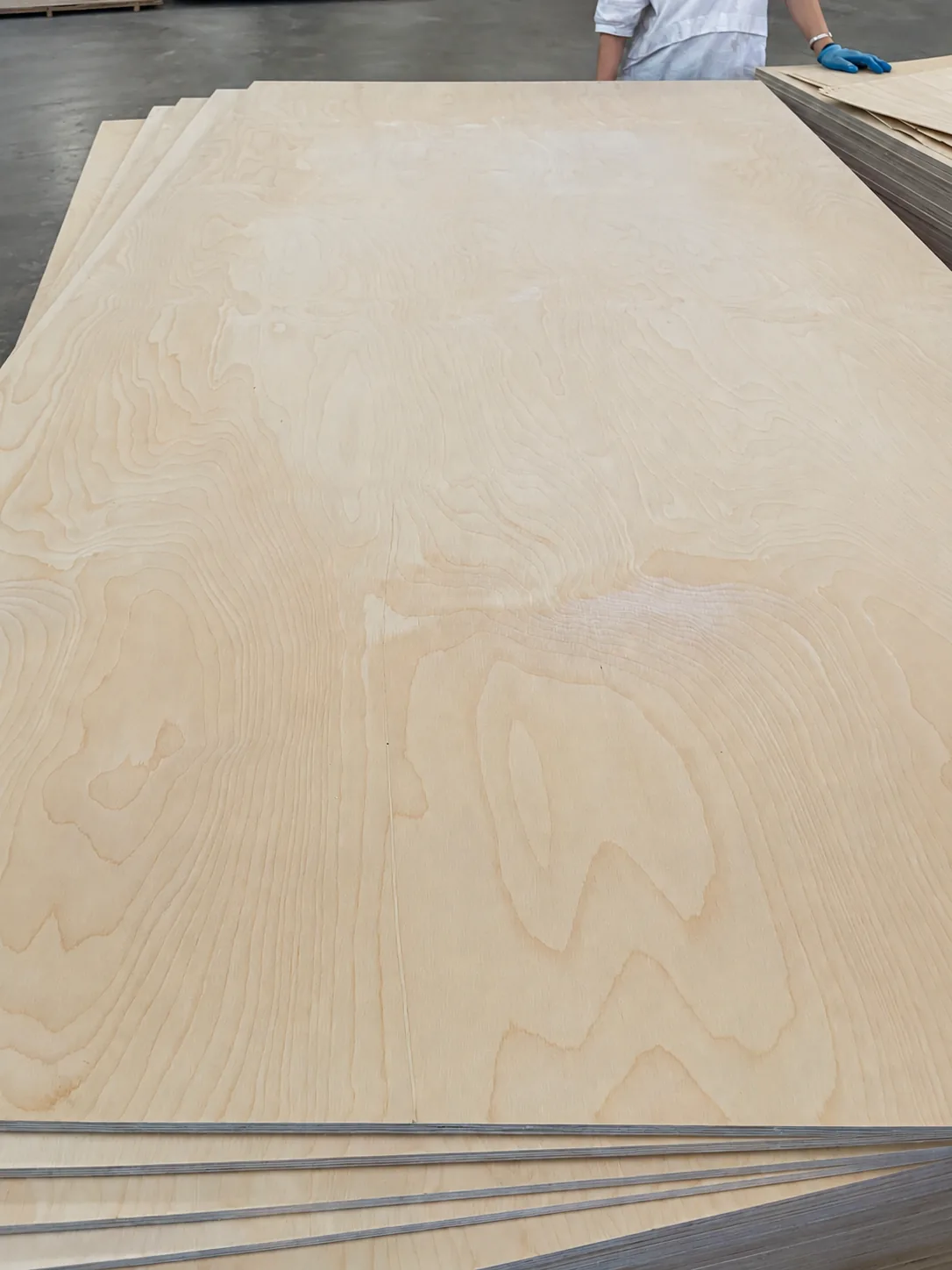
For painted, routed cabinet doors in dry interiors, start with plain MDF and trial the actual profile, edge preparation and coating. For kitchens or bathrooms with humid conditions, compare a moisture-resistant MDF model for that use and include the complete finish and exposed cuts. For flat decorative fronts, compare melamine, HPL or PVC faced MDF with its reverse and matching edge. The right purchase is the board and finishing route that produces your required door reliably.
A smooth sheet face is a useful starting point. Your customer also sees the groove, the outside edge, the sheen and the alignment of adjoining doors. Bring those details into the sample before a container order, so the board choice supports the result your workshop has to deliver.
- Select the route: painted profile, humid-service component or decorative front.
- Test the difficult detail: deepest groove, narrow rail, edge, hinge cup and finish transition.
- Keep a complete door: both faces, final dimensions, fittings and the selected process revision.
Request a routed-door sampleCompare a moisture-resistant door sample
For a closer look at the board-grade decision, read moisture-resistant MDF vs standard MDF.
Plain, moisture-resistant or decorative MDF?
Choose the service conditions and finished construction first. A raw board for a painted profile and a decorative board for a flat front can share an MDF substrate while requiring different cutting, edge and finishing work. State which surfaces arrive finished and which operations your workshop will carry out.
Scroll horizontally to compare all columns.
| Door route | Board and component choice | Sample to request |
|---|---|---|
| Painted, routed interior door | Plain MDF: 2.5–35 mm; E0, E1 or E2 options. Choose the door gauge from the drawing, remaining material below grooves, finished fit and hardware requirements. | A profile-and-edge piece followed by a complete painted door with the proposed reverse and fittings. Painted profile trial |
| Door in humid interior conditions | Moisture-resistant MDF: 9–25 mm; E0 or E1. Specify the proposed model, actual humidity or wetting, edges, holes and complete coating. MR identifies a moisture-resistant board choice; water exposure and the finished component still need review. | The same drawing and finishing route as the plain-board trial, plus the relevant moisture data and intended-use checks. MR door trial |
| Flat melamine decorative front | Melamine MDF: choose the decor, texture, sheen, finished gauge, single/double-faced construction and reverse. Agree the offered model and dimensions for your item. | A finished front with its actual edge, corner, reverse, boring and fitting detail. Routing through the decorative face exposes a different surface and needs its own finish decision. Melamine front trial |
| HPL decorative front | HPL faced MDF: finished board 12–25 mm; HPL 0.5–2 mm. Single or double face; a single-faced item can have a melamine reverse. Pair the actual front, reverse, bond and edge in the item schedule. | A complete laminated front showing layer build-up, finished thickness, edge joint and hardware clearances. HPL front trial |
| PVC faced or profiled door | PVC faced MDF: agree film identity, decor, finished gauge, adhesive, reverse and the supplied shape. A flat faced board and a membrane-formed profile require different processing proposals. | The proposed supplied component and its actual profile, film turn, corner, reverse and edge termination; identify any forming your workshop completes. PVC door-detail trial |
Raw board emission options belong to the specified item and test basis. Include the destination and required documents; review the complete coating, facing and adhesive system separately. A buyer can compare laminated MDF constructions without assuming every finished door shares the same performance or processing route.
Why the profile can need more attention than the flat face
A routed detail exposes the inner board and gives the finish a different surface from the factory face. MDF edges can absorb coating differently, so the flat face and cut edge may develop different appearance. European Panel Federation guidance on lacquer finishes discusses this distinction and the role of compatible preparation and sealers.
For MDF for painting, compare the proposed board under your selected finishing system. Check the groove wall, groove bottom, outside edge, hinge recess and face-edge transition after machining, after preparation and after the finish has cured. Observe whether a mark starts as a machining defect, appears during preparation or becomes visible only in the coating.
Choose the process with the coating supplier
Use the selected sealer, primer and topcoat instructions for preparation, compatibility, application and cure. Record the actual abrasives, equipment settings, product references and working conditions used in your trial. A universal grit sequence, fixed primer dose or drying time would miss the differences between your board, door geometry and finishing line.
The EPF guide to finishing edges also connects edge preparation with the chosen finish. Keep this general guidance alongside the supplier instructions for your actual system. Before machining, follow your board supplier’s handling guidance and use the panel storage and moisture guide to prepare the workshop handover.
Start the trial with the most demanding door detail
Send a dimensioned front and section, with the narrowest rail, deepest groove, inside radius and edge profile marked. Include the hinge-cup position and depth, handle holes, any pull recess and the finished dimensions your assembly needs. A small face coupon can compare colour, but a representative machined detail is needed to compare the routed surface.
Check board thickness and the material below each cut
Measure the blank and finished door, and show the material left beneath grooves, recesses and opposing cuts. Check where hinge cups overlap routed profiles, then agree thickness and machining limits for the chosen hardware and design.
Check the groove and hinge recess at the same drawing position.
Chosen geometry inputs: a local blank thickness of 17.7–18.3 mm before coating; front shallow cut 4.0–4.3 mm, front deep groove 8.0–8.4 mm, and rear recess 12.5–13.0 mm. These ranges are a drawing-comparison exercise, not CUZI thickness tolerances, a hinge specification or approved door design.
Where front and rear cuts overlap, remaining material equals local board thickness minus both cut depths. Use the lowest thickness and deepest cuts for the minimum. Measure from the same unfinished faces, and check each overlapping location on the drawing.
Scroll horizontally to compare all columns.
| Drawing location | Coincident cuts | Calculated web range |
|---|---|---|
| D01 · shallow front detail | Front 4.0–4.3 mm; no rear cut beneath it. | 17.7 − 4.3 to 18.3 − 4.0: 13.4–14.3 mm. |
| D02 · deep front groove | Front 8.0–8.4 mm; no rear cut beneath it. | 17.7 − 8.4 to 18.3 − 8.0: 9.3–10.3 mm. |
| D03 · rear recess away from the front groove | Rear 12.5–13.0 mm; no front cut at its footprint. | 17.7 − 13.0 to 18.3 − 12.5: 4.7–5.8 mm. |
| D04 · rear recess under the deep groove | Both cuts occupy the same footprint: front 8.0–8.4 mm and rear 12.5–13.0 mm. | 17.7 − 8.4 − 13.0 to 18.3 − 8.0 − 12.5: −3.7 to −2.2 mm. The chosen cuts intersect; the section needs revision. |
Overlay the front profile, rear hardware and hole drawings from the same reference point. D04 needs a geometry change: review the remaining material with your designer and hardware supplier before choosing another thickness or machining position.
Positive web values describe remaining geometry only. Keep the required rail/bridge dimensions, fixing engagement, component load and finished-door checks with the design; no minimum adequate web or strength is established by these arithmetic examples. Trial the critical profile and then the complete finished door.
Include machining details with your drawing
Use your intended tooling, fixture and machining route for the trial. Record the tool identity and condition, settings actually used, face orientation, datums and observed cut quality. When a tool or board changes, identify the revised piece so the preparation team can compare it with the original.
For a supplied processing proposal, discuss the MDF drawing and machining scope with CUZI. State whether you need raw sheet, cut blank, routed part or finished front, and which finishing and assembly operations your workshop retains. For nesting and quantity preparation, use the cut-to-size panel guide.
A short process record makes a useful door sample
Use one sample or item reference through machining, preparation, coating and assembly. Keep the actual process and observations beside that reference. When comparing boards, keep the drawing and finishing route consistent; when comparing a process change, mark exactly what changed.
Scroll horizontally to compare all columns.
| Stage | Keep with the sample | Decision it supports |
|---|---|---|
| Machined blank | Board model/grade, measured blank thickness, drawing revision, orientation, tool and fixture references, actual settings; photographs of face, profile and recesses. | Does the proposed board and machining route give the required profile, remaining section and fit? |
| Prepared edge and groove | Actual sanding or filling steps, sealer/primer references, preparation time, conditions and observations before coating. | Can your workshop prepare the detail consistently, and what labour or rework does it require? |
| Cured finish | Coating references and supplier instructions, application/cure record, colour/sheen master, face-edge transition and agreed viewing conditions. | Does the complete surface meet the selected appearance and relevant use requirements? |
| Assembled door | Finished dimensions, reverse, hinges/fixings, frame clearances, aligned neighbouring front and full-door observations. | Does the complete component work in the intended cabinet with the required fittings and finish? |
Photograph a problem before adding the next layer. Record actual preparation and rework time where it matters to the price decision. Retain the chosen board, process revision and finished sample together for the order and later repeat batches.
Bring the reverse, edge and hardware into the decision
The complete door has two faces and four edges. State the supplied reverse, the finish on new cuts and holes, the front-to-edge transition and the edge treatment at corners. For decorative fronts, keep the matching band or lipping reference with the facing master. For a painted front, include the same exposed detail your customer will see after installation.
Try the complete door in your cabinet
Use the intended hinges, screws, inserts, handles and cabinet mounting arrangement. Review boring geometry, clearances, fixing engagement, finished flatness and door alignment under the proposed checking conditions. Where the design needs a service or durability assessment, agree the relevant method and acceptance criteria with the responsible designer and hardware supplier.
Specify measured component weight when choosing the hinge or support arrangement. Hinge count, spacing, cup depth, screw choice and permissible door size come from the selected system and drawing; they are not fixed by the MDF product name. A small sample helps resolve a profile or edge, while the full-sized component addresses fit and handling.
A kitchen door brief needs the intended conditions
For MDF for kitchen cabinets, tell us where the door will be installed and how it will be cleaned. Include humidity, splashes or steam in the brief, then choose an MR grade and protective finish for those conditions.
WORKED BUYING EXAMPLE
Example: a good flat face, but a profile that needs rework
Illustrative workshop scenario; observations are not CUZI test results.
A cabinet-door workshop is choosing MDF for a painted recessed door. Its flat face meets the chosen appearance, but the first coated groove shows a visible line. Rather than judging the whole sheet from that final mark, the team compares the stages from the same door drawing.
Scroll horizontally to compare all columns.
| Observation | Comparison to make | Next action |
|---|---|---|
| Line visible after machining | Compare the tool path, condition and surface at the marked location before any preparation or paint. | Trial the relevant machining change and retain both pieces before changing the coating. |
| Machined detail looks acceptable; coated edge differs | Compare the actual preparation and sealer/primer sequence on the same profile, with the selected coating supplier. | Label the revised finish trial and record its preparation time, cured appearance and rework. |
| Face and edge pass; complete door fit differs | Compare final dimensions, reverse, recesses, fittings, checking conditions and adjoining-front alignment. | Resolve the component or assembly detail, then retain the complete selected door. |
Compare the cost of a usable finished door
Compare the same finished door quantity, including preparation, machining, coating, rework and usable output. Use recorded costs where available and label estimates clearly. The quote and processing-cost guide helps compare bare boards with partly finished panels.
Size the order around the door schedule
CUZI regular MDF formats are 1220 × 2440 mm and 2100 × 2800 mm. Formats 1220 × 3050 mm, 1830 × 3660 mm and 1220 × 3660 mm are on request. Check your machine bed, handling, trimming allowance, decor direction and actual door nesting before choosing a larger sheet. For faced products, include the proposed facing and finished dimensions in the item.
Plain MDF is available in 2.5–35 mm with E0/E1/E2; MR MDF in 9–25 mm with E0/E1. Fire-retardant MDF is also available in 9–25 mm with E0/E1. If the project needs a fire rating, include the required test and complete cabinet or door construction in the document request. See fire-retardant MDF.
From a door trial to a mixed container
The order minimum is one container and mixed loads are available. Keep a separate item code for each board grade, gauge, format and supplied surface or processing scope. Typical production lead time is 7–15 days; confirm the start point, final schedule and any custom processing with the quotation. Ask for FOB or CIF with the named port and receiving date.
Samples are free; you pay courier freight, which is credited in full against your formal order. Send the representative cut-piece or complete-door dimensions and destination so the sample format and shipment can be arranged. Use a profile trial to resolve the finishing detail before planning a full-door test.
Quote a painted-door board itemQuote an MR door-board itemQuote a decorative-front item
Get the data that belongs to your selected door board
Pair the physical door trial with the product information needed by your customer and workshop. Keep the proposed model, item, dimensions, finish and destination on the request so a document can be connected to the board you are buying.
Scroll horizontally to compare all columns.
| Buying question | Information to request | Keep with the trial |
|---|---|---|
| Raw or MR board selection | Board producer/model/grade; density and relevant profile data, dimensional tolerances and relevant physical/mechanical or moisture results with methods, conditions and applicable models. | Board and drawing references, gauge, machining observations and complete finishing route. Plain door-board dataMR door-board data |
| Decorative front construction | Decor/film/HPL identity, actual front and reverse, facing gauges, MDF and bonding information, finished dimensions, edge and applicable processing/care guidance. | Physical master, complete edge/corner, reverse, fitting detail and supplied processing scope. Melamine front dataHPL front dataPVC door-detail data |
| Emission and finished-use requirements | Required market/test basis, identified product and document scope; selected coating/adhesive information and any separate finished-component requirements. | Destination, customer requirement and chosen complete material/finish schedule. Read MDF and plywood emission documents for US/EU orders. |
View the RAW MDF test report and request the information needed for your proposed board and destination. Use the report’s stated product, dimensions and test methods alongside the quoted model data. Door machining, coating and hardware decisions also need the actual component trial.
Send one clear door brief to start the conversation
Start with your drawing, intended use and finish. Tell us which choices you need help with, and we’ll work through the board and sample options with you.
Door / drawing revision and numbered parts:
Finished door dimensions, blank thickness and tolerances:
Painted profile / humid-interior MR / decorative flat or formed front:
Deepest groove, remaining section, edge and reverse:
Coating or decor master; operations supplied / completed in our workshop:
Hinge / handle / recess / fixing drawing and cabinet fit:
Required board grade, emission/test documents and destination:
Profile piece or complete door sample; sample dimensions and shipping address:
Item quantities, chosen sheet format, FOB/CIF port and receiving date:
- Keep the door drawing and critical profile detail with the MDF item and sample code.
- Keep preparation, sealer and coating references, stage photographs and the complete-door result.
- Retain the selected process revision, physical colour/decor master and reverse/edge/fitting arrangement.
- Carry the same item references into your order and packing schedule.
Review the relevant product guide and prepare your inquiry files.
MDF cabinet-door buying questions
Which MDF should I start with for painted cabinet doors?
For a routed door in dry interior conditions, compare plain MDF through your actual machining and coating process. For humid interior use, compare an MR model and relevant product data with the complete finish and exposed cuts. Choose the gauge around the drawing, remaining section and fittings, then retain a completed door trial.
Does moisture-resistant MDF make a kitchen door waterproof?
No. MR MDF improves moisture resistance, but it does not make a complete kitchen door waterproof. The proposed MR board, intended exposure, complete finish, edges, holes and installation all belong in the assessment. Describe persistent humidity, splash, steam or cleaning rather than relying on a green board colour. Use the relevant model data and component checks for the intended conditions.
Can I rout a decorative melamine or HPL board like raw MDF?
The MDF core can be routed, but cutting through the facing removes that decorative surface and requires a separate finish for the exposed area. Routing through a decorative face exposes the substrate or layer edge. Decide whether the design keeps a flat faced front, uses an edge detail, exposes and finishes a routed surface or needs a different supplied construction. Trial the actual front, reverse, new cuts and fittings before defining the finished item.
Is a PVC faced sheet the same as a formed cabinet door?
No. A flat PVC faced sheet and a formed cabinet door are different supplied items. A flat faced sheet describes a panel construction. A formed profile also needs the shape, film, adhesive, corners, reverse and processing scope agreed. Identify what CUZI supplies and what your workshop forms or finishes, then request the relevant supplied component detail.
Why include the reverse face?
The order describes a complete door. Its reverse finish, machining and fitting arrangement affect the finished component and should stay with the front and edge schedule. Include them in the sample and full-door fit review so the next batch has the same intended construction.
Should a new colour trigger another trial?
A changed colour requires a new appearance check; changes to coating chemistry or processing also require the affected preparation and performance checks. Identify what changed: colour, coating chemistry, sheen, preparation or facing master. Discuss the relevant checks with the finish supplier and compare the affected detail under the selected viewing conditions. Keep the revised sample and process references with the item.
Which thickness is best for a routed door?
Choose the thickness from the remaining material beneath the deepest profile and the door’s size, weight and hinge arrangement. Start from the finished door size, profile, deepest cut, remaining section and hinge/fixing requirements. Plain MDF is offered in 2.5–35 mm and MR in 9–25 mm, but these supply ranges are not door-design limits. Measure the proposed blank and finished component and trial the actual geometry.
Can a small painted piece replace a complete-door trial?
No. A small colour or profile sample does not establish full-door fit, flatness or handling. A small piece can answer a colour, edge preparation or profile question. A complete door with the intended reverse, fittings, weight, dimensions and cabinet arrangement addresses fit and handling. Plan the sample stages around the decision you need to make.