
On this page
IN BRIEF
Compare the accepted concrete surface and complete service cost
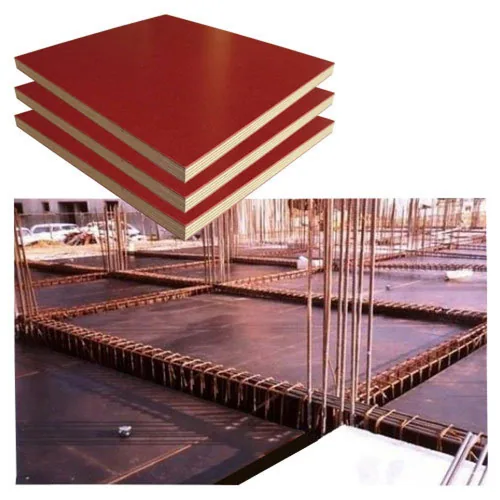
CUZI film faced plywood comes in three reuse grades: 10–15 uses, 15–25 uses and 30+ uses. Select the grade and film/core construction for your formwork design, then record its service under your site procedure. Identify the working panel and face through each pour, record the accepted concrete-contact area and include cleaning, repair and handling in the cost. Keep the observation period and next-use decision with the record so purchasing can compare the actual completed work.
- Select the required reuse grade and record accepted uses.
- Record the site procedure and concrete result.
- Separate handling damage from surface wear.
UNDERSTAND THE DETAIL
How many reuses can film faced plywood provide?
CUZI supplies film faced plywood in three reuse grades: 10–15 uses, 15–25 uses and 30+ uses. Specify the required grade with the film, core and bond. Use a suitable release agent, strip and clean carefully, protect cut edges and store panels flat. Service life also depends on the site conditions and required concrete finish. Inspect before each pour and replace panels with damage that affects support or finish. Record each placement, working face and inspected concrete area, with the applicable formwork and finish requirements. Keep repair work and the next-use decision on the same record so the comparison explains how the result was obtained.
Keep the panel identity throughout the trial. If a panel is replaced, start a new record rather than extending the old panel’s count. Record the operating and handling conditions that help explain the comparison, including approved cleaning, storage and any repair carried out between uses.
- Successful cycle
- The recorded use meets the agreed criteria for the panel and required finish.
- Repair event
- Document the local work, its approval and whether the repaired panel returned to service.
- Retirement reason
- Identify the condition that stopped further use rather than only recording the last cycle number.
How can reuse be compared on cost?
In this worked example, a panel costing 60 calculation units provides six usable pours, giving 10 units per use before repair and handling. Replace these inputs with your price and site records to compare total costs.
Continue with planning panel positions and replacements.
What does the 700-revolution result tell you?
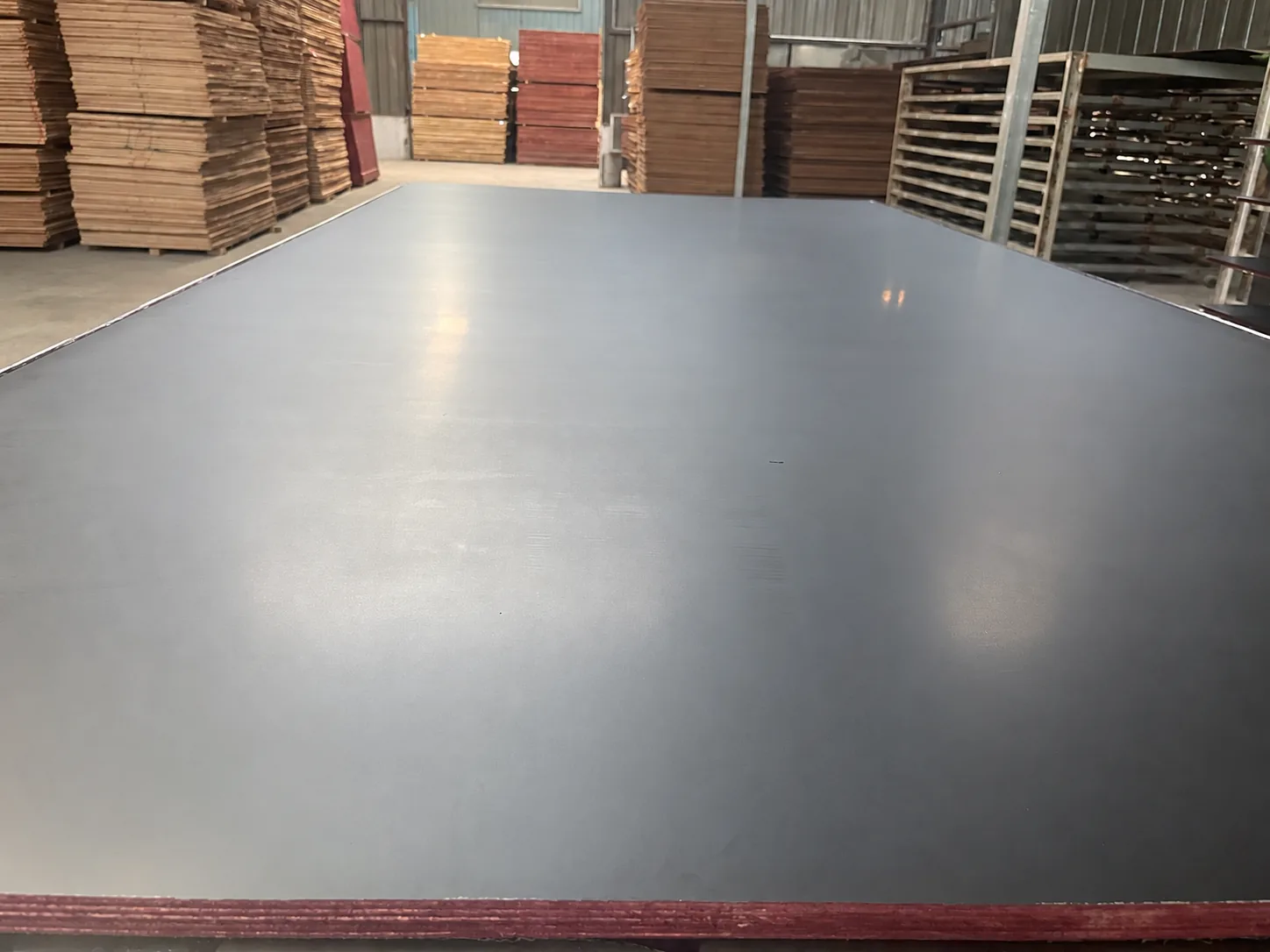
The SGS report for 18 mm film-paper-faced plywood records 700 abrasion revolutions under ISO 7784-2:1997, with 500 g on each wheel until the sub-layer is exposed. This measures wear in that laboratory procedure. It does not state 700 concrete pours.
Scroll horizontally to compare all columns.
| Record | What it tells you | Use it for |
|---|---|---|
| SGS abrasion result | 700 revolutions for the reported 18 mm film-paper face and named test. | Compare working-face data using the same method and construction. |
| SGS bonding result | Average 1.05 N/mm² under GB/T 17657-1999, clause 4.15. | Keep the bond result with the panel construction in your quotation. |
| Your formwork service record | Accepted pours, concrete finish, cleaning, edge condition and reason for retirement. | Estimate usable output and replacement cost on your site. |
Read the SGS 18 mm faced-plywood report · Compare Film Faced Plywood specifications and results
Compare the construction and site procedure together
Plan the trial around the required concrete finish and a formwork arrangement selected for the project. Identify more than the overlay colour: keep the film system and weight basis, working/reverse faces, full veneer/core construction, bond, dimensions and relevant panel data with the proposed item. Record each comparison panel and the conditions that affect its work.
Scroll horizontally to compare all columns.
| Record | Compare | Buying decision |
|---|---|---|
| Panel and working face | Panel/model/lot, cut and face ID; full overlay/core/veneer/bond/gauge, finished dimensions and edges/new cuts or tie holes. | Keep the offered material and sample reference with each item and actual working face. |
| Formwork and placement | Approved project layout, orientation, joints/holes/supports/fixings and loading basis; placement date/position and relevant mix, rate, temperature and vibration record. | Use the project’s responsible formwork review and comparable trial conditions. |
| Contact and maintenance | Selected compatible release product/application, surface preparation, stripping, cleaning, storage and actual local repair. | Retain the procedure and time/material cost for each use, including unsuccessful placements. |
| Result and area | Required concrete appearance/reference, inspection stage/conditions, actual contact area, accepted area and defect position/reviewer. | State whether the whole contact area or identified zones met the selected finish criteria. |
| Window and disposition | First-use date, observation cutoff, attempted/accepted placements and active/held/repaired/retired status, reason and replacement identity. | Compare the observed period and scope, then keep future planning assumptions separately identified. |
APA’s concrete-forming guidance links service life to maintenance, handling and concrete conditions, and treats panel/design selection separately. Use the actual panel and release/repair suppliers’ instructions with the project procedure. The quoted CUZI construction and its relevant files provide the material basis for that comparison.
Track each physical panel and face
A two-sided board can change working faces between placements. Retain the physical panel ID and record which face was in contact at each use. When a replacement arrives, give it its own material/part record and first-use date. Keep any recut or repair tied to the actual remaining piece and contact area.
Define what counts as a successful use
Agree the concrete finish and inspection stage with the project team. Record each panel’s position and the finish after stripping so you can judge whether it is ready for another pour.
APA’s concrete-forming guidance explains that maintenance, handling and concrete mix factors can affect reuse. Keep those conditions with the trial. Published performance for a named panel system should not be transferred to a different overlay or construction without relevant evidence.
Record the reason a panel leaves service
Use practical categories such as face damage, edge damage, unsuitable concrete finish or a design-related decision. Mark the affected position and retain photographs. Have the responsible site team decide whether repair or further use is appropriate for the application.
Compare panels in similar positions and site conditions, recording cleaning, release treatment and repairs. Use the project’s formwork design for structural requirements and the reuse log to track panel condition.
WORKED BUYING EXAMPLE
Example: interpret a four-cycle trial
Chosen four-placement record for an identified panel and stated finish requirement.
This planning record follows one panel through four placements and a documented repair, retaining the finish decision at each stage.
Scroll horizontally to compare all columns.
| Item or observation | Record or compare | Next decision |
|---|---|---|
| Cycles 1–2 | Concrete finish accepted; routine procedure recorded. | Retain both accepted results. |
| Cycle 3 | Finish accepted after an identified repair. | Record repair work as part of the service cost. |
| Cycle 4 | Required finish not achieved at a damaged area. | Record the result and the site decision about retirement or repair. |
What this means for the order
The record shows three accepted uses, including one repaired cycle. It gives a more useful comparison than reporting four pours without the finish result or the maintenance needed to achieve it.
Close the comparison at a stated observation date
At the chosen cutoff, identify every tracked panel as active, held, repaired or retired. A panel still working after four accepted placements has an observed count of four at that date; its eventual service duration is still being recorded. Keep retirement events and reasons visible alongside ongoing panels when comparing a trial group.
Scroll horizontally to compare all columns.
| Record | Compare | Buying decision |
|---|---|---|
| Attempted and accepted | Four placements may contain three accepted finishes and one failed result, as in the retained example. | Include all related costs and use the accepted quantity/area as the stated comparison output. |
| Full face and selected zones | Record actual contact area per placement, any openings/unused zones and the area accepted under the project criteria. | If the complete face is rejected, record that decision; any separately accepted zone needs its own agreed quantity basis. |
| Active and retired panels | Retain the cutoff date, current status, observation count and reason/date for any retirement or replacement. | Review like periods and constructions; carry any proposed future cycles as an explicit planning assumption. |
For a group trial, keep the individual panel records, count of panels started, observation periods, accepted areas and disposition at cutoff. Record the comparison procedure and its material/sample scope. These details let the buyer assess the variation between panels and plan a larger order with the site team.
COMPLETE COST / ACCEPTED AREA
Calculate the cost of the work that meets the finish requirement
Chosen comparison inputs for one 1220 × 2440 mm working face per panel: assume the entire rectangular face contacts concrete on every placement, giving 1.22 × 2.44 = 2.9768 m² per accepted full-face use. Both options have four attempted placements under the same selected procedure, finish criteria and scope at cutoff. The costs and counts below are chosen calculation inputs.
Scroll horizontally to compare all columns.
| Record | Compare | Buying decision |
|---|---|---|
| Option A: three accepted uses | USD 60 purchase + USD 24 care + USD 6 repair + USD 6 handling = USD 96; accepted area 3 × 2.9768 = 8.9304 m². | USD 96 ÷ 3 = USD 32.00 per accepted full-face use; USD 96 ÷ 8.9304 = USD 10.75 per accepted m². |
| Option B: four accepted uses | USD 78 purchase + USD 20 care + USD 0 repair + USD 6 handling = USD 104; accepted area 4 × 2.9768 = 11.9072 m². | USD 104 ÷ 4 = USD 26.00 per accepted full-face use; USD 104 ÷ 11.9072 = USD 8.73 per accepted m². |
Option B has a 30% higher purchase input and an 8.33% higher total cost in this window, but an 18.75% lower cost per accepted full-face use. Its four accepted placements describe the chosen observation window. The next-use and eventual retirement records remain part of the site comparison.
Use actual accepted contact area when panel sizes, openings or useable zones differ. Include cleaning/repair labour, materials, handling, recutting and replacement costs in the agreed cost scope, and record any separately agreed residual value. Align currency, purchase/delivery terms and which work is included before comparing offers.
Compare the film and core your site will use
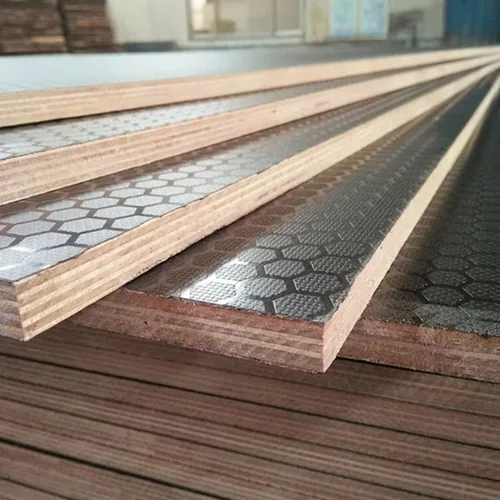
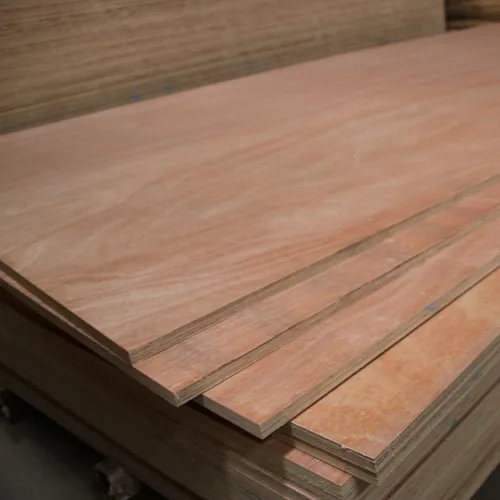
CUZI Film Plywood is available in 4–30 mm with poplar, birch, eucalyptus or mixed cores. Brown, black and red film options are available in 90–240 g/m², with single-sided or double-sided overlays. Choose the proposed construction and overlay with the required concrete finish and formwork design.
Keep a short cycle record
Use columns for panel ID, position, pour date, face and edge condition, cleaning or release treatment, repair time, concrete-finish decision and next-use decision. Keep the same panel ID until retirement; start a new line series when a replacement is fitted.
For a quote, send the required reuse grade, thickness and core, film colour and weight, panel layout and expected concrete finish. Request the construction you want to trial and keep its sample reference with the site record. Use accepted cycles plus repair and handling cost to compare the order options.
Turn the trial into an executable order
Send the required panel model/construction, film and facing options with the project layout, working process and concrete-finish reference. Request the relevant dimensional, directional-property and bond files for the offered material and intended use. Identify current sheet/part quantities, selected reserves, edge preparation, identification, pack scope and named FOB/CIF port.
For staged work, map the installed panel demand, handling/storage and replacements against the recorded service observations. Request comparable constructions as separate items with their own overlay/core/lot and sample references; keep any change in film, core or site process visible in the next trial and repeat order.
Keep these details with your inquiry
- Panel code, construction and installation position.
- Cycle date and agreed finish result.
- Cleaning, release treatment and repair record.
- Retirement decision, photographs and responsible reviewer.
Review the relevant product guide and prepare your inquiry files.
Questions buyers ask
What reuse grades does CUZI supply?
CUZI supplies three film faced plywood reuse grades: 10–15 uses, 15–25 uses and 30+ uses. Include the selected grade, film, core and bond in the order. Follow the release-agent, stripping, cleaning, edge-protection and storage instructions, and inspect the panel before each pour for the required support and concrete finish.
Does surface acceptance confirm structural capacity?
No. The formwork design and panel suitability need their own appropriate review. A finish record answers a different service question.
How is a panel still in service counted?
State its accepted uses and contact area at the observation cutoff, with its active status. Continue the same record; the future total is still being observed.
Should unsuccessful placements disappear from the cost record?
No. Unsuccessful placements remain part of the cost record. Retain their care, repair, handling and other agreed costs. Keep the failed result with the panel and position, then calculate cost against the quantity or area accepted under the chosen criteria.
How should I record use of the reverse face?
Keep the physical panel identity and record the actual working face at each placement. A new replacement panel needs its own item/lot and service record.
How are different working areas compared?
Add the usable contact area recorded for each pour under the agreed finish standard. Account for openings and repaired areas so the cost calculation reflects the concrete work completed.