On this page
THE SHORT ANSWER
You can choose MDF and a melamine finish together.
MDF describes a fibre-based board. In furniture purchasing, “melamine board” usually describes a decorative faced panel whose substrate can be MDF or particleboard. Melamine faced MDF combines both choices. Start with the finish your customer wants, then choose the board and processing route that suit the component.
- For a painted routed door, start with plain MDF and your complete finishing process.
- For a flat decorative furniture part, compare a melamine faced board with its reverse, edge band and hardware.
- When an offer says “melamine”, ask which substrate is included before comparing its price.
Keep the design choice and production choice connected. Your furniture range can use a routed painted front, a flat decorative interior and a different shelf construction. Give each part a finish, substrate and working detail so the quotation follows the job instead of a broad material label.
LOOK UNDER THE DECOR
The same visible finish can sit on different boards.
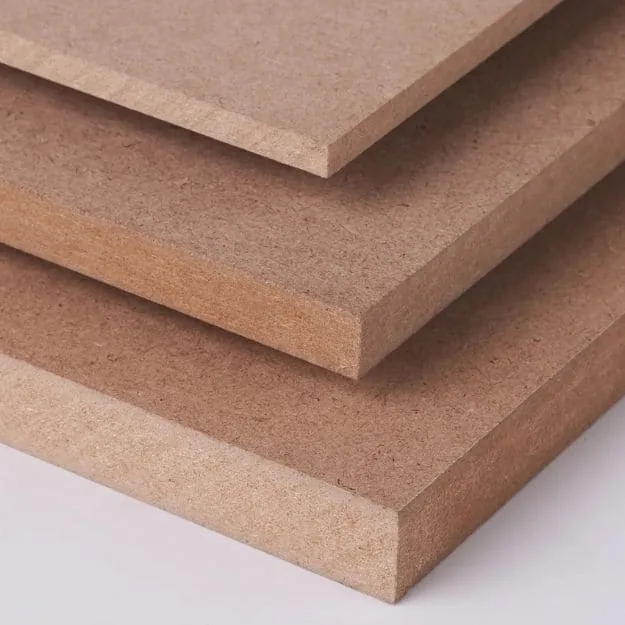
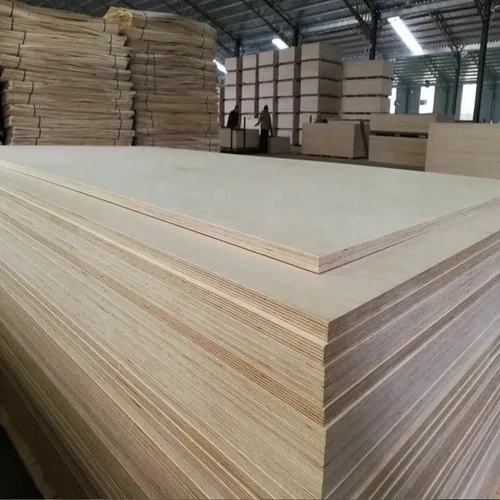
MDF uses wood fibres bonded into a panel. Particleboard uses wood particles. A melamine decorative layer can be applied to either substrate, so a woodgrain face alone gives an incomplete description of the board you are buying.
Conceptual cross-sections; layer thicknesses and colours are illustrative. Use a cut sample of the proposed board to identify the actual construction.
The Composite Panel Association’s MDF overview and particleboard overview describe the two substrates. Its TFL guide explains the resin-impregnated decorative paper fused to a substrate with heat and pressure. You may encounter “TFL” alongside “melamine faced” in a supplier’s description.
Write the substrate and the surface on the same line.
Scroll horizontally to compare all columns.
| Identity | Define | Check with the delivered item |
|---|---|---|
| Substrate | MDF or particleboard designation, grade, gauge and required methods. | Exposed core, proposed material data and component trial. |
| Decorative facing | Surface system, decor/physical master, texture and sheen. | Actual face/reverse and matching edge or adjoining surface. |
| Finished construction | Complete gauge, geometry and included fabrication/edge work. | Drawing issue, final dimensions, fittings and delivered stage. |
The term MFC identifies a melamine-faced chipboard route. Keep that particle substrate distinct from melamine-faced MDF even when the decor reference is similar. A cut edge helps show the construction; the offered designation and technical data complete its identity.
For TFL, HPL or PVC, name the actual facing system rather than assuming every laminate is interchangeable. Confirm the substrate, reverse and supplied preparation with each offer. Keep the appearance master and relevant surface data with that combination.
Compare the complete panel your workshop will use.
Scroll horizontally to compare all columns.
| Construction | Furniture buying route | Work and details to compare |
|---|---|---|
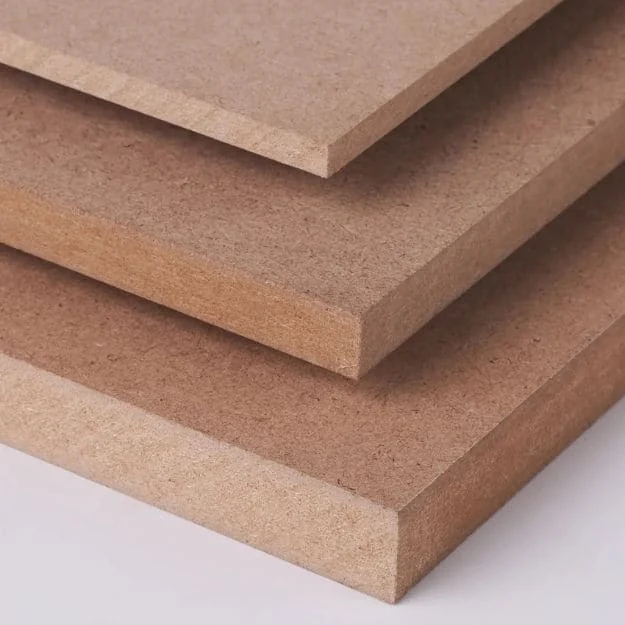
| Raw / plain MDF | Painted doors, routed profiles or a substrate for your chosen facing. | Board grade; machining; face and edge preparation; coating or facing; finished fit. |
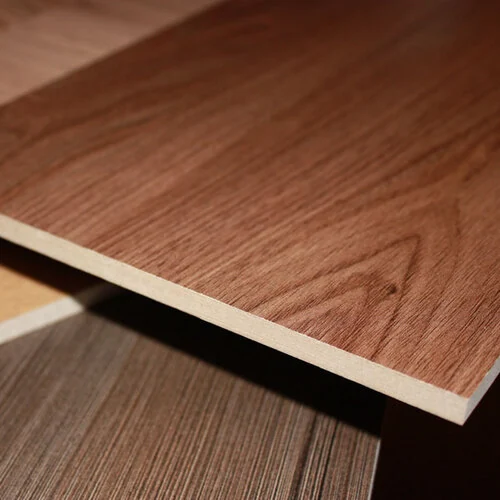
| Melamine faced MDF | Decorative flat panels for cabinets, wardrobes, shelving and interiors. | MDF substrate; front/reverse decor; cut quality; edge band; joints and hardware. |
| Melamine faced particleboard | A decorative particleboard construction to evaluate against the same component drawing. | Particleboard type; faces; finished dimensions; edging; fixing and assembly trial. |
These are purchasing routes, rather than a universal ranking. A flat wardrobe interior and a deep routed painted door create different jobs for the board and your production line. Compare the proposed constructions using the actual part, fitting and finish.
CUZI’s melamine MDF range lets you coordinate decor, reverse and edging. Use plain MDF for the raw-board route, or bring your board and facing brief to our particleboard project supply.
Follow the shape and finish your customer expects.
For a deep painted profile, price the board and remaining routing, preparation and coating as a complete route. For a flat decorative part, price the faced panel with cutting, banding, holes and fitting. When comparing an alternative, keep the same finished design and delivered stage in the request.
Include the reverse even when it is hidden in the assembled furniture. Record its supplied facing/treatment, complete thickness and the panel’s flatness requirement with measurement conditions. A front decor code alone leaves that construction incomplete.
Choose the route for each visible component
Keep the selected design, fitting and service conditions beside each material proposal. A furniture range can combine raw and faced boards; each part still needs its own construction and completed-detail reference.
Scroll horizontally to compare all columns.
| Component or input | Compare | Select with |
|---|---|---|
| Routed painted front | Raw MDF grade and deepest profile, remaining section, prepared edge, reverse, coating and actual fitting. | A finished routed corner and hinge detail with the selected paint process and fit. |
| Flat decorative cabinet side | Melamine-faced MDF or particleboard proposal, actual core designation, front/reverse, grain, edged dimensions and connector. | A cut and edged corner with the proposed fitting and retained decor reference. |
| Shelf or long horizontal part | Offered board data with actual clear span, support layout, load, direction, edge and intended conditions. | The project checking basis and component trial; identify changed support or gauge with an alternative. |
| Humid interior location | Substrate grade and required moisture data, reverse, exposed cuts/joints and cleaning or splash conditions. | The complete proposed construction and detailing for the actual location. |
| Coordinated replacement part | Retained substrate, decor/texture/sheen, edge, direction, dimensions and drawing/version. | The completed reference beside the adjoining part, with proposed changes visible. |
THE DETAILS THAT REACH YOUR CUSTOMER
Match thickness, cut edge and hardware to the finished part.
- Finished thickness
- Specify the delivered panel thickness and tolerance. Include the facing and reverse when checking hinge cups, connectors, grooves and adjoining parts.
- Visible edges
- Mark the exposed edges on the drawing. For a faced part, pair the decor with the edge-band material, shade, texture and selected application process.
- Routed details
- A routed recess or profile changes the visible surface. Define whether the exposed substrate will be painted, wrapped, edged or finished by another agreed route.
- Fittings and shelves
- Trial the actual hinge, connector, screw or support. For shelving, include the span, load and support arrangement with the component drawing.
Cut and edge a representative corner, then drill the fitting detail your workshop uses. Check the finished dimensions, face chipping, edge joint and assembled appearance. A flat decor chip helps choose a colour; a complete corner or fitting sample helps choose the production construction.
For paint-finished MDF, the European Panel Federation’s edge-finishing guidance discusses cutting, preparation and compatible sealing/coating. Use the proposed board and finish suppliers’ instructions for your trial.
Continue with our hardware sample trial, decor and edge-band matching guide or routed MDF door finishing trial for the detail you need to test.
Distinguish the cut blank from the edged component.
For a geometry calculation, request a 600 × 400 mm completed rectangular part with the same total edge build on all four sides. The table assumes 1 or 2 mm build per edge, including the amount your drawing defines as added to the blank. These are dimension inputs, not a band or processing specification.
Scroll horizontally to compare all columns.
| Build at each edge | Cut-blank width | Cut-blank length | Completed part |
|---|---|---|---|
| 1 mm | 598 mm | 398 mm | 600 × 400 mm |
| 2 mm | 596 mm | 396 mm | 600 × 400 mm |
Confirm actual band, adhesive, trimming and dimensional limits with the intended edging process. Keep hole locations relative to their stated datum: a fixing measured from the finished banded edge may use a different coordinate from one measured on the blank. Retain both stages where the machining sequence needs them.
For a routed decorative face, identify exactly where the cut exposes substrate and which finish is added there. Trial the recess, corner and edge alongside the broad face so the finished appearance and supplied work remain clear.
Choose a coordinated finish for the whole furniture range.
Start with the front your customer sees, then consider the cabinet interior, reverse and visible edge. A black, white or woodgrain name is a useful starting point; the physical reference defines the shade, texture and sheen you intend to buy.
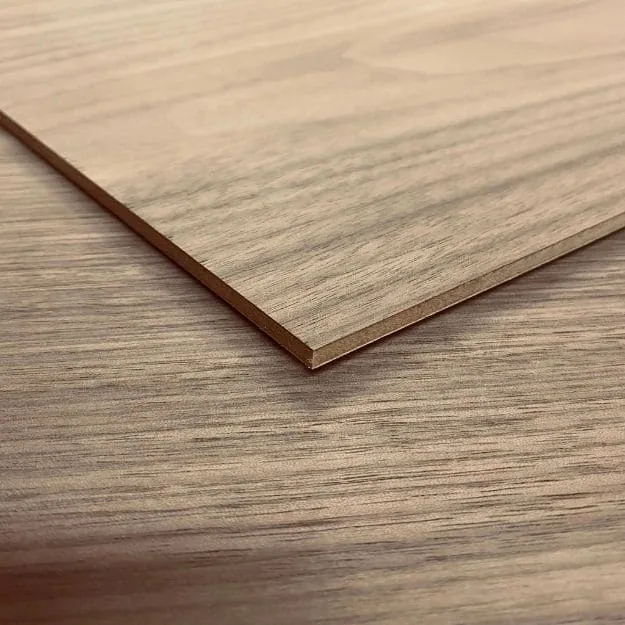
For a woodgrain wardrobe, show the grain direction and door sequence on the elevation. Inspect the faced board beside its proposed edge band and neighbouring parts under the project lighting. Keep the selected decor reference for repeat purchases and later additions.
Single-sided and double-sided arrangements should identify both faces. Describe the reverse treatment, finished thickness and flatness requirement for the part. If a premium front uses another surface system, compare HPL, melamine or PVC faced MDF with the complete construction in view.
HPL and TFL use different constructions. Name the required facing in the quotation; choose a physical finish sample before coordinating different surface systems within one furniture range.
Coordinate the corner before fixing the decor item.
Pair the proposed board and band under the project lighting, checking shade, grain, texture and sheen at their junction. Use the completed corner and adjoining furniture part where those surfaces meet. Record front, reverse, band and direction references separately.
If the range combines HPL, TFL and another facing, retain a physical match for each system. The same general woodgrain name can cover different prints or finishes. Keep the selected references and replacement-part sequence with the repeat-order code.
Specify the board grade behind the surface.
A decorative face is only one part of the furniture component. For humid interiors, define the location, cleaning or splash exposure, substrate grade, cut edges, reverse and joints together. Our standard versus MR MDF guide helps you choose the moisture-related board route.
Request substrate information and the decorative-surface data relevant to the offered panel. Surface wear or stain results, where required, should identify the proposed finish and test method. Emission information should identify the board or finished construction, method and destination requirement.
Connect each result to its tested construction.
For surface wear, scratch or stain requirements, identify the method, conditions, facing and result. For emission or moisture requirements, request the product scope, substrate grade and relevant report. A surface result does not identify the core’s moisture performance.
Keep the offered finished board, dimensions and reverse with the data request. Add the intended machining, cleaning and service conditions. Where the furniture component needs a specified fire or structural result, retain the complete assembly and required method with the responsible project brief.
FROM SHEET PRICE TO FURNITURE COST
Compare what it takes to deliver an accepted component.
A raw sheet quotation and a decorative faced-board quotation include different work. Ask for offers against the same component list and delivery terms, then add the processes your factory will perform.
Scroll horizontally to compare all columns.
| Cost line | Raw MDF route | Decorative faced-board route |
|---|---|---|
| Board and yield | Selected grade, usable dimensions, quantities and cutting layout. | Selected substrate, decor, front/reverse, dimensions and grain layout. |
| Workshop work | Cutting, routing, preparation, paint or facing, curing and handling. | Cutting, edging, drilling, joints and any further finished-part work. |
| Delivered output | Accepted parts, rework, packing, freight and quoted FOB/CIF scope. | The same output and delivery scope, including decor/edge matching and pack requirements. |
For your internal comparison, divide the agreed board, processing and delivery costs by the number of accepted parts. Include cutting losses and rework consistently. That shows where a ready-faced board fits your operation and where workshop finishing gives you the design control you need.
CUZI quotations can use FOB or CIF. Specify the shipment or destination port, quantities, decor and delivered scope; shipping and local charges belong in the same purchasing calculation. Use the mixed-panel item schedule to combine different constructions without losing their individual costs.
Keep accepted output and remaining work visible.
Compare the same currency, price unit and delivery point, then record the operations still needed at the workshop. Include edge preparation, machining, finishing, handling and rework at the same output stage. A faced-sheet offer and an installation-ready part offer cover different work.
For repeat production, keep the construction and process that gave the selected result. If a facing, core, band or coating changes, review the resulting fit and appearance before applying the previous processing-cost record.
Compare the cost at the finished part your customer accepts
For a flat part whose appearance and use can be met by either route, compare raw MDF plus its actual workshop finish against the selected faced board plus remaining cutting and edging. A routed painted design and an unchanged flat woodgrain panel should have separate component requirements.
Scroll horizontally to compare all columns.
| Component or input | Compare | Select with |
|---|---|---|
| Raw plus workshop finish | Chosen complete batch cost 3,600 currency units; 112 accepted finished parts → 32.14 per accepted part. | Keep material, preparation, coating, labour, handling/rework, packing and freight within the declared cost boundary. |
| Faced plus remaining work | Chosen complete batch cost 3,900 units; 120 accepted finished parts → 32.50 per accepted part. | Retain the actual core/decor/reverse, cutting, banding, fitting and matching result within the same boundary. |
| Raw-route output changes | At 108 accepted parts: 3,600 ÷ 108 = 33.33. With the faced route at 32.50, the mathematical crossover is 110.77 accepted parts. | At least 111 whole accepted parts put this chosen raw-route subtotal below 32.50, if the other inputs stay fixed. |
These chosen costs demonstrate the calculation; they are not prices or yield forecasts. Request actual offers and workshop results for the selected component. Record the observation period, rejected/reworked output and included costs before comparing alternatives. Include the named FOB/CIF port and delivery stage consistently.
Build the board mix your furniture business needs.
Scroll horizontally to compare all columns.
| Route | Supply starting point | Include in the request |
|---|---|---|
| Plain MDF | Standard board in 2.5–35 mm, with E0/E1/E2 options. MR and fire-retardant MDF routes are available in 9–25 mm with E0/E1 options. | Grade, dimensions, machining or finish process, destination and required documents. |
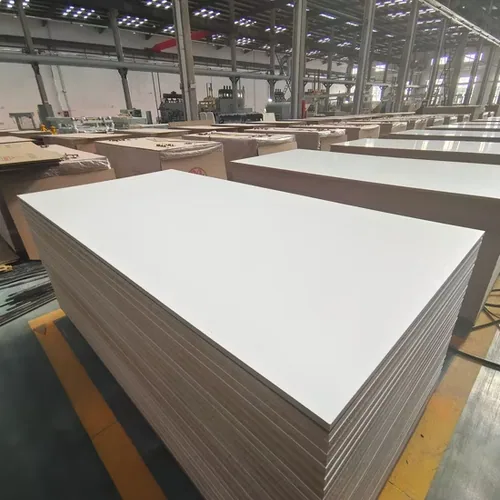
| Melamine faced MDF | Black, white or woodgrain decor; front/reverse arrangement and finished thickness quoted for the selected construction. | Physical decor/edge reference, texture, sheen, MDF grade and part layout. |
| Laminated MDF | HPL, melamine or PVC on one or both sides, with the facing and reverse identified. | Required surface system, finish reference, finished dimensions and delivered scope. |
| Particleboard project supply | Board designation, facing and component requirements quoted around the job. | Required construction, dimensions, quantities, hardware and finish brief. |
Regular MDF formats are 1220 × 2440 and 2100 × 2800 mm. Formats 1220 × 3050, 1830 × 3660 and 1220 × 3660 mm are on request; confirm the selected decorative facing’s available format with the item quotation.
Board orders start at one container, with mixed loads available. Regular board production guidance is 10–15 days, with shipping additional. Decor selection and further component work follow the quoted schedule for your order.
A FURNITURE RANGE CAN USE MORE THAN ONE ROUTE
A painted front with a woodgrain wardrobe interior.
Consider a wardrobe range with routed painted fronts and flat woodgrain interiors. Compare a plain MDF front through the intended machining and coating process, alongside a melamine faced construction for the interior and shelves.
- The front sample includes the demanding routed profile, finished edge, reverse and hinge fitting.
- The interior sample pairs the proposed woodgrain face with its edge band, corner and actual connectors.
- The shelf brief adds the span, supports and loading requirement for the assembly.
Give the two constructions separate item codes and quantities in the container schedule. You can buy a coordinated range while keeping each part’s grade, finished thickness and processing clear for the workshop.
Put the raw and faced components on separate quantity lines.
For a planning list, take 120 painted fronts at 700 × 400 mm and 240 decorative shelves at 600 × 400 mm. These are net rectangular part inputs before cutting waste, reserve, profiles or holes; they are not a board-stock list.
Scroll horizontally to compare all columns.
| Item | Count | Net panel area | Both broad faces |
|---|---|---|---|
| Painted front, 700 × 400 mm | 120 | 33.60 m² | 67.20 m² |
| Decorative shelf, 600 × 400 mm | 240 | 57.60 m² | 115.20 m² |
The net board area totals 91.20 m². Broad-face finish area and purchased sheet area are different quantities. Use the actual cut layout for sheet purchasing, then list coated faces, banded edges, fabrication and reserve on each component line.
This keeps the front’s preparation and paint work separate from the shelf’s decor and edge work while combining purchasing volume. Mark finished dimensions, grade, reverse and grain arrows with the drawing and item code.
Turn the component list into coating and edging quantities
Use the retained 120-front and 240-shelf schedule to separate board area from finishing work. The chosen front is 700 × 400 mm; the chosen shelf is 600 × 400 mm. These are rectangular geometry inputs before profiles, holes, waste, reserves or actual application losses.
Scroll horizontally to compare all columns.
| Component or input | Compare | Select with |
|---|---|---|
| 120 painted fronts | 33.60 m² net board; 67.20 m² across both broad faces; rectangular edge perimeter 120 × 2 × (0.7 + 0.4) = 264 m. | Identify coated faces, routed/edge profile and actual coating/process before purchasing finish material. |
| 240 decorative shelves | 57.60 m² net board; all-four-edge perimeter 240 × 2 × (0.6 + 0.4) = 480 m. | Mark the actual visible edges and cutting/edging sequence on the drawing. |
| Two 600 mm edges per shelf | 240 × 2 × 0.6 = 288 m of selected finished edge; the other edges are described separately. | Add actual start/end allowance, waste and reserves for the chosen band/process; quote supplied edging separately. |
The mixed schedule still contains 91.20 m² of net board area. The 264 m painted perimeter and 288 m selected banded edge describe different processes and materials. Use the actual oriented cutting layout to buy sheets, the coating instructions to price finishing, and the selected band/application process to price edging.
BRING THE FINISH YOU WANT TO BUY
Start with a sample of your visible detail.
Send a decor reference or finish photo with the component drawing, thickness and intended use. For a faced panel, include the reverse and visible-edge treatment. For raw MDF, describe the profile and coating or facing your workshop will add.
Samples are free; buyers pay courier freight, with a later-order freight credit available by agreement. Try the proposed board through the cutting, edging or finishing detail before finalising the construction.
Exploring a solid colour? Request a black or white melamine MDF sample.
Choose a working detail as well as a colour.
Use a decor chip to narrow colour, texture and sheen, then request the offered full-thickness construction with an edge or fitting detail. For a painted part, include the actual profile and preparation/finish route. Retain the selected material and completed reference together for the order.
Take the selected corner, construction and offer into the order
Resolve appearance and fit with the actual proposed material, then retain the selected combination as a reproducible item. List any remaining decision against a named part rather than allowing a broad decor name to cover several constructions.
Scroll horizontally to compare all columns.
| Component or input | Compare | Select with |
|---|---|---|
| Material and destination | Actual producer/model, MDF or particleboard grade, facing/reverse, full finished gauge and required methods or product documents. | The same offered construction identified in the sample, quote and order. |
| Completed physical reference | Decor, texture/sheen, edge/paint, grain and finished corner/profile with the actual hardware and process. | Retained component reference and the features the workshop has selected. |
| Quantity and supplied work | Item/drawing issue, sheet or cut-part dimensions, actual cut allocation, finish/edge quantities, reserves and included operations. | Separate raw and faced items with their own pack quantities and remaining buyer work. |
| Order and receiving scope | Named FOB/CIF port, required date, lot/pack labels and relevant dimensional/appearance/material checks. | A quotation and receiving plan that follow the selected item and actual supplied stage. |
MDF versus melamine: furniture buying questions.
What is the difference between MDF and melamine board?
MDF identifies the fibre-based substrate. Melamine board describes a decorative faced panel that can use an MDF or particleboard substrate. A melamine faced MDF board includes both the MDF core and decorative finish.
Does every melamine board have an MDF core?
No. Ask for the substrate designation and inspect a cut sample. Melamine faced particleboard is also common in furniture specifications and may be described as MFC or melamine faced chipboard.
Should I choose raw MDF or melamine faced MDF for cabinets?
Start with the part and finish. Compare raw MDF through the intended painted or faced process; compare a melamine MDF part with the chosen decor, reverse, edge and fittings. Trial both routes against the same component requirements when selecting an alternative.
Can melamine faced MDF be routed?
Specify the actual routed feature and the finish required where the cut exposes the substrate. Include the machining, visible edges and any further paint, wrap or edge treatment in the trial and delivered scope.
Which route is cheaper?
Compare the same accepted furniture part. Include sheet yield, routing or drilling, face/edge finishing, edging, handling, rework, packing and FOB/CIF scope. A raw-sheet price and a faced-panel price cover different work.
Does a melamine face make the whole board waterproof?
No. Specify the substrate for the intended moisture exposure and include the reverse, cut edges, joints and fitting details. Request data for the proposed board and finished construction.
Can I mix raw and decorative MDF in one order?
Yes. CUZI offers mixed loads with a one-container minimum. Separate grades, sizes, thicknesses, decors and facing arrangements into their own items, and include the destination and required schedule.
What should I send with a melamine MDF sample request?
Send the decor or physical reference, texture and sheen, MDF grade, finished thickness and component use. Include the reverse, matching edge, drawing and trial detail you want to evaluate.
Can the same furniture order combine painted and melamine components?
Yes. Give each component its own substrate/finish, completed dimensions, drawing, quantities and supplied-work scope. Retain the coordinated physical references while separating the raw-board finishing and faced-board edging processes.
How much edge band should a shelf schedule include?
Mark the selected edges and sum their finished lengths by item count. Add the allowance, waste and reserve required by the actual banding process. All-four-edge perimeter and selected visible-edge length can be different.
How do I compare a raw board with a finished decorative board?
Use the same completed-part requirements and delivery stage. Include remaining workshop work and the actual accepted output, then divide the complete comparable cost by accepted parts.
What identifies the selected melamine board for a repeat order?
Retain the actual substrate model, facing and reverse, complete thickness, physical decor/edge reference, grain direction, drawing and supplied operations. Link them to the selected sample and item code.