On this page
YOUR FURNITURE FINISH STARTS WITH THE BOARD
Read the MDF process through the part you want to make.
MDF manufacturing prepares wood fibres, combines them with a bonding system, forms a mat and presses it into a board, followed by conditioning, sanding and sizing. For purchasing, connect those stages with the properties your workshop needs: an appropriate board grade, reliable fit, a workable routed edge and a surface ready for your finish.
A painted door front, a bonded decorative face and a slim cabinet back ask different things of MDF. Bring the drawing, coating or facing reference and intended use into the material selection. Then request the proposed board's specification, relevant test data and a sample for the detail that matters.
A manufacturing overview is most useful when it helps you specify the sheet that enters your workshop. Name the substrate grade, identify the surface and dimensions you will receive, and mark the feature that must work after machining or finishing. Follow those requirements into the product data and delivery record.
From prepared fibres to a finished sheet.
The European Panel Federation's MDF manufacturing overview describes the dry-process route: wood is chipped, softened and refined into fibres; binder is added, fibres are dried and a mat is formed for hot pressing. Finishing brings the pressed board to its delivered surface and dimensions.
These process schematics help organise the buying questions. Ask for the production and finishing route for your selected grade, thickness and facing, then connect the delivered sheet with its specification and records.
The Composite Panel Association's MDF overview describes fibres bonded under heat and pressure, with properties and dimensions selected around the end product. Start with that end product when comparing a board for painting, machining or decorative surfacing.
Follow the changes from wood to sheet.
- Prepare the furnish. Wood is reduced to chips, then softened and refined into fibres.
- Prepare the bonded fibres. The selected binder and grade formulation accompany the fibres through drying.
- Form the mat. The fibre mat is prepared for consolidation into the selected board thickness.
- Hot press. Heat and pressure consolidate the mat into a bonded panel.
- Prepare the delivered board. Conditioning, sanding and sizing lead to the specified surface, dimensions and packing.
The sequence is an industry process outline. For a purchasing decision, use the selected producer/model and finishing route to identify the actual offered sheet. Keep the material and relevant output data together when discussing a standard, special-grade or faced board.
Turn a process description into quality questions.
Scroll horizontally to compare all columns.
| Stage to discuss | Useful buying question | Record for the item |
|---|---|---|
| Fibre preparation | What material description and board grade are proposed for the component? | Manufacturer/product identity, grade and the drawing or intended use. |
| Bonding and grade formulation | Which mechanical, moisture/fire and emission requirements apply to this board? | Required designation, methods, class where specified and relevant reports. |
| Mat formation and pressing | What density, variation, internal bond and bending data cover the selected board? | Values or ranges, thickness, method and measurement/conditioning basis. |
| Conditioning and storage | In what condition will the sheet be measured and evaluated against the drawing? | Moisture/conditioning, measured dimensions, flatness and agreed limits. |
| Sanding and sizing | What surface preparation, finished thickness and cutting scope are included? | Face/edge condition, tolerances, finished dimensions and sample reference. |
| Inspection and packing | How will the specified items and recorded checks connect to the delivery? | SKU/lot, sheet and bundle references, inspection summary and packing list. |
Give each question a use. A deep routed recess may need a different working trial from a flat veneering substrate. Mark the critical interface and visible surface on the drawing, then discuss the associated result and acceptance method with the supplier.
Ask for outcome data alongside the process description. Keep the relevant producer, board model and finishing route with those records so the quotation, sample and delivery describe the same material.
Separate sheet manufacture from later fabrication.
Scroll horizontally to compare all columns.
| Purchased stage | Identify in the item | Your next operation |
|---|---|---|
| Sanded raw sheet | Board grade/model, gauge, format and face/edge condition. | Cutting, routing, coating or bonded surfacing. |
| Ready-faced sheet | MDF substrate, front/reverse, bonding and completed thickness. | Cutting, edging, holes or assembly under the selected finish. |
| Cut or profiled component | Drawing revision, datum, dimensions, machining and delivered finish. | Remaining fitting, coating, bonding or final assembly. |
Assign the relevant data and inspection field to that stage. A raw-board thickness record describes the substrate, while a faced component also needs its finished dimension. A routed part needs the drawing and machining reference alongside the material used.
Start supplier comparison with the workshop feature that drives rejection
Use the component drawing and actual production route to choose the relevant board information. Ask each proposal to address the same finished feature, then use the local trial to connect its material data with your process.
Scroll horizontally to compare all columns.
| Component or input | Compare | Select with |
|---|---|---|
| Routed painted edge | Proposed model/grade, actual routed depth and remaining section; cut quality, preparation and compatible complete coating. | The finished demanding profile/corner with recorded tool, preparation and cure conditions. |
| Repeated fitting and assembly | Actual raw and finished gauge range, datum, hole/pocket geometry, selected fitting and component conditions. | Measurements at the relevant stages plus the actual fitted part and required fit limits. |
| Bonded decorative facing | Substrate surface/conditioning, facing/reverse/adhesive and material/process instructions. | The finished joined face/edge with the actual build-up, dimensional and appearance result. |
| Shelf or loaded component | Relevant board property/method data with clear span, supports, direction, load and checking basis. | The actual project assessment and component arrangement for the offered model. |
| Moisture, fire or destination requirement | Selected board designation, relevant model/method/report and complete finish/assembly/use scope. | The required product/system files with the intended duty; keep the grade and drawing identified. |
Choose the grade before choosing the finish.
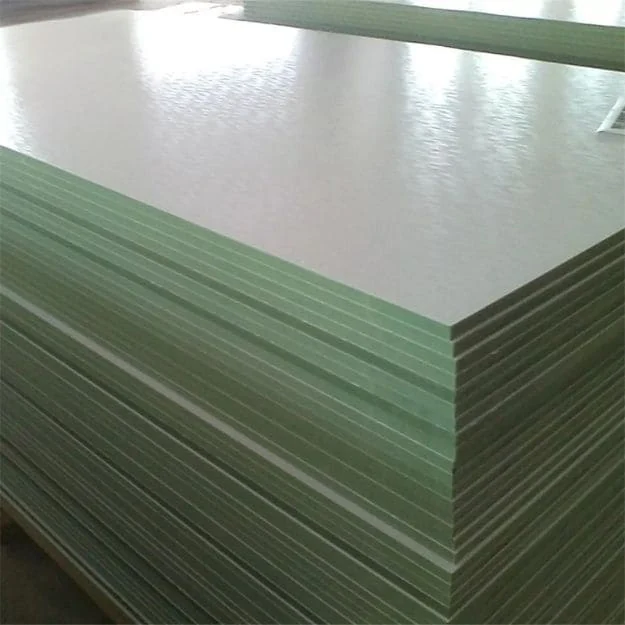
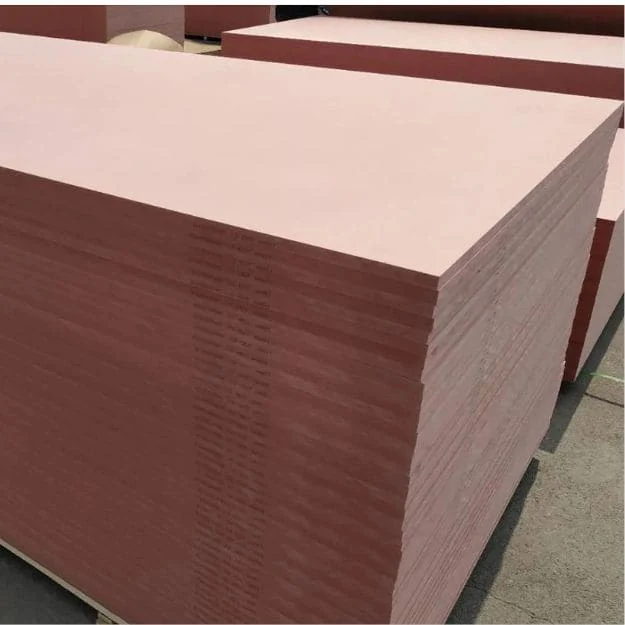
Scroll horizontally to compare all columns.
| Board route | Supply options | Include for the proposal |
|---|---|---|
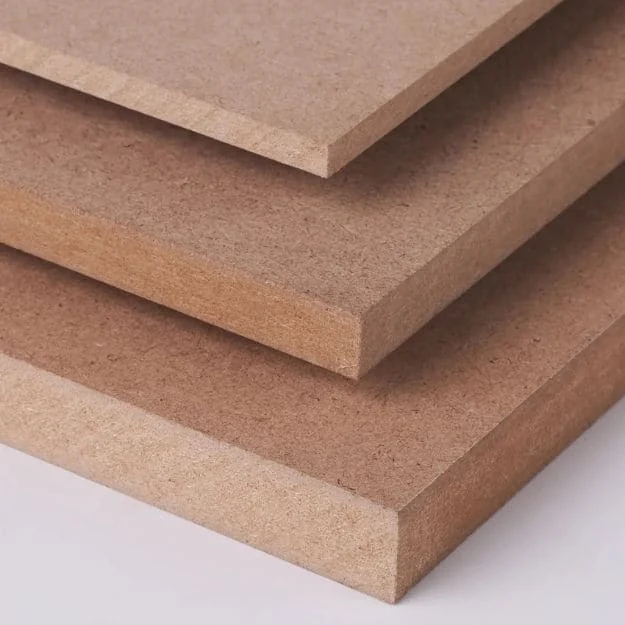
| Plain / standard MDF | 2.5–35 mm; E0, E1 or E2. | Dry-interior use, thickness/fit, machining, facing or coating and destination documents. |
| Moisture-resistant MDF | 9–25 mm; E0 or E1. | Service conditions, moisture-performance designation, test requirements and complete finish. |
| Fire-retardant MDF | 9–25 mm; E0 or E1. European, Chinese or requested test requirements. | Applicable fire standard/class, thickness, finish and installation represented by the report. |
Regular MDF formats are 1220 × 2440 mm and 2100 × 2800 mm. Requested formats include 1220 × 3050 mm, 1830 × 3660 mm and 1220 × 3660 mm. Put the board type beside each thickness and format, with quantity and the tolerances needed by the finished part.
Explore Plain MDF, Moisture-resistant MDF and Fire-retardant MDF. For a ready-faced component, specify the MDF substrate with its facing, reverse and edge using the HPL, melamine and PVC comparison.
Send the emission test method and destination with E0/E1/E2 requirements. For moisture or fire performance, name the required product designation, method and class where your specification calls for one. Review the corresponding construction and finish in the proposed data.
Keep the grade and colour in their proper roles.
The photographs identify the supplied board routes and show their faces and edges. Specify moisture or fire performance through the offered board designation and applicable documents. Keep emission choice, tested construction and destination requirements beside the item; colour and appearance do not establish a performance class.
For a project with more than one MDF grade, list the quantity, gauge, format and processing separately for each item. Mark any parts that will share a finish so the proposed surfaces can be compared under the same preparation and coating process.
Read density through the depth of your machined part.
The EPF manufacturing guidance discusses average, face and core density separately. For a deep profile or recess, request the proposed board's density information through its thickness when it is relevant to the design.
Connect that information with a working trial. Show the depth and position of the routed feature, material left behind it and the intended coating or bonding operation. Keep tool condition, cutting settings and preparation steps with the observations when comparing two boards.
Include internal bond, bending or fixing data where the component requires it, with the applicable test method and conditions. A fitting trial should use the actual screw, insert or connector and its hole preparation. For a loaded component, provide the support and design requirement with the drawing.
Use the MDF density and thickness guide for dimensional and handling-weight planning. The MDF machining route connects the board selection with the finished geometry, datum, tolerance and process scope.
Show where the new working surface sits.
A routed recess exposes material below the original face. Put its depth and the material remaining behind it on the section drawing. Include the final coating, facing or adhesive at that location when asking for a working trial.
Use average density for a stated mass calculation and the relevant property or density-profile information for the material selection. Record the preparation and finished appearance at the actual machining depth. Keep tool, operation and geometry changes visible if the trial compares two proposed boards.
Check the remaining section at the actual machined feature
For a chosen nominal 18 mm component, take a measured-thickness input of 17.8–18.2 mm. A chosen profile-depth range is 7.9–8.1 mm and a separate chosen pocket-depth range is 11.9–12.1 mm, each measured from the stated surface. These inputs show how ranges combine; they are not offered tolerances, fitting instructions or a load assessment.
Scroll horizontally to compare all columns.
| Component or input | Compare | Select with |
|---|---|---|
| Routed profile | Minimum remainder 17.8 − 8.1 = 9.7 mm; maximum 18.2 − 7.9 = 10.3 mm. | Mark the actual deepest profile, surface datum and relevant board/process/finish observations. |
| Separate fitting pocket | Minimum remainder 17.8 − 12.1 = 5.7 mm; maximum 18.2 − 11.9 = 6.3 mm. | Use actual hardware geometry/instructions and the component requirement to choose the permitted pocket and fit. |
| Features sharing a location | If a profile and pocket overlap, the drawing must define their surfaces and remaining local geometry. | Review the actual combined section and assembly; the separate calculations do not describe an overlapping feature. |
Measure the proposed board and the machined feature at the defined stage. Keep raw thickness, removed material and the final face/reverse treatment identifiable. A density value alone does not resolve a thin profile, pocket, edge finish or loaded assembly. Continue with the hardware trial and routed finishing trial for the local detail.
Make the trial reproduce the finish you want to sell.
For a painted front, prepare the face and routed edge with your intended sanding, sealer and coating sequence. Record the resulting appearance, preparation time and any repair work. Keep the coating reference and viewing conditions with the accepted piece.
For a bonded facing, use the proposed MDF surface, facing and adhesive/process on the actual geometry. Include the reverse and edge treatment with a finished sample. Discuss surface condition and delivered thickness before fixing the processing allowance.
For a slot, joint or hinge pocket, measure the board where the interface will be made and compare the actual mating part. Put the required finished-thickness range, geometry, flatness or fit result on the drawing and use an agreed measurement procedure.
Compare the cost of accepted parts across the same process: sheet purchase, machining, preparation, finish and rework. A useful trial gives purchasing a material decision and gives production a repeatable reference.
The routed MDF door trial guide helps organise the profile and coating comparison. Keep the selected board model and drawing revision on that trial record.
Measure before and after the operation that changes the part.
Record the delivered substrate dimension first, then the completed dimension after facing, edging or coating where it affects fit. Identify the datum face and measuring locations on the drawing. A fitting at an edge or recess needs the local completed geometry, with its intended mating part or connector.
For a painted profile, keep the sealer and coating sequence with the observed surface and preparation time. For a bonded facing, retain the substrate surface, facing, adhesive/process and reverse arrangement. The material choice should follow the finish your workshop can reproduce at the required part size.
Follow the same part from raw board to completed fit
Retain the offered model and lot with the working sample. Record the selected tools, materials and component conditions so the trial can be repeated with the proposed production supply.
Scroll horizontally to compare all columns.
| Component or input | Compare | Select with |
|---|---|---|
| Raw board | Producer/model/grade, lot/sample identity, thickness and dimension positions, conditioning and face/edge observations. | The relevant technical file and actual starting dimensions. |
| Machined part | Drawing issue, surface/datum, cutting/routing/pocket/edge detail, tool/process and measured remaining geometry. | The feature that will receive finish, facing or hardware. |
| Completed finish | Preparation, primer/coating or facing/adhesive, reverse, cure and actual measured total/appearance. | The completed section/corner and relevant supplied or remaining workshop work. |
| Fitted component | Actual fitting/supports, installation detail, finished dimensions, local fit and project acceptance checks. | Retained selected part and the observations required before repetitive production. |
Request records that follow the proposed board.
Scroll horizontally to compare all columns.
| Record | Details to match | Buying use |
|---|---|---|
| Product specification | Producer/model, grade, thickness, formats, finish and declared values/ranges. | Compare the item being quoted with the component requirement. |
| Physical/mechanical data | Density, dimensions, moisture, bending/internal bond and other required properties, with methods and conditions. | Select the board and relevant working trial. |
| Special-grade / emission documents | Applicable standard/edition, class, tested construction and destination requirement. | Review the required product evidence for the intended market and use. |
| Item/lot inspection summary | Lot reference, checked characteristics, sampling/measurement method, results and agreed limits. | Connect recorded quality checks with the order and delivery. |
| Working sample record | Board identity, part/drawing revision, machining, fittings, finish and selected reference. | Retain the finished result used for the buying decision. |
| Packing and shipment list | SKU/lot, sheet count, bundle identification, dimensions, weights and included documents. | Reconcile items and protect the receiving/processing sequence. |
State which records you need to review with the quotation and which should accompany delivery. Discuss inspection locations and sampling around the characteristics that affect your component, then retain the agreed checks on the item schedule.
For US/EU emission documents, use the destination document guide. It connects the proposed panel with the required method, product identity and shipment information.
Make the inspection field readable.
For each characteristic, identify the item/lot, measured feature, method, conditions, inspection locations and agreed criterion. Keep individual readings and the relevant summary under their own fields where they are needed. State whether the result describes the offered grade, an identified tested panel or the current supplied lot.
Discuss which records accompany the quotation and which are needed before dispatch. Link them with the board model, dimensions, selected sample and order reference so the buyer and receiving team can match the supplied construction to its file.
Read the available RAW MDF test data with its methods.
The RAW MDF test report identifies interior MDF for dry conditions at nominal 1220 × 2440 × 12 mm, with EN 622-1:2003 / EN 622-5:2009 references. It records measured dimensions of 2441 × 1221 × 12.08 mm and the properties below.
Scroll horizontally to compare all columns.
| Property | Recorded result | Method |
|---|---|---|
| Density | 755 kg/m³ | EN 323 |
| Bending strength / modulus | 29.8 N/mm² MOR / 3180 N/mm² MOE | EN 310 |
| Internal bond | 0.82 N/mm² | EN 319 |
| 24-hour thickness swelling | 8.6% | EN 317 |
| Moisture content | 6.7% | EN 322 |
| Formaldehyde emission | 0.038 mg/m³ | EN 717-1 |
Keep the reported panel identity, conditions and methods with these results. In your inquiry, select the board grade, dimensions, finish and destination requirements for the item you want to buy, then discuss the corresponding product data and documents.
Review Plain MDF documentation · Request the proposed board's data
Use the reported dimensions in the calculation.
The identified report supplies both nominal and measured dimensions. Its density result of 755 kg/m³ can be used to show how the dimensional basis affects calculated bare-board mass. The figures below are volume and mass calculations from those references, not reported scale readings.
Scroll horizontally to compare all columns.
| Dimension reference | Calculated volume | Density input | Calculated mass |
|---|---|---|---|
| Nominal 1220 × 2440 × 12 mm | 0.0357216 m³ | 755 kg/m³ | 26.97 kg |
| Measured 1221 × 2441 × 12.08 mm | 0.03600396888 m³ | 755 kg/m³ | 27.18 kg |
Convert each dimension to metres, multiply to obtain volume, then multiply by the stated density. Keep the reported physical results with the board they describe. Other gauges, special grades, facings and completed assemblies need their relevant material data and assessment scope in the proposed order.
Connect the supplier, producer and delivered item.
Established in 2006 and based in Xuzhou, China, CUZI works in panel manufacturing, customization and international supply. Bring the board selection, facing or machining scope and delivery requirements into one inquiry so the proposed route can be discussed for your order.
For supplier qualification, review the company background and company documents. Include the company identity, proposed board producer/model and any finishing or processing source in your purchasing discussion. Request the product and inspection records relevant to that item.
For a supplier visit or factory review, send the proposed grade, product reference, operations you want to understand and the records you need to review. Agree the relevant location, responsible party and visit scope with the team before arranging travel.
Keep the chosen specification, sample reference and drawing revision with each purchase line. Link the agreed inspection and packing details to the same item/lot identification, then reconcile those references at receiving.
Make a supplier review specific to your product.
List the sheet-manufacturing, surfacing or fabrication operations relevant to the item you intend to buy. Request the corresponding product and quality records with their producer/model identities. If your customer needs to review a production location, agree which operation and material the review will cover.
Keep company credentials and product data identifiable in that file. A company document helps the supplier relationship, while the offered board specification, report and delivery checks address the actual panel or component. Retain the selected scope with the purchase reference.
Carry the selected MDF model into the incoming lot
Keep the quote and the trial connected to the same material description and supplied stage. Review a proposed model, grade or process change against the component feature it affects before allocating it to a repeat purchase.
Scroll horizontally to compare all columns.
| Component or input | Compare | Select with |
|---|---|---|
| Selected material line | Actual board model/grade, full facing or coating scope, gauge/format, relevant methods and supplied operations. | Quoted item and drawing issue match the trial reference and required documents. |
| Quantity and packing | Sheet/part units, separate grade/finish lines, actual cut allocation/reserves, lot and bundle contents. | Distinct labels and a reconciled item/pack list at receiving. |
| Incoming checks | Agreed characteristic/limit, method/condition/positions, selected lot checks and results or held differences. | Record what was examined and the decision on the identified quantity. |
| Repeat or change | Retained producer/model, sample, drawing, finish and process reference with changed fields shown. | Relevant new material data or local trial, actual version cutover and revised quote scope. |
Start with the board and the detail that decides the order.
Send a representative profile, fitting or finishing reference. Choose the MDF grade, thickness and format, describe the trial you want to run and include the data that purchasing needs before selecting the material.
For the product proposal and quality records, choose the board type below. The request keeps the grade, dimensions, relevant methods and item/lot checks with the application you provide.
Samples are free; buyer pays courier freight, with a credit toward a later order by agreement. Keep the selected board and finished-part reference together when moving to the order.
Orders start at one container, with mixed panel loads available. Regular production is 10–15 days, with shipping time additional. Send quantities by grade/thickness, your named FOB or CIF port and target receiving date to discuss the product mix, documents and packing schedule.
Download the plain MDF sample worksheet (.csv) · Prepare a mixed-order item schedule
Return the result in a form purchasing can use.
After the working trial, send the board identity and drawing revision with measured fit, machining observations, preparation work and the finished reference. Include any required test method or result with its conditions. Keep alternatives under separate item references if your team is still comparing them.
Use the selected combination to complete quantities, processing, document deadlines and packing requirements. At receiving, match the supplied references and agreed checks before the board enters the production sequence. Keep a material, geometry or finish change visible when preparing the next order.
Questions buyers ask about MDF manufacturing and quality
How is MDF manufactured?
Wood is prepared and refined into fibres, combined with a bonding system, dried and formed into a mat, then hot pressed into a board. Conditioning, sanding and sizing prepare the delivered sheet. Connect the proposed grade and finished dimensions with the product data.
Which production details matter for a furniture order?
Discuss board grade, density and bonding data, surface preparation, finished dimensions and conditioning. Use the drawing to identify the routed feature, fitting or finish your sample should reproduce.
Should I request density through the board thickness?
Request the proposed board's density information when a deep profile, pocket or bonding surface makes it relevant. Compare it with the actual geometry, machining and finishing trial, alongside the required mechanical data.
How should I check MDF for painting or veneering?
Use your intended preparation and finishing process on a representative face and edge. For a bonded facing, specify the substrate, facing, adhesive/process, reverse and edge. Record the finished result, work involved and selected material reference.
What MDF grades and thicknesses does CUZI supply?
Plain MDF is available in 2.5–35 mm with E0/E1/E2 options. Moisture-resistant and fire-retardant MDF are available in 9–25 mm with E0/E1 options. Define the required grade, method, finish and destination documents for each item.
What does the RAW MDF report record?
It identifies dry-interior MDF at nominal 1220 × 2440 × 12 mm and reports dimensions, density, bending/internal bond, swelling, moisture and emission results with methods. Retain that identity and method information while requesting data for the proposed order item.
Which quality records should accompany my inquiry?
Request the proposed product specification and relevant reports, then discuss item/lot inspection results, methods, conditions, sampling and acceptance limits. Keep those records connected to the sample, purchase line and packing list.
Can I try the board in my own process before ordering?
Yes. Request a sample with the grade, dimensions and actual machining/finishing detail. Samples are free; buyer pays freight, with a later-order credit by agreement. Orders start at one container and can combine panel lines.
How do I compare two MDF producers for the same component?
Give both the same drawing, finish, fitting, intended conditions and required material methods. Compare the actual offered model/grade, supplied stage and local finished-part result with consistent cost and delivery scope.
Does the average density describe a routed pocket completely?
No. Keep the model property data with the actual routed depth, remaining section, surface condition and fitting or coating trial. The local feature and intended assembly determine the additional checks.
When should the panel thickness be measured?
Define the measurement stage and conditions for raw board, machined part and completed finish where each affects fit. Retain the positions, method, limits and corresponding drawing reference.
What should receiving know about the selected working sample?
Keep its actual board/model/lot, drawing, process, finish and relevant accepted features with the item specification. Agree the lot checks, pack identities and handling of any changed construction.