On this page
US PLYWOOD SOURCING / LOCAL SUPPLY AND PLANNED IMPORTS
Choose the supply service your US order needs.
For an immediate cabinet job, start with the exact stocked panel and receiving date. For repeated furniture components, compare the material with the cutting, edging and finishing included. For a planned container programme, compare direct import against the same construction, finished output, documents and receiving location.
US plywood manufacturers, importers, distributors and fabricators serve different parts of that buying job. Identify who makes the panel, who holds the stock and who supplies the finished work. CUZI is based in Xuzhou, China, and offers a direct-import comparison for one-container plywood and MDF orders, with mixed loads available.
- Define the output: full sheets or finished components, with dimensions and quantity.
- Compare the route: actual origin, stocking/processing location and delivery scope.
- Review the material: construction, working sample and relevant US product files.
- Plan arrival: production/dispatch, transport, packaging and receiving needs.
US plywood manufacturer, distributor or fabricator: which route fits?
Choose the route around the work, quantity and timing you need to purchase. One supplier may combine several roles. Ask about the offered item and included service before comparing the breadth of its catalogue or the price on a sheet.
Scroll horizontally to compare all columns.
| Route | Useful buying question | Keep in the comparison |
|---|---|---|
| US panel manufacture | Which mill/model makes the selected panel, and through which channel can this quantity be bought? | Exact origin, face/back/core, product designation, documents and order/dispatch schedule. |
| Stock distributor | Is the quoted construction and quantity available at the serving branch, with what collection/delivery arrangement? | Stock identity, source, usable quantity, transfer time and replenishment plan. |
| Component fabricator | Does the price cover the drawing’s cutting, boring, edging, coating and component packing? | Material identity, drawing revision, accepted finished output and excluded work. |
| Planned direct import | How does a proposed container schedule serve the production mix and required US receiving date? | Seller/producer, item mix, samples/files, packing, named delivery scope and import/receiving coordination. |
Compare US production, import supply and fabrication.
A locally stocked panel may be manufactured elsewhere; a locally machined component may use an imported substrate. Ask where the exact material is produced and from where the order will ship. For origin-specific procurement, keep the project’s origin requirement with the actual item and supporting documents.
For a component order, send the drawing, tolerance, visible-face direction and included operations. Compare the sheets and remaining workshop work needed to make the same finished quantity. The completed-part cost guide helps keep different units and processing scopes readable.
Compare origin, stock availability and processing services.
Keep five fields on each shortlisted offer: manufacturing origin, exact construction/model, stock or production location, processing location/scope and dispatch/receiving arrangement. A seller’s address gives you a contact location; request the origin of the selected panel separately.
- Available stock: quantity and condition for the named construction, serving location and proposed reservation/dispatch.
- Fabrication: supplied cuts, orientation, edges, fittings and finish, with a current drawing.
- Replenishment: proposed source and schedule after the first delivery, including changes behind a familiar product code.
- Replacement: contact, item/lot identification and proposed process for a wrong item or condition concern.
- Origin requirement: the customer/project wording and item-specific supporting information.
For a repeat furniture line, retain the sample, full construction and finish range from the accepted item. Review the next proposed source or drawing revision against that reference. Keep price alternatives visibly separate so purchasing and the workshop know which material was selected.
Regional receiving questions continue in the California sourcing guide and Canada sourcing guide. For the producing-country discussion, use the China manufacturer and supplier guide.
Supplier profiles: explore different purchasing channels.
These company references cover hardwood plywood production, specialty imports, regional distribution and processed supply. Use their current product/channel information to choose a relevant contact, then issue the same item specification and delivery questions. Company product and channel pages were reviewed on 6 October 2026.
Columbia Forest Products
Columbia presents hardwood plywood and veneer from a US/Canada mill network, with distributor and fabrication purchasing channels. For cabinets or millwork, identify the face, core and product model before confirming the channel and origin for the offered item.
North American Plywood Corporation
NAPC describes specialty plywood importing/wholesaling with custom sizing, CNC machining, finishing and laminating services. Compare its proposed processed component with a sheet-only route by listing the panel construction, operations, finished dimensions and packing included.
Atlantic Plywood
Atlantic Plywood is a wholesale panel and woodworking-material channel described in Parksite’s company information. Confirm the branch serving your order, the exact stocked/source item and any panel lay-up or coating service included.
Swanson Group
Swanson Group describes Oregon plywood operations and lists commodity, concrete-forming, sanded and industrial panels. Begin a construction or industrial inquiry with the exact required product designation, then compare the offered model, marking/document scope and purchasing channel.
Buffalo Veneer & Plywood
Buffalo Veneer & Plywood presents plywood for cabinetry, furniture, fixtures and other fabrication, with species, core and finish choices. For custom work, discuss the front/reverse, selected core, dimensions and sample/finish reference with the proposed production scope.
More supplier contacts
Use the exact offered product, serving channel and current quotation to compare these further routes. Ask the producing site and model for each item when origin, repeat supply or supporting files affect the purchase.
Put the inch drawing and the proposed millimetre panel on the same line.
Keep the drawing’s units and fit requirement visible. A literal inch conversion, a nominal panel description and a measured finished thickness are different references. Give the supplier the critical slot, edge, hardware or assembly dimension, then ask for the proposed gauge and its measured range.
Scroll horizontally to compare all columns.
| Drawing reference | Literal millimetre conversion | Quotation / fit question |
|---|---|---|
| 1/4 inch | 0.25 × 25.4 = 6.35 mm. | What finished gauge/range is proposed for the backing or component? |
| 1/2 inch | 0.50 × 25.4 = 12.7 mm. | Which nominal description and measured thickness meet the drawing? |
| 3/4 inch | 0.75 × 25.4 = 19.05 mm. | Review the actual panel/finish and critical joint; do not assume an 18 mm panel has this literal gauge. |
| 4 × 8 feet | 1219.2 × 2438.4 mm. | Keep the offered 1220 × 2440 mm format explicit and check the cutting/trim allowance. |
Include face preparation, surfacing and edging when agreeing the finished thickness. Keep the measuring method and current drawing with the proposed item.
Discuss a sample for my 3/4-inch drawingRequest the drawing’s dimension and US file
These requests retain the literal 19.05 mm drawing reference and ask for the proposed nominal description and finished range. The actual supplied gauge remains part of the quotation and fit review.
WORKED BUYING EXAMPLE
Example: 80 sheets or 240 prepared cabinet sides
Illustrative buying scenario. Quantities and offer details below are examples for preparing your own comparison.
- Required output
- 240 cabinet sides from the current component drawing.
- Planning assumption
- A draft layout uses 80 sheets; usable yield and process losses still need confirmation.
- Options
- Full sheets for in-house work, processed parts, or material within a planned import programme.
Scroll horizontally to compare all columns.
| Supply offer | Example information | Remaining work to compare | Receiving / reference |
|---|---|---|---|
| Stock distributor | 80 full sheets offered for collection. | Collection, storage, cutting yield, edging and preparation in the workshop. | Exact construction/model, sheet condition and current drawing. |
| Fabricator | 240 dimensioned and edged cabinet sides offered. | Any excluded boring, coating, fitting, inspection or part handling. | Accepted part count, finished dimensions and edge-band/packing scope. |
| Direct supply route | Material offered as part of a planned production/import programme. | Production timing, transport/import coordination and work remaining after receipt. | Item/samples/documents, packing and named delivery point. |
How to use the result
Compare the same output: 240 accepted sides at the agreed receiving point. Eighty sheets × three planned blanks per sheet gives 240 gross blanks; actual usable yield and excluded operations determine whether that plan meets the finished requirement.
Place the 80-sheet line within your full mixed-container order with CUZI. Add the other panels, processing and packing details needed to quote the complete shipment.
A follow-up message you can adapt
Please identify whether your offer covers sheets or finished sides. For finished parts, quote the attached drawing, construction, edge-band specification and delivered quantity of 240 accepted components. List any operations excluded.
Prepare your inquiry files →Compare delivered supply and repeat-order lead times.
Give each shortlisted seller the same face/back, full core or MDF model, dimension/gauge, quantity/unit and finish/processing requirement. Ask for another core, grade or finish as a separately named alternative, with its own sample, data and schedule.
Compare three different supply offers.
- Local stock: exact item/quantity, branch, collection or delivery, cutting services and source for the next order.
- Fabricated components: material, drawing revision, yield/accepted count, machining/finish and protection, with excluded operations visible.
- Planned import: production/dispatch, sample and file decisions, freight/import coordination, receiving/storage and repeat-order timing.
Key quotation checks
For decorative plywood, specify species, matching, core and finish. For structural panels, include the required grade and design data. For components, send the drawing and finished quantities. Check local stock with the serving branch, or plan the full receiving schedule for direct import.
Record currency, price unit, quote validity, payment terms, named delivery basis and the included work. For FOB, identify the named shipment port; for CIF, identify the named destination port. Add current destination/inland/import costs and other services using the actual provider/broker quotations for the selected item and origin.
Use the same quotation comparison fields for the replies, and keep the quotation comparison record with the schedule. Use the inquiry file checklist to attach the construction, drawings and questions still open.
Keep product documents and import responsibilities specific.
EPA’s TSCA Title VI rules cover defined hardwood plywood, MDF including thin MDF, and particleboard categories. They identify exceptions for qualifying PS 1 structural plywood and PS 2 structural panels. Check your product category using the EPA stakeholder questions.
Match documents to the offered panel.
Send the purchaser’s document list, US state/sales territory and intended application with the item. For covered products, connect the producer, relevant certification or exemption basis, test information, labels and shipment records to the proposed model. Use EPA’s importer, distributor and retailer guide to review the applicable role.
Scroll horizontally to compare all columns.
| File / responsibility | Request for the offered item | Keep with the order |
|---|---|---|
| Product category / identity | Producer, model/construction and the applicable TSCA category or stated exclusion basis. | Same item and supplied work as the quotation. |
| Certification / test scope | Relevant certifier/product coverage or applicable exemption basis; identified reports and methods. | Supporting file linked to producer/model and its actual scope. |
| Labelling / traceability | Appropriate panel/bundle or finished-goods label and item/lot relationship. | Label arrangement and shipment identification. |
| Supply-chain records | Relevant supplier statements and invoice/transport records for the product and role. | Purchase and shipment references retained by the responsible party. |
| Import coordination | Importer/broker’s product/origin classification, current entry instructions and document needs. | Who prepares each shipment field and when it is needed. |
| Project / customer requirements | Specified structural designation, state/customer requests and any additional purchase criteria. | Required marking/data and the customer/project review. |
EPA’s English compliance guide explains the supply-chain record and import responsibilities. Review the current product and transaction with the responsible importing parties before booking the shipment.
Include the E0/E1 test method and the TSCA Title VI documents required for the panel. The US/EU emission-document guide helps prepare that request alongside your supplier-qualification documents. See Prepare the product document list.
For designated building work, compare the actual structural product files with the project specification. Discuss any California requirements through the California guide and the purchaser’s document list. Agree the applicable product/file scope before treating a proposed alternative as the same purchase.
Compare replies at component level.
Use the sample to settle the workshop question before building the repeating order. Keep the full construction/model, drawing, front/reverse, critical edge or fitting, finish and observations with the sample. Request the corresponding US product file for the material that is actually proposed.
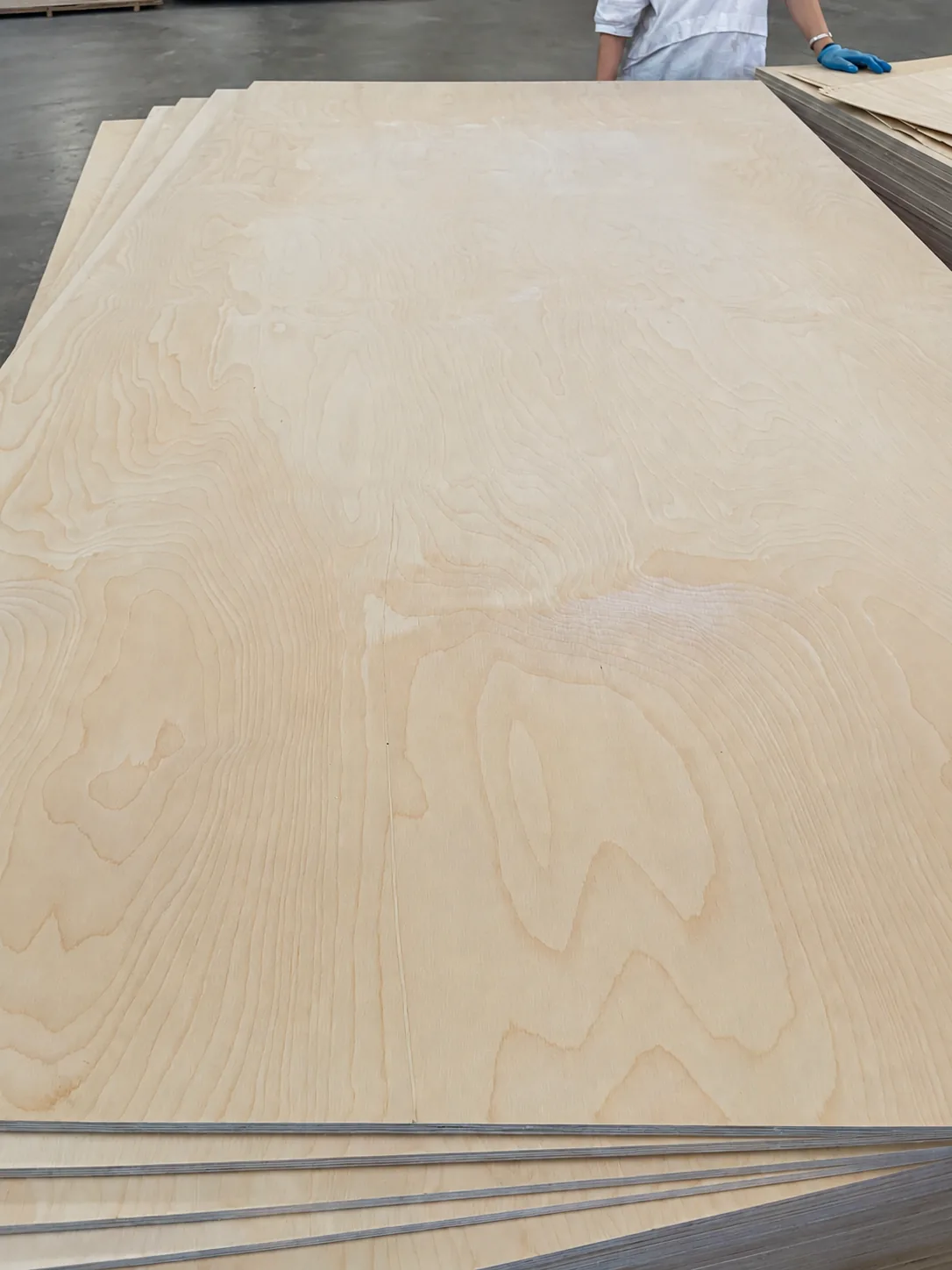
Birch plywood for cabinets and exposed edges
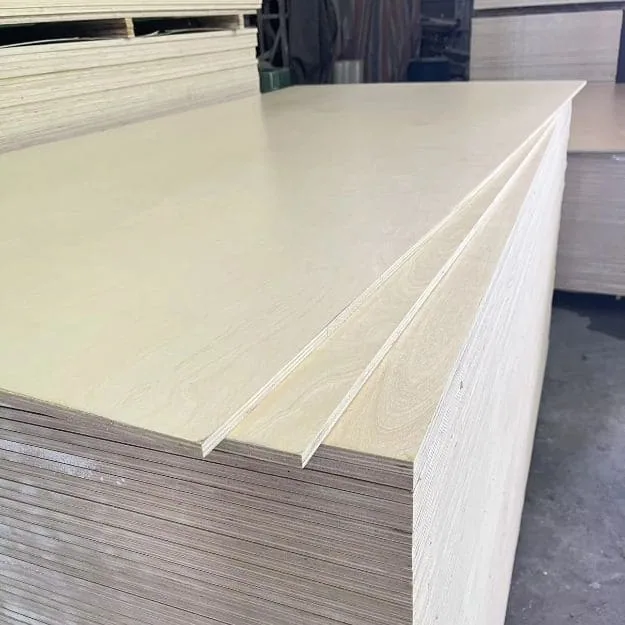
Compare the selected birch-faced or full-birch construction through the actual cut edge, joint, hardware and finish. Keep face/back appearance and the complete core alongside the finished gauge. Explore birch construction and use the RFQ checklist for the common comparison fields.
Request birch construction samplesRequest the birch US product file
MDF for routed or painted furniture
Keep the actual profile, remaining section, prepared edge, coating, reverse and fitting with the selected MDF model. Record usable output and process observations with the required density/dimension and US document questions.
Request an MDF process sampleRequest the MDF model and US file
Structural panel for a specified US project
Start from the required standard/edition, product designation, directional properties, supports, fixings and project data. Request the offered construction and its matching files, then review the actual edge/connection detail. Follow structural panel selection for that route.
Discuss a structural connection sampleRequest the structural project file
CUZI for a planned direct-import comparison.
CUZI is a plywood and MDF business in Xuzhou, China. Send the same specification you issue to other suppliers, with item quantities, the US destination/port and required receiving date. We can discuss a one-container order combining the panels your production or stock programme uses.
Commercial and Birch Plywood are available in 3–30 mm, with poplar, birch or eucalyptus cores, BB/CC or C/D face/back options and E0/E1 emission choices. Specify the full construction, grading basis and required US file for the quoted item. Regular plywood formats are 1220 × 2440, 1250 × 2500 and 1525 × 3050 mm; 1220 × 3050 and 1250 × 3660 mm are examples of formats on request.
Plain MDF is available in 2.5–35 mm with E0/E1/E2 options; moisture-resistant and fire-retardant MDF are 9–25 mm with E0/E1. Regular MDF sizes are 1220 × 2440 and 2100 × 2800 mm; requested formats include 1220 × 3050, 1830 × 3660 and 1220 × 3660 mm. Keep the board model, finish and destination requirements with each line.
Regular production takes 10–15 days; transit and US receiving are additional. Samples are free; you pay courier freight, which is credited in full against your formal order. Name the FOB shipment port or CIF destination port and discuss the proposed packing, product files and receiving needs before comparing the whole replenishment cycle.
Compare a direct-import quoteDiscuss my China supply schedule
Choose a route for your order, then send a useful RFQ.
- Small cabinet order with mixed veneers: compare exact construction/usable quantity at a relevant stock channel and whether the items can arrive together.
- Repeat furniture component: compare the same drawing and accepted output, with machining, edge/finish and part packing visible.
- Designated building panel: request the required grade/marking and project file before discussing an alternative.
- Planned mixed container: define each material line, sample/file decisions, production and receiving stages.
US destination / state or sales territory / receiving location:
Named FOB shipment port or CIF destination port / required date:
Item / face-back / full core or MDF model / required product designation:
Inch drawing and proposed mm dimensions / finished range / quantity-unit:
Supplied cutting, edge, finish and packing / remaining workshop work:
Working sample / drawing revision / applicable US product files:
Proposed production, dispatch, import and receiving responsibilities:
Pack labels / external dimensions, gross weights and unloading needs:
Attach the drawing and item list using the inquiry file checklist. You can start with the editable RFQ outline and fill in the US destination and open selections.
Keep the quotation comparison record with the replies and the receiving checklist with the shipment. Repeat-order changes should retain the selected construction/sample and responsible contact.
US sourcing questions
Should a distributor be excluded from a supplier shortlist?
No. A distributor may provide the local stock, quantities or processing service the job needs. Compare the actual panel, serving location, included work and delivery arrangement with the intended purchasing route.
Does a US seller’s address establish where the plywood was made?
Request the manufacturing origin and producing site for the exact item separately from the stocking, sales and processing locations. Keep any project-specific origin requirement with its supporting purchase documents.
Is CUZI a US plywood manufacturer?
CUZI is based in Xuzhou, China. This guide includes US supply channels and CUZI as a planned direct-import comparison. CUZI orders start at one container, with mixed plywood and MDF loads available.
Can an 18 mm panel replace a 3/4-inch drawing requirement?
Three-quarter inch literally converts to 19.05 mm. Keep the drawing’s nominal/fit requirement, proposed panel description and measured finished range visible. Review the actual joint, finish and hardware before selecting an alternative.
Does an E0 or E1 name settle the US product-document request?
Specify its test basis and separately request the applicable US category, producer, certification or exemption basis, relevant reports, labels and shipment records for the offered construction. Keep the purchaser’s state and project requirements named.
How do I avoid changing the panel when comparing prices?
Send one panel specification covering the faces, core, bond, dimensions and agreed checks. Ask for alternatives to show their changes, sample, documents and delivery details on separate lines.
How do I compare 80 sheets with 240 finished cabinet sides?
Use the same accepted side dimensions and receiving point. Confirm usable cutting yield and add the work remaining on the sheet route; identify exclusions on the component route. The draft three-sides-per-sheet layout needs an actual process review.
Does the 10–15-day lead time include arrival in the United States?
CUZI’s regular lead time is for production. Confirm the selected mix and add dispatch, transport/import and receiving time. Provide the target workshop date and item/pack needs when discussing the proposed schedule.