On this page
COMPARE THE BOARD ON THE COMPONENT YOU MAKE
MDF or HDF? Start with the finished detail.
MDF means medium-density fibreboard; HDF means high-density fibreboard. In furniture purchasing, HDF is often used for higher-density MDF. Request the actual board designation and manufacturing process with the proposed thickness, density and properties. CUZI supplies MDF and can quote HDF for project requirements, so you can discuss both around the same component.
A backing panel has to fit its groove. A painted door needs a clean profile and an acceptable finish. A faced insert needs the right thickness, surface and bonding arrangement. Put that finished detail at the centre of your MDF vs HDF comparison, then ask for the board data and working sample that help you select it.
For a furniture buyer, the useful question is whether a proposed board improves the component you sell at a workable delivered cost. Identify the detail causing extra preparation, poor fit or excess mass, then compare two offers against that detail. This guide connects the material names to a measurable trial, a part-weight calculation and an order brief.
Give each offer a board identity you can keep.
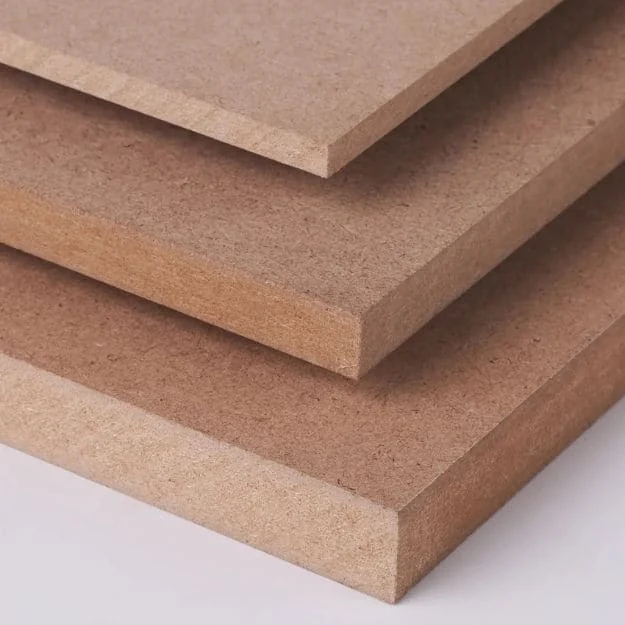
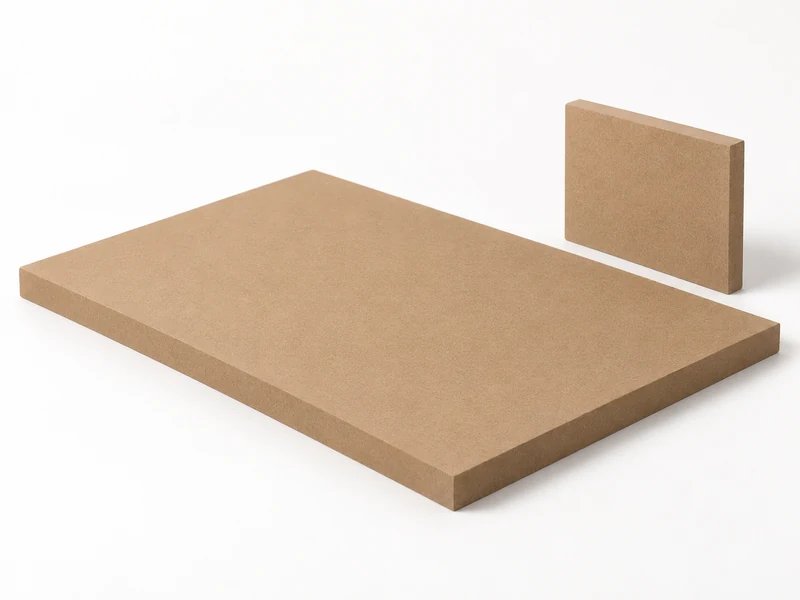
The European Panel Federation's specialty-grade guidance describes HDF as high-density MDF and discusses its use in machined and finished furniture components. Ask the supplier to identify the proposed grade, process and specification when using that description.
Scroll horizontally to compare all columns.
| Buying description | Identify with the item | Compare on the component |
|---|---|---|
| Standard MDF | Board grade, thickness, format, emission option and relevant product data. | Machined edge, finish, fitting and intended conditions. |
| HDF / high-density MDF | Actual fibreboard designation, process, proposed density and thickness. | The same drawing, surface treatment and required properties. |
| Hardboard requirement | Named hardboard product/grade, manufacturing process, face/reverse and dimensions. | The specified board and the actual backing, facing or formed-part requirement. |
| Finished door skin | Material, model, formed profile, delivered finish and assembly reference. | The delivered skin and completed-door arrangement. |
If your drawing names hardboard, a branded substrate or a particular product standard, send that reference with the inquiry. Keep the supplier's proposed material name and data sheet on the quotation line. This gives your production team a clear reference when it trials the material and places a repeat order.
Use Plain MDF for sheet supply and MDF Machining when the delivered scope includes profiles, grooves, drilling or cut parts. For a specified HDF substrate, use our HDF project buying route.
Read the substrate line beneath the surface description.
A painted, veneered or melamine-faced panel needs both identities on its purchase line: the substrate and the delivered surface. State whether the thickness means bare board or the completed faced panel. If a supplier offers high-density MDF, retain its grade/model and technical sheet so the description follows the material into repeat purchasing.
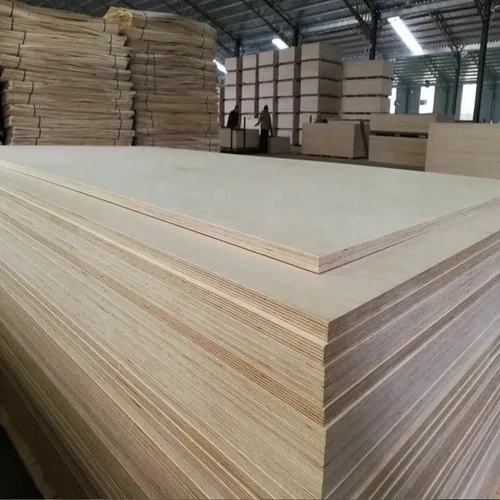
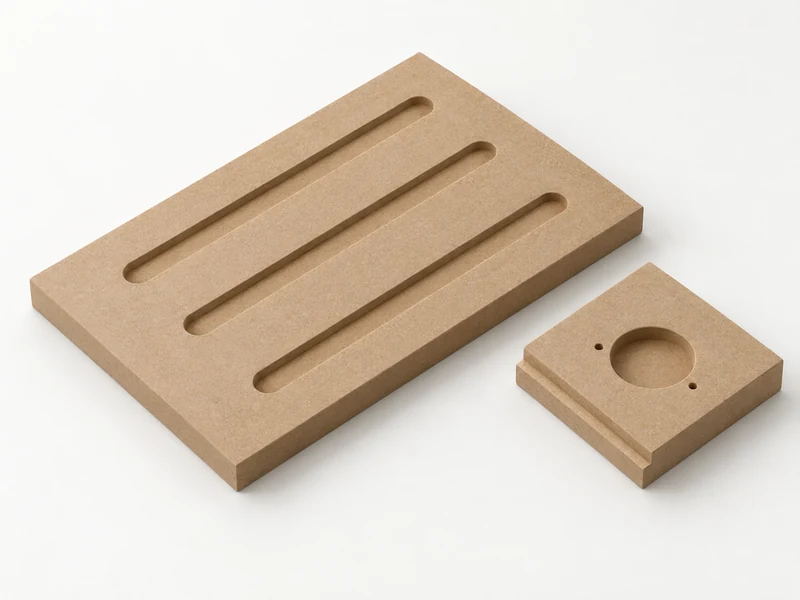
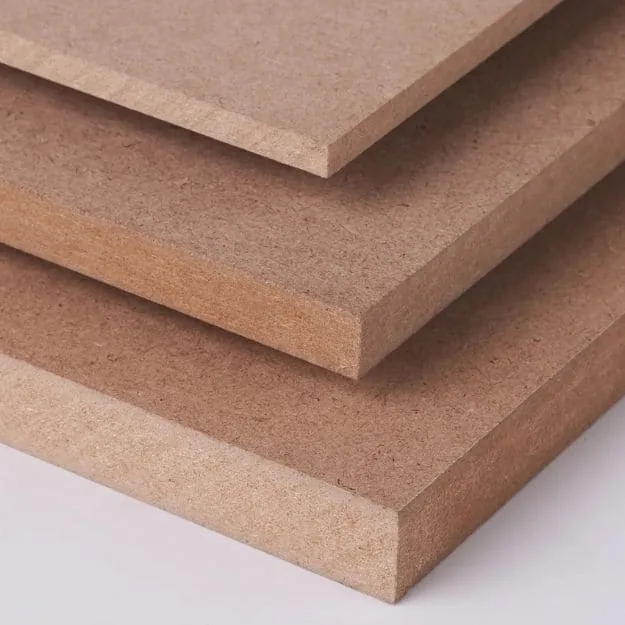
The photographs show Plain MDF and raw HDF faces and fibrous edges. Board density is established by the identified material data or measurement. A formed door skin, a specified hardboard and a flat HDF sheet each need their own dimensions, process and delivered-part reference.
Read density alongside the properties your part requires.
Density relates mass to volume. At the same bare-board dimensions, a higher density produces a higher calculated mass. Your component's thickness, geometry and finish determine how that board will be used.
The European Panel Federation's property guidance explains why density should be reviewed with performance data. Relevant measurements include density (EN 323), internal bond (EN 319), bending properties (EN 310), screw withdrawal (EN 320) and thickness swelling (EN 317). Request the methods and results needed by your application.
Set the important outcome before choosing a density target: profile appearance, fit in a groove, connector performance, finished weight or response to the intended environment. Review that outcome with the proposed board's data and the production trial. A supplier can then address the material choice your team actually needs to make.
For a load-bearing shelf or another designed assembly, include the load, support and span requirements with the material specification. Keep the designer's required properties and the component arrangement with the proposed board. The shelf design brief helps organise those inputs.
Choose the result that has commercial value.
For a routed door, compare the preparation needed to achieve the selected paint finish. For a drawer bottom, define the support and intended loading with your designer. For a backing inserted into a groove, start with thickness and fit. Ask for relevant properties at the proposed gauge; a general density figure does not describe all three outcomes.
Record the conditioning and measurement stage used for the trial. Compare bare boards before facing, then completed parts after your process, keeping those readings in separate fields. This helps purchasing see whether a difference comes from the substrate, the selected thickness or the finishing operation.
Compare the details that decide usable output.
Prepare the same critical detail in each proposed board. Keep the drawing revision, machining operation and intended finish with the trial. These schematic component details show where to focus the comparison.
Scroll horizontally to compare all columns.
| Component | Include with the sample | Record in your trial |
|---|---|---|
| Cabinet back or drawer bottom | Finished outline, nominal thickness, groove/support section and fixing. | Measured fit, flatness, edge condition and assembled behaviour against the drawing. |
| Painted or routed front | Actual profile, recess depth, corners, datum face and coating process. | Machined appearance, preparation time, coated result and critical dimensions. |
| Laminated or veneered part | Facing, adhesive, reverse, pressing/process reference and finished thickness. | Finished surface, bonding observations, dimensions and relevant assessment. |
| Door skin or assembled door | Model/master, material, formed section, core/frame and bonding arrangement. | Skin identity, fit and finish; completed-door results required by the project. |
For a formed door-facing purchase, review MDF Door Skins and identify the required model. Flat-sheet thickness and formed profile depth belong in their own fields on that brief.
Calculate the fit range before ordering the backing.
For an insert, clearance equals groove width minus completed insert thickness. Work from the smallest groove with the thickest insert, then the largest groove with the thinnest insert. Include any face/reverse or coating that enters the groove in the completed thickness.
Calculation assumptions: a groove specified at 6.20 ± 0.10 mm, compared with three chosen insert thickness ranges. These are drawing calculations; supply tolerances and acceptable fit must be agreed for the actual component.
Scroll horizontally to compare all columns.
| Insert assumption | Insert range | Smallest clearance | Largest clearance |
|---|---|---|---|
| 6.00 ± 0.15 mm | 5.85–6.15 mm | −0.05 mm | 0.45 mm |
| 5.95 ± 0.05 mm | 5.90–6.00 mm | 0.10 mm | 0.40 mm |
| 4.00 ± 0.10 mm | 3.90–4.10 mm | 2.00 mm | 2.40 mm |
The groove range is 6.10–6.30 mm. The negative result indicates overlap in the first assumed combination. The thinner alternative creates a substantially different clearance and needs a corresponding assembly decision. Your team should assess actual fit, support, adhesive or fixing and permitted movement with the working part.
Mark the groove section, measurement locations, datum face and drawing revision on the brief. State the stage at which the insert is measured and the receiving condition. A nominal thickness written beside “HDF” leaves that essential fit range unresolved.
Compare part mass with both density and thickness.
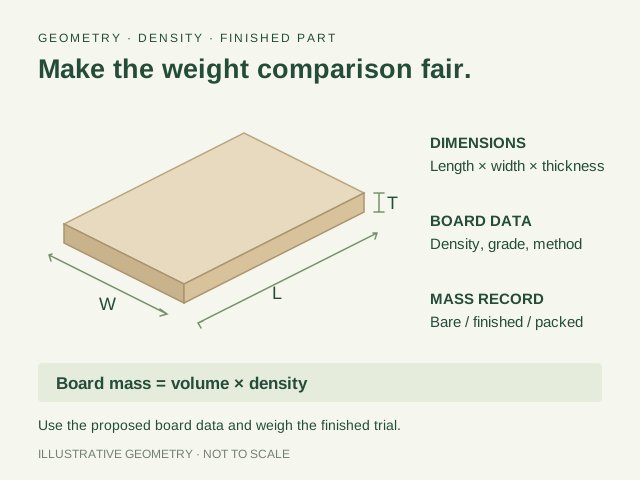
Calculate bare-board mass as length × width × thickness in metres × density in kg/m³. Then add the face, reverse, coating, edging and fittings included in your finished-part target.
Planning example: a 600 × 400 mm cut panel. The densities and thickness alternatives below are chosen calculation assumptions for comparing mass.
Scroll horizontally to compare all columns.
| Alternative | Assumed thickness / density | Calculated volume | Calculated mass |
|---|---|---|---|
| Reference panel | 6 mm / 700 kg/m³ | 0.00144 m³ | 1.01 kg per part |
| Higher-density panel, same size | 6 mm / 850 kg/m³ | 0.00144 m³ | 1.22 kg per part |
| Higher-density panel, thinner alternative | 4 mm / 850 kg/m³ | 0.00096 m³ | 0.82 kg per part |
For 500 parts at 6 mm, those density assumptions produce calculated totals of 504 kg and 612 kg, a difference of 108 kg. The 4 mm alternative changes the component geometry, so its fit, support and performance need their own review.
Replace the assumptions with the quoted material data and dimensions for your project. Set a target for the delivered bare part or the complete assembly, and state which additions it includes. Keep packing and shipping gross weight separate from the calculated panel mass.
Use the MDF density and thickness guide for sheet formats and measurement context, or open the panel quantity calculator with the dimensions, quantity and density you want to compare. For a lightweight alternative, discuss Lightweight MDF with the same component target.
Keep the batch total separate from the rounded part weight.
The first two alternatives use an area of 0.24 m² and an unrounded volume of 0.00144 m³ per part. Their masses are 1.008 kg and 1.224 kg before rounding for display. Multiply those unrounded values by quantity to obtain 504 kg and 612 kg for 500 parts.
The 4 mm alternative has a calculated mass of 0.816 kg per part and 408 kg for 500 parts using the stated 850 kg/m³ input. That arithmetic is useful for a packing discussion, while the revised gauge still needs a component trial. Add the actual surfaces, hardware and packing to obtain the relevant finished and shipping totals.
Compare the finished part cost through your production process.
Ask for the same delivered scope in each offer: full sheets, rectangular blanks, machined components or a finished facing. List the cutting, profiling, drilling, preparation and finishing operations your workshop will perform after receipt.
Run the offered boards through the relevant operation and record usable output, preparation time, rejected parts and the result your customer sees. Include the actual tools, fitting and finish reference in the trial record. This makes a material-price comparison useful for repeat production.
Compare cost per accepted part using your recorded material and processing costs. Where the trial changes thickness or geometry, keep that alternative on its own line with the revised drawing and acceptance criteria. Retain the proposed grade, sample reference and chosen process with the quotation.
The routed-door finishing trial helps document a painted profile. For cut or profiled components supplied by CUZI, send the dimensions and included operations through the machining specification route.
Compare a repeatable finish with the accepted quantity.
Use the same critical profile and agreed finished appearance when recording trial output. Include sanding, sealing, coating, tool changes and rework within the processing scope you cost. Keep an alternative tool or coating sequence identifiable so production can reproduce the result.
Cost calculation assumptions: two 100-blank trials in the same currency, with material and recorded processing costs included. The amounts and accepted quantities below are selected inputs, not CUZI prices or promised yields.
Scroll horizontally to compare all columns.
| Trial | Material + processing | Accepted parts | Cost per accepted part |
|---|---|---|---|
| Board A, 100 blanks | 1200 + 300 = 1500 | 95 | 15.79 |
| Board B, 100 blanks | 1300 + 220 = 1520 | 99 | 15.35 |
Divide each included total by its accepted quantity. These trials produce different shortfalls against a 100-part requirement, so include replacement production and its costs when preparing the final order comparison. Give freight, packing, finishing and tax the same scope in both offers. Retain the drawing and finish reference with the recorded output.
Include service conditions and destination documents.
Describe indoor humidity, likely moisture contact, required fire performance and the finished installation where they affect the material choice. Name the board grade and relevant testing with those conditions. Density remains a material measurement alongside that specification.
Review Moisture-resistant MDF for a humid-interior requirement and Fire-retardant MDF for a specified fire-performance inquiry. Include the standard, required class and finished scope with any HDF project requirement too.
Keep the emission option, method and destination file beside the quoted construction. Our US and EU emission-document guide helps prepare the certification or assessment discussion for the board and the article you intend to sell.
The available RAW MDF report records 755 kg/m³ by EN 323 for its identified interior MDF. Request the proposed HDF's own designation and data with the dimensions and component requirement. Retain each report under the material it describes.
Link the material file to the component you will import.
Keep the offered substrate grade/model, gauge, surface system and destination requirements on the same item reference. Ask which technical data and market file cover the proposed material or finished article. An HDF description does not by itself establish emission, moisture or fire classification.
If a coating, facing, adhesive or board changes, identify the changed construction in the file sent to the customer or importer. Keep the relevant measurements under their original methods and material identities; the RAW MDF report remains connected to its identified board.
Bring CUZI MDF and HDF into the same component discussion.
Scroll horizontally to compare all columns.
| Route | Supply information | Send for the inquiry |
|---|---|---|
| Standard Plain MDF | 2.5–35 mm; E0, E1 or E2 options. | Thickness, format, part geometry, finish and required method/documents. |
| MR / FR MDF | 9–25 mm; E0 or E1 options. | Actual conditions, required material performance and finished construction. |
| Lightweight MDF | Project supply with thickness, density and emission requirements agreed for the item. | Target mass, drawing and the scope included in that target. |
| HDF | Project supply; designation, thickness, density, format and technical requirements discussed with the quotation. | Component, target weight or density, machining, surface and supporting data. |
Regular MDF formats are 1220 × 2440 mm and 2100 × 2800 mm. Requested formats include 1220 × 3050 mm, 1830 × 3660 mm and 1220 × 3660 mm. State your required HDF format with the project brief so its proposed combination is identified separately.
When comparing several substrates for the same component, give each material its own item code and keep the drawing revision shared. Add the face/reverse, delivered processing and test requirements to each option. This keeps the choice clear when the order moves to sampling and production.
Choose the delivered stage with the material.
Full sheets give your workshop control of the cutting and finishing route. Rectangular blanks need a cutting list with finished or pre-finishing dimensions. Profiled components need drawings, datum faces, holes, recesses and included operations. Faced or painted parts also need the selected front/reverse and finished-thickness arrangement.
State quantities per item and whether alternatives are for comparison or intended together in a mixed load. Add the destination port and delivery timing. CUZI can then discuss the MDF and HDF routes around the same production requirement and identify any project-specific processing or document work.
TRY THE COMPONENT BEFORE CHOOSING THE BOARD
Request an MDF or HDF working sample.
Send the drawing, critical detail, required thickness and target weight or density with the sample request. Include the fitting, groove, routed profile or finished layer arrangement you need to evaluate. The HDF route retains that material identity and component brief in the form.
CUZI orders start at one container, with mixed loads available. Regular production takes 10–15 days, with shipping time additional; project processing and testing are scheduled in the quotation. Request FOB or CIF with the named port. Samples are free; the buyer pays freight, with a later-order freight credit available by agreement.
Keep the accepted working detail, material data and observations with the chosen item. For a repeat order, identify any change to the board, geometry, finish or production process so the reference remains useful.
Request paired parts around one critical detail.
Use separate material references with the same drawing and finished requirement. The 6 mm and 18 mm gauges below are request starting points: confirm the proposed HDF grade/gauge and completed tolerance, then compare the actual offered materials.
Scroll horizontally to compare all columns.
| Component decision | Common comparison basis | Start the request |
|---|---|---|
| Grooved backing or insert 6 mm drawing reference | Groove and completed insert ranges, included face/reverse layers, minimum/maximum clearance, datum, conditioning, support and assembled fit. | Request the HDF backing trial Request the MDF backing trial Request the HDF fit and board data |
| Routed painted component 18 mm drawing reference | Same deepest profile, remaining section, preparation/coating/cure, fitting, completed mass and appearance. Record processing effort and accepted output by board. | Request the HDF routed-part trial Request the MDF routed-part trial |
| Order the accepted finished quantity | Same delivered geometry/tolerance/finish, included operations and product data. Include replacement production, remaining work, packing and the named delivery point. | Quote the comparable HDF component |
Make the trial useful for the next purchase.
Request enough material to reproduce the critical profile, groove or facing arrangement and retain a finished reference. Send the drawing revision, required processing and finish with the proposed board identity. After the trial, return the measured fit, finished mass, preparation observations and relevant results with that item.
Use those observations to select the material and delivered scope for the order. Keep the accepted part and its material/process references available for the receiving team and a repeat quotation. This turns the first comparison into a purchasing reference your production team can use.
MDF vs HDF questions.
What is the difference between MDF and HDF?
MDF means medium-density fibreboard and HDF means high-density fibreboard. In a furniture inquiry, identify the actual grade, process, thickness, density and properties behind the supplier's description, then compare the component you need to make.
Is HDF always the better choice?
Choose around the required detail and finished result. Compare machining, fit, coating or facing, fittings, mass and the relevant material data using the same component trial and acceptance criteria.
Does higher density increase panel weight?
At the same bare-board volume, calculated mass increases in direct proportion to density. Include thickness and part dimensions in the calculation, then add the other materials within your finished-weight target.
Can a higher-density board replace a thicker MDF part?
Evaluate the proposed thickness on its own drawing and support arrangement. Check fit, stiffness or required performance, fastening and the final finish with the technical team and working sample.
How should I compare MDF and HDF for painted profiles?
Use the same profile, tools and coating process. Record the cut detail, preparation, coated appearance, critical dimensions and usable output, with the actual board and drawing reference.
Does an HDF density description establish moisture resistance?
Specify the board grade and intended conditions with the required moisture tests and finishing arrangement. Review those requirements with the offered material and the completed component.
Can CUZI supply HDF?
Yes, HDF can be quoted for project supply. Send the board designation, thickness, format, target density or part weight, processing and required documents to discuss the proposed item.
What should I send for an HDF sample?
Include the part drawing, requested material and thickness, sample dimensions, face/reverse, edge or groove and the fitting/finish trial. Add any target mass and the conditions under which your team will measure it.