On this page
SIZE THE BOARD AROUND THE PART YOU MAKE
Choose the grade and thickness. Check the weight. Plan the cut.
For a furniture order, start with the MDF type your component needs, its nominal thickness and the sheet format that suits your cutting plan. CUZI supplies standard plain MDF in 2.5–35 mm, moisture-resistant and fire-retardant MDF in 9–25 mm, and lightweight MDF to project requirements.
To connect density with your machining and finish, read how MDF is made and which quality questions to ask. Keep the proposed board, measurement basis, finished dimensions and item-linked records with the component trial.
Regular MDF formats are 1220 × 2440 mm and 2100 × 2800 mm. Longer formats are available on request. Ask for density, dimensional tolerances and moisture information for the board being quoted; these help you compare handling, machining and fit before committing to a container.
A useful MDF purchase fixes three different numbers: the nominal board gauge, the dimensions your machinery will receive, and the finished-part mass you want to handle. Keep them beside the board grade and supplied stage. This avoids comparing a raw sheet with a faced or machined part whose thickness and weight include additional work.
Available MDF thicknesses depend on the board type.
Keep the substrate designation beside the thickness in every item. A standard 18 mm board, an 18 mm MR board and an 18 mm finished decorative board each need their own description. The table gives CUZI's supply ranges and the options to take into your quotation.
Scroll horizontally to compare all columns.
| Board route | Thickness / construction | Include in the request |
|---|---|---|
| Standard plain MDF | 2.5–35 mm; E0 / E1 / E2 emission options. | Dry-interior use, thickness, size, machining and finish. |
| Moisture-resistant MDF | 9–25 mm; E0 / E1 emission options. | Humid-interior application, board requirement and complete finished detail. |
| Fire-retardant MDF | 9–25 mm; E0 / E1 emission options. | Required fire standard, class, construction and supporting documents. |
| Lightweight / ultralight MDF | Thickness, density and emission specification agreed for the project. | Target board or finished-part mass, dimensions, fittings and working trial. |
| HPL faced MDF | 12–25 mm finished board; 0.5–2 mm HPL; single- or double-sided. | Finished thickness, HPL, reverse, edging and substrate grade. |
| Melamine / PVC faced MDF | Finished thickness and substrate specified with the facing arrangement. | Decor / film, front and reverse, finished dimensions and matching edge. |
Use the emission option with the required test method and destination-market documents. For a specialised board, include its grade and the performance requirement alongside the dimensions. CUZI can discuss European or national fire testing for FR MDF around the requirement you specify.
Give each grade its own density and dimensional line.
For a mixed order, ask for the offered grade/model, nominal gauge, thickness tolerance and measurement basis on each item. A density or tolerance taken from another board type does not complete that line. Keep the actual substrate specification with the chosen facing and reverse for decorative items.
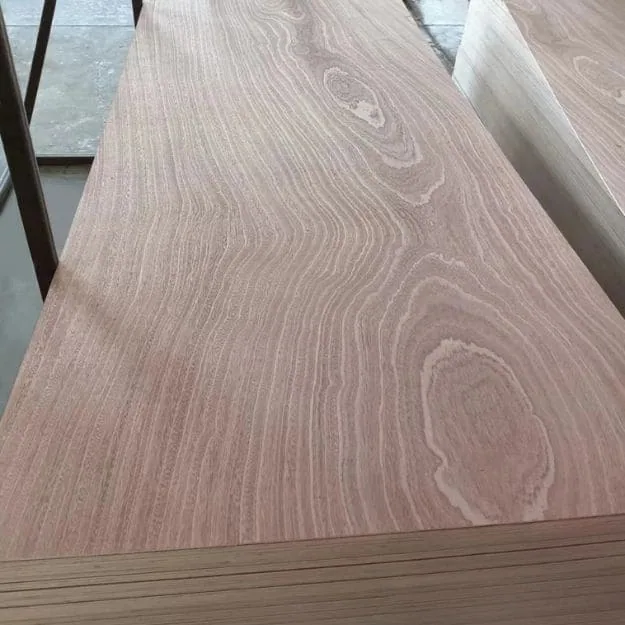
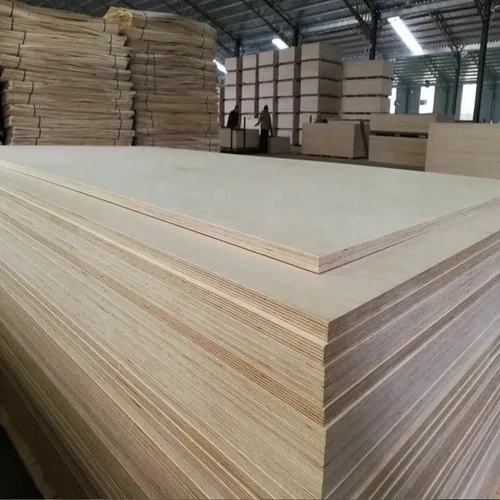
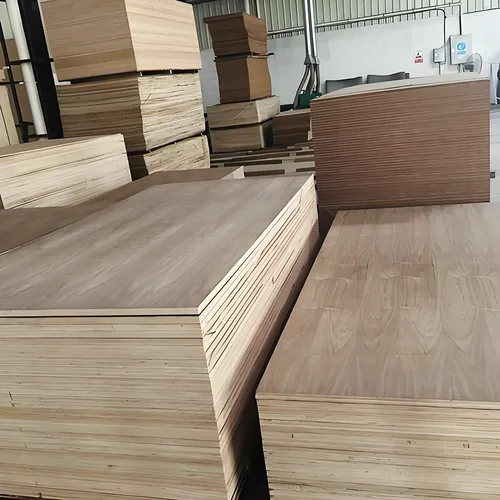
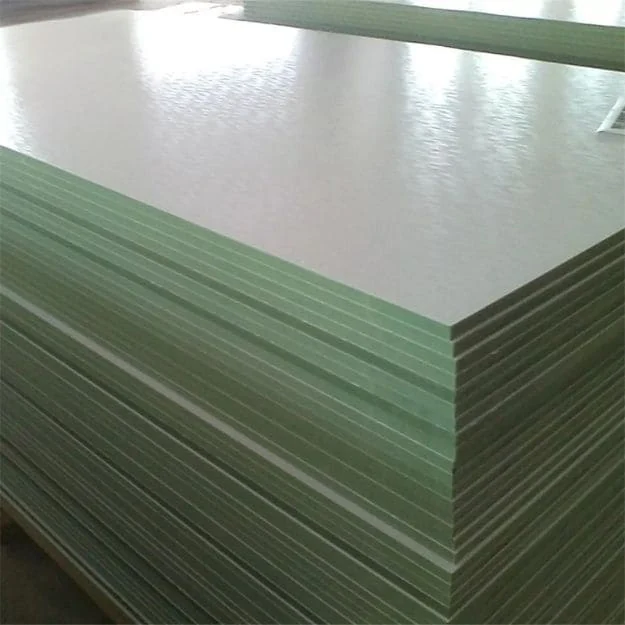
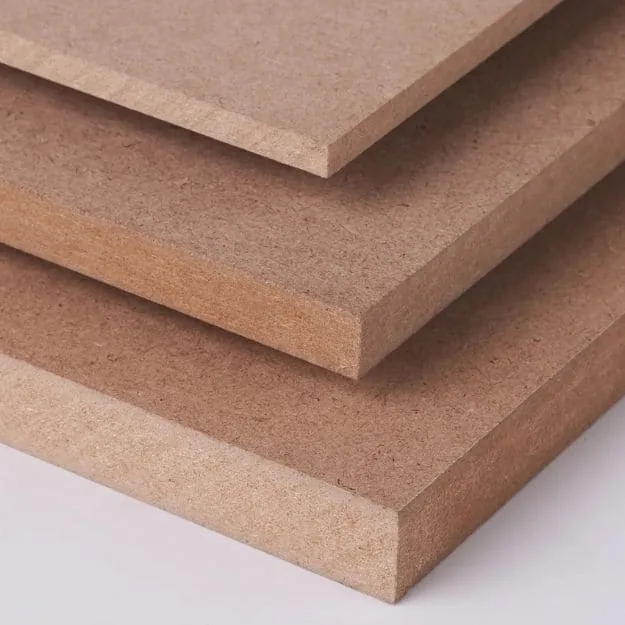
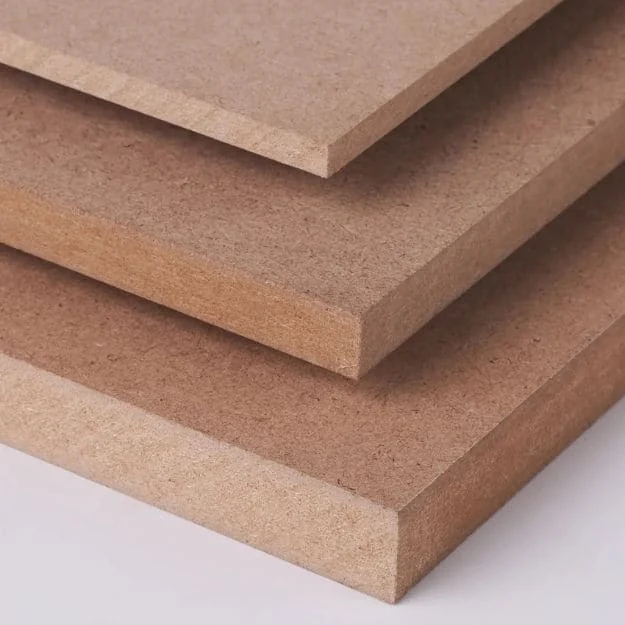
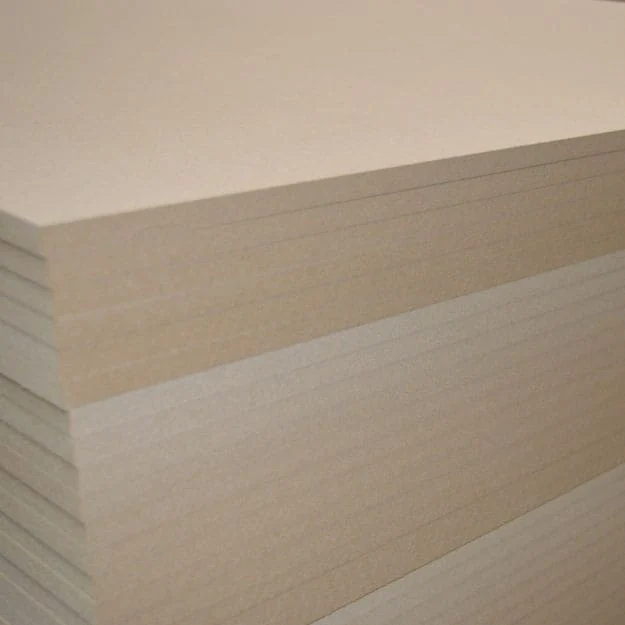
The photographs show standard and lightweight MDF faces and fibrous edges. Their appearance helps identify the board route, while the quoted material data establishes the density and properties used in your comparison.
What does an 18 mm MDF requirement leave to decide?
18 mm is within the standard, MR and FR supply ranges above. Your next decision is which board belongs in the part: a painted cabinet front, a routed profile, a shelf or a component with a specified fire requirement. Add the grade, nominal thickness, finished size and required material data to the drawing.
For a routed door, check the remaining section beneath the deepest profile and the hinge detail. For a shelf, include the span, supports, loading and acceptable deflection in the design review. For a laminated part, define whether 18 mm means the substrate or the completed faced board.
Thin MDF requests should identify the backing, frame, groove or support arrangement. A 3 mm panel cut for a cabinet back and a thin panel bonded to another part have different fit and assembly questions. The plain MDF buying route helps turn those details into a trial request.
Trial the proposed board through the operation that matters: routing and painting for a door, fitting and assembly for a cabinet, or bonding and calibration for a faced component. Use the MDF routed-door guide and shelf design brief to prepare that comparison.
Convert inches without changing the fit requirement.
Scroll horizontally to compare all columns.
| Metric input | Inches, rounded | Buying consequence |
|---|---|---|
| 12 mm | 0.4724 in | Use the actual gauge and fit allowance for the groove or fitting. |
| 18 mm | 0.7087 in | An exact ¾ in input is 19.05 mm; specify which your drawing requires. |
| 25 mm | 0.9843 in | An exact 1 in input is 25.40 mm; quote the required nominal gauge and tolerance. |
The conversion uses 25.4 mm per inch. A trade label, nominal stock size and measured panel thickness can be different descriptions, so retain the intended dimension in the item and check the working fit. Converting units does not establish a new stock gauge or tolerance.
For a laminate build-up, list the raw substrate and the complete front/reverse layers before specifying the final overall thickness. For a routed feature, show the deepest cut and minimum remaining material on the drawing rather than selecting gauge from the front’s overall size alone.
MDF sheet sizes: regular formats and longer boards on request.
Scroll horizontally to compare all columns.
| Sheet format | Supply route | Area per sheet |
|---|---|---|
| 1220 × 2440 mm | Regular | 2.9768 m² |
| 2100 × 2800 mm | Regular | 5.8800 m² |
| 1220 × 3050 mm | On request | 3.7210 m² |
| 1830 × 3660 mm | On request | 6.6978 m² |
| 1220 × 3660 mm | On request | 4.4652 m² |
Send your cut list before choosing a larger sheet. Check the useful parts per sheet, saw kerf, trim allowance, grain or decor direction, and usable offcuts. Also compare the format with the saw, CNC bed, lifting arrangement and storage rack in your workshop.
A 2100 × 2800 mm sheet offers more nominal area, but the worthwhile format is the one that gives your production plan the right parts with manageable handling. For faced MDF, carry the required decor direction and surface arrangement into the cutting schedule.
Review the format with the receiving and cutting plan.
Confirm the usable sheet dimensions, trim and kerf with the cut list. Compare the bed capacity, feed path, handling equipment and supported storage size against the proposed format before choosing a larger sheet. For decorative boards, keep grain arrows and matching groups on the layout.
Purchased sheet area and net part area are different quantities. Record useful parts, recoverable offcuts and reserve from the actual layout, then compare the delivered cost and workshop time. Our cut-to-size panel guide includes a fixed-layout comparison and a drawing-based request route.
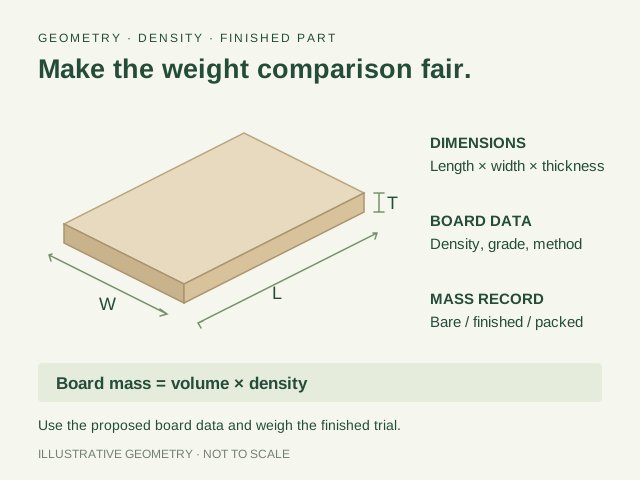
MDF density is mass per cubic metre.
For a choice between MDF and a specified HDF, use the MDF vs HDF component guide to compare the actual profile, fitting, finish and finished-weight target.
Density in kg/m³ tells you how much a stated volume of board weighs. For a quotation, ask whether the number is a target, a stated range or a measured result, and identify the board type, thickness and measurement conditions. That makes comparisons between standard and lighter constructions more useful.
The European Panel Federation's MDF property guidance explains density measurement under EN 323 and treats density, internal bond, screw holding and bending as separate properties. Compare the required properties for your component alongside the mass.
- Density
- Board mass ÷ board volume, expressed in kg/m³.
- Nominal volume
- Sheet length × width × nominal thickness, with all dimensions in metres.
- Estimated board mass
- Nominal volume × the density used in the calculation, expressed in kg.
Request the data for the proposed grade and thickness when machining, edge fittings or sustained loading drive the decision. The Composite Panel Association's MDF overview describes a range of MDF properties and dimensions for furniture, machining and decorative surfacing.
Use measured mass and dimensions for a density check.
With mass in grams and dimensions in millimetres, density in kg/m³ equals mass × 1,000,000 ÷ (length × width × thickness). For arithmetic, a 50 × 50 × 18 mm piece weighing 31.50 g gives 700 kg/m³; at 32.40 g with those same dimensions it gives 720 kg/m³. These inputs explain the calculation, not measured CUZI results or a laboratory procedure.
Use the relevant method and conditions for a report, including how specimens and measurements are selected. Keep instrument precision, measured dimensions and material identity with a workshop check, and distinguish it from the supplier’s target or a stated average. A measured 755 kg/m³ is equivalent to 0.755 g/cm³.
For machining and fittings, review the properties relevant to the operation as well as average density. EPF’s property guidance treats density, internal bond, screw holding and bending separately. Request the relevant results for the proposed gauge and construction instead of ranking all boards by one density figure.
READ THE RESULT WITH ITS METHOD
Density and moisture in the RAW MDF test report.
The available RAW MDF report records interior MDF for dry conditions, with nominal dimensions of 1220 × 2440 × 12 mm. These are the reported measurements and methods for that construction.
Scroll horizontally to compare all columns.
| Property | Recorded result | Method / units |
|---|---|---|
| Measured dimensions | 2441 × 1221 × 12.08 | EN 324-1; mm, length × width × thickness |
| Density | 755 | EN 323; kg/m³ |
| Moisture content | 6.7 | EN 322; % |
| Bending strength / modulus | 29.8 / 3180 | EN 310; N/mm² |
| Internal bond | 0.82 | EN 319; N/mm² |
Read the complete report for its scope and other recorded results. For a new item, request the offered board's density range, dimensions, tolerances and relevant performance data with the required methods. Keep those details with the grade, finish and intended application in the quotation.
Keep nominal dimensions and measured results identifiable.
The report’s nominal 1220 × 2440 × 12 mm describes its stated board; its measured length, width and gauge are 2441, 1221 and 12.08 mm. When using a result in a calculation, say whether the volume comes from nominal or measured dimensions. Keep the method and reported units with that result.
For a new thickness or faced item, request its corresponding dimensional and property information. The supplier’s proposed material line, report scope and working component should describe the same purchase, with the relevant destination documents retained separately.
CALCULATE BEFORE PLANNING THE LOAD
How much does a 1220 × 2440 × 18 mm MDF sheet weigh?
Multiply 1.22 × 2.44 × 0.018 to obtain 0.0535824 m³. Then multiply that volume by the density of the board you are buying. At an assumed 700 kg/m³, the calculated board mass is 37.51 kg per sheet.
Calculation example: 700 kg/m³ is a chosen planning assumption, rather than a CUZI density specification or a measured 18 mm sheet weight. Use the quoted density for your order.
Scroll horizontally to compare all columns.
| Nominal item | Volume per sheet | Calculated mass |
|---|---|---|
| 1220 × 2440 × 18 mm | 0.0535824 m³ | 37.51 kg per sheet |
| 2100 × 2800 × 18 mm | 0.1058400 m³ | 74.09 kg per sheet |
| 100 sheets, 1220 × 2440 × 18 mm | 5.35824 m³ total | 3750.77 kg total, before rounding individual sheets |
Use the unrounded inputs for a total, then round the final result. Add facings, adhesive, edges or fittings when estimating a completed component. For shipment planning, obtain the bundle count, external dimensions, packing and confirmed gross weight.
Compare thickness changes at the same planning density.
Scroll horizontally to compare all columns.
| Nominal thickness input | Nominal volume | Bare-board mass |
|---|---|---|
| 6 mm | 0.0178608 m³ | 12.50 kg |
| 12 mm | 0.0357216 m³ | 25.01 kg |
| 18 mm | 0.0535824 m³ | 37.51 kg |
| 25 mm | 0.0744200 m³ | 52.09 kg |
The constant 700 kg/m³ is a calculation input, not a density specification across these gauges. Recalculate each offered item with its own density and dimensions. For the larger 2100 × 2800 × 18 mm format, the same input gives 74.09 kg before facing or packing; review the actual sheet-handling route as well as its cutting area.
Compare lightweight MDF with the same component and finish.
When handling or finished-part weight matters, send a target mass with the drawing. CUZI supplies lightweight and ultralight MDF with thickness, density and emission requirements agreed for the project. Ask for the proposed construction and density range, then calculate the part using its actual volume.
At the same bare-board volume, calculated mass changes in direct proportion to the density used. A finished door also contains its facing, coating, edges and fittings. Keep those additions in the comparison, and trial the selected hinge, connector or routed profile with each proposed board.
Use the lightweight MDF buying route to compare the handling benefit with machining, finish and assembly requirements. Send the target board mass or completed-part mass, clearly identifying which one your team needs.
Budget the complete part before setting a density target.
For a 900 × 450 × 18 mm rectangular part, bare volume is 0.00729 m³. If your completed-part limit is 6 kg and the stated non-board materials add 1.2 kg, the remaining board budget is 4.8 kg. Dividing that budget by the volume gives a planning density ceiling of about 658 kg/m³.
That arithmetic helps frame an inquiry; it does not establish a supplied density or prove the fitting/finish performance. Add actual faces, band, adhesive, coating, hardware and machining losses to the finished-weight record, then compare the offered board through the working detail.
Turn your finished-weight limit into a board inquiry.
Enter a rectangular bare-board blank and the maximum completed-part weight. Include the total mass of facings, adhesive, edges and fittings separately. For routed or shaped parts, use this full-blank estimate to start, then check the actual machined and finished component.
Use the calculated ceiling with the offered board’s density range and actual dimensions. Keep machining, hinge or connector performance, finished appearance and emission requirements in the same comparison. Confirm the completed mass through your working component trial.
Specify the thickness tolerance at the feature that needs it.
Write the nominal dimension and required tolerance separately. A groove, an edge joint, a laminated stack or a roller-finishing line may need a more specific fit than a general board description gives. Identify the critical measurement position and the condition in which the panel will be checked.
For a faced board, state the finished overall thickness and the substrate/facing arrangement. For cut parts, also include finished length and width, squareness, edge quality and any holes or profiles that must align in the assembly.
EPF's property guidance connects thickness control with conditioning during transport and storage. Agree the measurement and receiving procedure with the supplier so your mill data, incoming check and workshop fit can be reviewed together.
Send the drawing and required tolerances through the cut-to-size panel route or MDF machining route. Include the selected board and finish with the dimensions your component requires.
Retain the measurement stage.
State whether the receiving check is on a bare substrate, a calibrated faced board or the completed part. Put permitted overall gauge, length/width and squareness beside their methods and measuring positions. If the assembly uses a groove, recess or connector, include the relevant working dimensions and trial rather than a thickness label alone.
Read moisture content with the storage and machining conditions.
The RAW MDF report records 6.7% moisture content by EN 322. For your order, discuss the required moisture range and checking method for the offered board. Record transport, receiving and workshop conditions when comparing readings or investigating dimensional changes.
Moisture content describes moisture in the board; a moisture-resistant designation describes a board selected for the corresponding service conditions. Keep the measurement, board type and application together when preparing an inquiry.
At receiving, match pack labels and item references, inspect condition, and follow the agreed plan for dimensional and moisture checks. Support and protect the boards during storage and plan conditioning before machining. Our panel storage guide and incoming inspection checklist help organise that work.
Connect the receipt record to the item you machine.
Keep pack/item identity, observed condition, measured size and moisture readings with their time and checking conditions. If boards are conditioned before use, retain the machining-stage readings as a separate record. This helps review a fit change without replacing a measured result with a general board-grade label.
FROM A BOARD SIZE TO A WORKING ORDER
Send the thickness, format and part you want to make.
A useful first request names the board type, nominal thickness, sheet size, quantity and destination. Add the finished-part drawing, machining and facing details, required tolerances, density or mass target, and material documents where they affect your selection.
Start with 18 mm standard MDF in 1220 × 2440 mm below, or choose the larger regular format above. The request carries the thickness and sheet format into the form; you can edit them there. For samples, specify a practical cut size and the operation you want to trial from the proposed sheet.
CUZI orders start at one container and can mix items. Regular production is 10–15 days, with shipping arranged for the route. Request an FOB or CIF quotation with the named port. Samples are free; buyers pay freight, with a later-order freight credit available by agreement.
For several grades, thicknesses or finishes, use a separate item line for each in the mixed-panel schedule. The wholesale MDF guide connects your item list, packs and destination into a container inquiry.
Keep calculation inputs visible in the request.
State any density used for planning and whether the target concerns bare sheet mass, finished-part mass or packed gross weight. Include the chosen format, raw/faced stage, drawing and hardware. This lets the proposed material and handling information answer the same purchasing question.
MDF density, thickness and size questions.
What MDF thicknesses does CUZI supply?
Standard plain MDF is available in 2.5–35 mm. MR and FR MDF are available in 9–25 mm. HPL faced MDF has a 12–25 mm finished-board range. Lightweight and other faced constructions follow the requirements agreed in the quotation.
What are the regular MDF sheet sizes?
1220 × 2440 mm and 2100 × 2800 mm are regular MDF formats. 1220 × 3050 mm, 1830 × 3660 mm and 1220 × 3660 mm are available on request. Include the board type, thickness and facing with the format you need.
What density should I use to calculate MDF weight?
Use the quoted density for the selected board, or a clearly named planning assumption while comparing options. Multiply length × width × thickness in metres by density in kg/m³. The RAW MDF report records 755 kg/m³ for its stated construction; request the offered item's data for your purchase.
How heavy is an 18 mm MDF sheet?
A nominal 1220 × 2440 × 18 mm sheet has a volume of 0.0535824 m³. At the illustrative assumption of 700 kg/m³, its calculated bare-board mass is 37.51 kg. Recalculate with the density of your selected board and add any facing or component materials.
Does higher density mean a better furniture board?
Compare the properties your part requires: machining, internal bond, bending, fitting performance, dimensional control and finished appearance. Review the density alongside those properties and the finished-part trial.
Is 18 mm the substrate or the finished faced-board thickness?
State which dimension you need in the inquiry. For HPL, melamine or PVC faced boards, include the substrate, facing, reverse and final overall thickness so the supplied board fits the component.
Can I compare moisture readings from receiving and machining?
Keep the measurement method, board identity and conditions with each reading. Use the agreed receiving and conditioning plan when reviewing any change alongside dimensional measurements.
Can I mix MDF sizes and thicknesses in a container?
Yes. CUZI's minimum order is one container and mixed loads are available. Send separate quantities and specifications for each item, with packing requirements and the named FOB or CIF port, to prepare the load and quotation.