
On this page
IN BRIEF
Plywood core voids and ply count
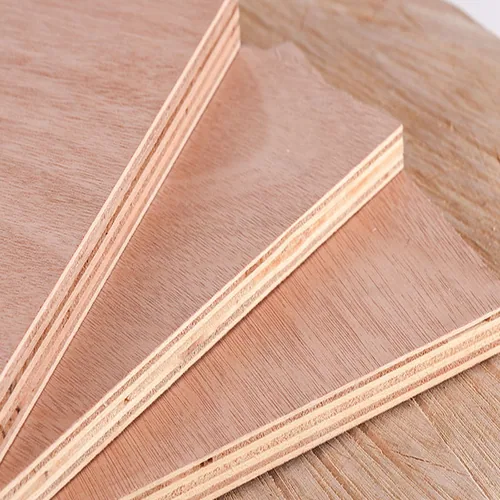
A plywood core void is a gap in the inner veneer construction; ply count is the number of veneer layers. Compare the full lay-up and the cut locations your component exposes, then record how gaps or overlaps affect its edge, joint or finish. Keep each observation linked to the sample and drawing position so the core choice can be evaluated through usable finished parts.
When the core choice also affects handling, use the construction-based plywood weight guide. Keep the complete veneer schedule, dimensions and measurement conditions with each mass result, then compare the finished component.
For a birch buying decision, connect the observed edge with the birch faced and all-birch veneer schedules. Compare named constructions with the same machined part, appearance requirement and inspection scope.
- Request the offered lay-up rather than only a ply count.
- Map cut-core observations to the finished drawing.
- Agree defect acceptance for the intended part.
UNDERSTAND THE DETAIL
Core voids, overlaps and delamination: what is the difference?
A core void is a gap within the veneer build-up; an overlap is a local overlap of veneer material; delamination is a separation at a bonded interface. These observations describe different conditions and should be recorded separately when inspecting a cut edge or component.
Inspect the cut edges, pockets and fixing areas that matter to the part. Record where each feature appears, and agree a closer inspection or bond test if separation is suspected.
- Ply count
- The number of layers in the construction; keep the veneer arrangement and thickness information alongside it.
- Location
- Identify the sheet and the exact cut where a gap or separation is observed.
- Acceptance
- Agree the appearance and core requirements around the part you are making.
Does more plywood plies always mean better plywood?
No universal quality ranking follows from the layer count. The veneer materials, arrangement, bond, dimensions and intended application also matter. Compare the actual offered constructions and any relevant product performance information, then use the finished-part trial to address the component-specific questions.
Continue with recording an observed panel difference.
Reference: APA: plywood construction and grades.
Describe the construction behind the edge
Plywood is built from bonded veneer layers with arranged grain directions. Compare the construction and relevant board properties alongside ply count when selecting it for a component.
For an appearance-led part, inspect a prepared edge using the actual finish. For a joint or fixing, identify the relevant internal location and evaluate the complete detail. The same observed gap can have different implications depending on where it falls in the component.
PLYWOOD CONSTRUCTION AND INSPECTION RECORDS
Connect the cut edge with a named panel and its data.
Make the shortlist useful for your workshop. The ECQA file identifies 100% birch plywood in three thicknesses; the SGS marine file identifies an 18 mm panel with 11 plies. Use the corresponding construction, dimensions and checks with the edge, pocket or fixing your component exposes.
Scroll horizontally to compare all columns.
| Report and panel | Recorded construction and checks | Read and compare |
|---|---|---|
| ECQA plywood inspection 2500 × 1250 mm · 21 / 24 / 30 mm | 100% birch plywood; WBP; phenolic E1 glue CP appearance basis 80 panels checked for workmanship 0 critical · 0 major · 2 minor Conclusion: PASS | Open the ECQA inspection report (opens in a new tab) Read all-birch panel measurements |
| SGS marine plywood report 1220 × 2440 × 18 mm · 11 plies | BS 1088-1:2003 product reference Class 3 bonding · BS EN 314-1:2004 Mean thickness: 17.95 mm · BS EN 324-1:1993 | Open the marine plywood report (opens in a new tab) Read the marine panel results |
Bring the measured gauge into the machining plan.
The ECQA record gives the following measurements and workmanship sampling counts for its three all-birch items. Keep the nominal thickness, individual readings and your finished-fit requirement together when planning a slot, pocket or exposed edge.
Scroll horizontally to compare all columns.
| Nominal item | Thickness readings | Diagonal difference | Panel weight | Workmanship sampling |
|---|---|---|---|---|
| 21 mm | 21.09 / 21.05 mm | 1 / 1 mm | 46.5 / 46.6 kg | 23 panels |
| 24 mm | 24.10 mm | 1 mm | 50.0 kg | 20 panels |
| 30 mm | 30.21 / 30.10 mm | 1.5 / 1 mm | 63.5 / 63.6 kg | 37 panels |
The workmanship counts total 80 panels. The two recorded minor findings are surface dirt on the 24 mm item and remaining material not removed on the 30 mm item. Retain those descriptions with the appearance checks; record the observed gap, overlap or bonded-interface condition separately at the cut location in your own component trial.
Give the layer schedule a working detail to answer.
For the proposed panel, request the face, back and every inner veneer species, gauge and grain direction, plus the bond and delivered dimensional range. Mark the full-thickness front edge, deepest pocket and fixing location on the drawing. Review the actual cut section, remaining material and finished joint with that schedule.
On a visible shelf edge, compare the prepared and finished layer appearance against the retained range. At a hardware pocket, include the actual fitting, hole depth and required remaining section. For a specified marine part, keep the project edition and complete marine construction with the required bond and component data.
Scroll horizontally to compare all columns.
| Buying decision | Keep with the request | Next step |
|---|---|---|
| 21 mm all-birch material file | 1250 × 2500 mm format; full face/back and inner-layer schedule, measured gauge, bond documents and the marked cut-core checks. | Request the 21 mm core file |
| 21 mm all-birch visible edge | Your front-edge cut and preparation, actual clear-coated finish, permitted layer appearance and labelled observation locations. | Try the 21 mm finished edge |
| 21 mm all-birch fixing detail | Actual pocket, slot or fastener and support requirement, remaining section and full-thickness construction at the marked position. | Try the 21 mm fixing detail |
| 18 mm marine construction file | 1220 × 2440 mm format; required marine edition/class, complete veneer and ply schedule, measured dimensions and the component cut list. | Request marine construction data |
Specify the core requirement by layer, location and finished task.
Focus the inspection on the areas your part uses: visible edges, hardware pockets and joints. Agree acceptable features for those locations using the selected construction and drawing.
Scroll horizontally to compare all columns.
| Field | Record with the cut | Use in comparison |
|---|---|---|
| Sheet and part identity | Bundle/sheet, construction/sample code, finished-part code and drawing issue. | Trace the observation to the offered panel and affected component. |
| Feature description | Gap, overlap, suspected bonded-interface separation or machining damage; label observations separately. | Compare the same observed condition and required assessment. |
| Geometry and scale | Visible length, width and accessible depth, units, scale and cut/section view. | Use defined dimensions rather than photograph size alone. |
| Layer and direction | Observed layer/position, veneer direction and full offered lay-up. | Keep the affected layer beside the feature, orientation and required data. |
| Drawing zone | Exposed edge, pocket, slot, fixing, support/joint or trim area; part origin and axes. | Find where the finished detail intersects the observed feature. |
| Processing and finish | Cut/tool/preparation stage, complete coating or lipping and actual finished appearance/fit. | Separate raw-edge observations from the supplied finished stage. |
| Limits and inspected scope | Applicable product/drawing feature limits, method, sheets/cuts/parts selected and inspected count. | Compare with the requirement without extending one cut to unexamined material. |
| Part disposition | Accepted, permitted appearance repair and recheck, rejected or pending; responsible part decision and record. | Keep unique part counts separate from feature counts and offcuts. |
For visible edges, agree the appearance under your chosen finish, including acceptable features and repairs. Around fixings or loaded joints, use the drawing and strength requirements to decide how a core gap should be handled.
Ask for the face, back and core species, layer arrangement and veneer thicknesses. Compare these with the component’s strength, edge and machining needs, alongside the bond test information. See Bond requirements and report scope.
Record observations without losing their location
Photograph the cut section with a scale and part code. Mark the sheet position if it is available, and distinguish the usable part from the offcut. Keep the sample identity so the observation can be connected to the construction being discussed.
Use agreed defect descriptions rather than a general good-or-bad judgement. A critical joint observation should return to the responsible design or technical reviewer. Sorting or appearance repair should be discussed against the selected acceptance criteria before material is released for use.
WORKED BUYING EXAMPLE
Example: three observations from one cutting nest
Illustrative planning example; values and quantities are not product specifications or quotations.
A trial nest exposes the core in a shelf edge, a hardware component and an unused offcut. Each observation should retain its location.
Scroll horizontally to compare all columns.
| Item or observation | Record or compare | Next decision |
|---|---|---|
| Shelf front edge | A visible gap remains after the planned finish. | Compare with the accepted edge appearance. |
| Hardware position | An internal feature intersects the joint location. | Review the complete fixing detail before approval. |
| Discarded offcut | A feature appears outside every finished part. | Record it, but distinguish it from actual component rejects. |
What this means for the order
Count rejected finished parts by defect type and keep photographs, measurements or offcuts showing the issue. This connects the requested construction quality to usable output instead of treating every photographed feature as the same purchasing issue.
Count affected parts once, then record their disposition.
Use a chosen trial of 80 attempted parts. There are 12 parts with an edge-feature observation and seven with a hardware-location observation; four parts appear in both groups. Six additional feature observations occur in discarded offcuts. These are calculation inputs, not CUZI production results or a prescribed inspection plan.
Scroll horizontally to compare all columns.
| Record | Count or calculation | Purchasing meaning |
|---|---|---|
| Unique affected parts | 12 + 7 − 4 = 15 | The same part with two observations stays one affected part. |
| First-pass accepted | 80 − 15 = 65 65 / 80 = 81.25% | Retain the other 15 parts under their separate decisions. |
| Permitted appearance rework and recheck | 5 of the 15 | Accepted after the stated appearance recheck; keep added work visible. |
| Rejected / pending | 8 / 2 | Pending parts are not added to accepted output. |
| Accepted after the stated recheck | 65 + 5 = 70 70 / 80 = 87.5% | 70 accepted + 8 rejected + 2 pending = 80 attempted parts. |
| Discarded offcut observations | 6, recorded separately | These are not six additional finished-part rejects. |
The rework line refers only to the appearance repairs permitted and rechecked for this chosen record. A critical fixing, suspected bond separation or other unresolved property remains under its own required assessment. Record repair time and changed finishing alongside accepted output when comparing constructions.
These percentages describe the 80 components in this trial. To compare cores, use the same drawing, process, finish and quality checks, and record each trial’s usable parts.
Compare core options on the same finished part
CUZI birch-faced plywood can use poplar, birch or eucalyptus cores. Ask for each construction you want to compare on a separate quotation line. Keep thickness, face grade, finish and the cutting pattern fixed during the comparison, so you can see what changes with the core.
Give the sample a job to do
- Cut the visible front edge and machine the pocket or fixing shown on your drawing.
- Label every observation with the sample, part code and position; photograph it with a scale.
- Record accepted parts, parts needing repair and rejected parts separately.
- Agree the edge-quality requirement and construction for the order using the finished trial.
Send CUZI your edge detail or fixing drawing and the core alternatives you want to compare. If internal quality is critical to a whole sheet, discuss a suitable full-panel trial and inspection scope alongside the small sample.
Start with the cut, fixing or construction file that decides the purchase.
The requests use 18 mm and 1220 × 2440 mm within the confirmed birch plywood supply range. Add the actual face/back grade and basis, full construction, required finish and component geometry; the quotation identifies the final offered panel.
Scroll horizontally to compare all columns.
| Decision | Comparison reference | Continue |
|---|---|---|
| Poplar-core visible edge | Marked front cut, actual finish and permitted edge appearance on the drawing. | Trial the poplar-core finished edge |
| All-birch fixing detail | Actual pocket/slot/fastener, support and marked layer/location; complete fitting reference. | Trial the all-birch fixing location |
| Two offered constructions | Face/back and complete layer/gauge/bond schedules, matching data and inspected scope. | Request the two construction files |
| Selected core and usable parts | Same part and finish; permissible features, accepted output, rework, rejects and pending parts, with the delivered operations. | Quote the core-selected component item |
Keep these details with your inquiry
- Proposed veneer construction and panel identity.
- Drawing locations that expose or rely on the core.
- Photographs, scale and cut-part references.
- Agreed acceptance descriptions and resulting component yield.
Review the relevant product guide and prepare your inquiry files.
Questions buyers ask
Which plywood construction reports can I read?
The construction records link the ECQA all-birch inspection in 21, 24 and 30 mm with the SGS 18 mm marine report identifying 11 plies. Read the full PDFs and request the layer schedule, dimensions and component checks for the panel you are buying.
Is a higher ply count always preferable?
No. Ply count alone does not rank the quality or suitability of plywood. Compare the veneer arrangement, board properties and finished-part requirements alongside the ply count.
Does one clear cut edge prove the whole shipment?
No. A clear cut edge does not prove that every panel in the shipment has the same internal condition. One edge represents a limited observation. Agree a sample and inspection scope that matches the order, then keep results linked to the sheets or lot evaluated.
What should a void-free description specify?
Name the applicable product requirement, permitted feature descriptions, critical drawing zones and inspection method/scope. Request the offered construction and its corresponding information instead of treating an undefined phrase or one clear edge as a whole-sheet record.
Can an appearance repair settle a hardware or bond concern?
No. A cosmetic repair does not establish fixing strength or bonding performance. An appearance repair addresses its agreed visual detail. Keep fixing, bonded-interface or load requirements under the relevant material and complete-component assessment; record any unresolved part separately.
How should two observations on the same part be counted?
Keep both feature descriptions and locations, but count the finished part once when calculating affected or accepted quantities. Record its final disposition separately from the number of observations.
Does an offcut gap count as a finished-part reject?
Not by itself. A gap in discarded trim is not a defect in the finished component unless it affects that component’s specified requirements. Record its sheet/cut location and construction, then distinguish it from the actual finished part. A defect in discarded trim and a feature at a required edge or fixing represent different component records.
What belongs in a full core construction request?
Face/back and inner species, layer order and direction, veneer gauges, final panel thickness, bond and required product data. Keep the offered material code and sample/inspection scope with the drawing locations that matter.
How can two cores be compared for a repeat order?
Hold the part drawing, gauge/format, face/back and grading basis, machining, finish, requirements and inspection scope common. Retain each core’s offered lay-up, finished-part record and supplied-work cost as a separate item.