On this page
THE QUICK BUYING ANSWER
Choose for the moisture the finished part will encounter.
Start with standard MDF for dry interior furniture and painted components. For interior parts exposed to humid conditions, specify moisture-resistant MDF and the finish, edges and fitting detail needed for that use. Direct water contact or exterior service calls for a product and complete finishing system intended for that exposure.
- Standard MDF: a dry-interior starting point for routing, painting and facing.
- MR MDF: an interior moisture-resistance requirement, with product data and a complete component trial.
- Exterior or wet-use requirement: define the actual exposure, proposed board and full surface/edge detail.
Choose the material around the part your customer will use, then compare the cost of making it. Keep a dry-interior item and a humid-use item separate even when they share a paint colour, thickness or container. That gives each component a clear grade, finish and receiving reference.
STANDARD, MR OR AN EXTERIOR REQUIREMENT?
Make the location and contact conditions part of the specification.
A cabinet door in a dry bedroom, a bathroom cabinet component and an outside panel can all have a painted MDF appearance. Their location, moisture exposure and finishing requirements create different purchasing briefs.
Scroll horizontally to compare all columns.
| Route | Buying starting point | What to confirm |
|---|---|---|
| Standard MDF | Furniture, profiles and facing substrates in dry interiors. | Selected board, thickness, machining, complete finish and required material data. |
| Moisture-resistant MDF | Interior components with a defined humid-service requirement. | MR designation, relevant moisture test results, finished edges, reverse and fitting detail. |
| Exterior or direct-wetting requirement | An exposure brief describing shelter, rain/splash/contact, drainage and maintenance. | Product intended for the exposure, complete coating/edge system and installation guidance. |
Write down where the part sits and what reaches it. Include condensation, cleaning, splashes, cut edges, joints and nearby wet surfaces when they affect the component. That is a more useful brief than a general request for “water resistant MDF”.
Manufacturer guidance distinguishes interior MR panels from exterior products and sets finishing requirements for the latter. MEDITE’s MR/exterior usage guidance is one named reference for that distinction. Request the proposed CUZI board’s own designation and application information with your quotation.
Put the exposure at the actual cabinet detail.
Scroll horizontally to compare all columns.
| Component location | Describe | Carry into the selection |
|---|---|---|
| Dry-interior door or front | Installed conditions, routed profile, coating, reverse and hardware. | Board grade, machining result and completed finish/fit. |
| Humid-room cabinet component | Humidity, condensation, cleaning and any splash near joints or holes. | Proposed MR grade, corresponding moisture data and complete detail. |
| Repeated wet contact or outdoor part | Contact path/duration, shelter, drainage and maintenance. | Product intended for that exposure and the complete finish/installation route. |
For a bathroom cabinet, distinguish a door face from a bottom edge near a wet floor or a penetration beside a basin. For a kitchen component, describe the cleaning and contact around sinks, joints and appliances. The room name alone leaves those different conditions unresolved.
Keep the relevant moisture requirement separate from the emission requirement, face finish and mechanical properties. E0 or E1 describes the requested emission option, while MR identifies a moisture-resistance route. Use the required methods and corresponding product documents for each field.
What does “waterproof MDF” mean in a buying brief?
Turn that search term into actual conditions: humid air, intermittent splash, repeated cleaning, outdoor weather or sustained water contact. Then identify the board, finish and installation system intended for those conditions.
MR is a moisture-resistance selection for interior use. It does not establish unlimited water exposure for a completed component. The finish on the broad face, reverse, routed profiles, cut edges and fixing holes belongs in the same purchase discussion.
For an outdoor component, describe the location and shelter, contact duration, joints, exposed edges and planned maintenance. The European Panel Federation’s exterior MDF guidance connects the board selection with finishing surfaces and edges. Our exterior MDF project brief helps organise those requirements.
Is a green colour enough to identify MR MDF?
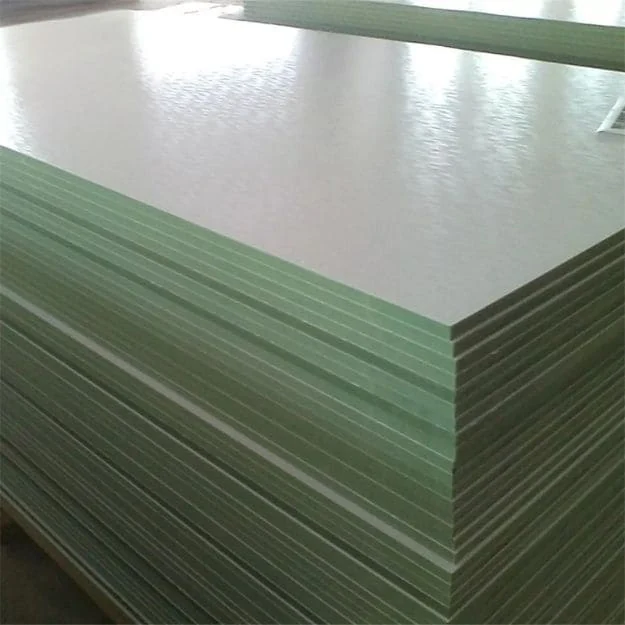
Use the supplied board designation, item identity and relevant technical data to select the grade. Keep any colour identification with the material record and request a cut-edge sample of the actual construction.
Follow the water path through the finished part.
Mark cut edges, routed recesses, hinge cups, connector holes and joints on the drawing. Show which surfaces your workshop finishes and which cuts or fixings will be made later. Keep their preparation and protection with the proposed board and coating instructions.
A faced sheet and a fully fabricated component have different exposed details. Include the reverse and newly machined areas in the trial, with the intended fitting and cleaning routine. If the contact conditions change, revisit the board and complete detail before reusing an earlier component reference.
READ THE METHOD ALONGSIDE THE PERCENTAGE
Compare thickness-swelling results on the same basis.
Thickness swelling describes the change in thickness under a stated test. The European Panel Federation describes EN 317 as a cold-water immersion test with thickness measured before and after a defined period. Its overview also identifies separate cyclic and other moisture assessments.
A useful comparison retains the board designation, thickness, test method, duration and conditions with the result. Ask which requirement or acceptance limit the reported value is being compared with.
- Thickness swelling
- The percentage change in thickness under the specified test conditions.
- Water absorption
- A mass-change result under its stated method; keep its units and conditions separate from thickness change.
- Component fit
- The finished part’s dimensions, joints and hardware fit under the working or exposure conditions you agree.
How is a thickness-change percentage calculated?
Thickness change (%) = (thickness after − thickness before) ÷ thickness before × 100. For example, hypothetical readings of 18.0 mm before and 18.9 mm after give 5%. Use the proposed board’s reported result and applicable requirement for purchasing.
For a project with repeated humid/wetting conditions, include the assessment specified for that use rather than comparing unrelated numbers. EPF’s property-assessment overview explains the distinction between thickness swelling and further moisture-related tests. Use the applicable current method and product requirement for the proposed item.
We can discuss the MR data needed for your quoted construction. You can also read the RAW MDF test report for its methods and recorded results, then request the corresponding information for your selected board grade.
Translate a percentage back into the measured thickness.
The same percentage can represent different absolute changes at different starting gauges. The readings below are arithmetic inputs for understanding the formula; use the selected board’s actual report and applicable requirements for buying.
Scroll horizontally to compare all columns.
| Before | After | Change | Percentage |
|---|---|---|---|
| 12.00 mm | 12.48 mm | 0.48 mm | 4.0% |
| 25.00 mm | 26.00 mm | 1.00 mm | 4.0% |
Neither row predicts movement of a finished cabinet under ordinary service conditions. A defined immersion result and component fit involve different specimens and conditions. Keep test duration, conditioning, measuring positions and reported individual/summary values with the product identity when comparing documents.
A lower number from a shorter exposure or different specimen cannot be compared directly with another method. Ask for the same assessment basis and the requirement that applies to the selected grade and thickness. If repeated exposure matters, include the method required by that product/application rather than treating one immersion percentage as the whole decision.
Trial the routed edge, reverse and actual fitting detail.
The useful sample follows the component your workshop will make. Route the demanding profile, cut the exposed edge, drill the hardware locations and apply the intended finish. Retain the preparation and coating references with the trial piece.
Use the board and coating suppliers’ instructions to define compatible preparation, face/reverse finish and treatment of edges, grooves and holes. Include any banding, joint, mounting or sealant detail that belongs in the finished part.
For a painted door, compare the cured appearance at the face, recess, edge and reverse, together with the hinge or hardware fit. For panelling or a skirting profile, include the joints, fixing positions and the surface next to the installed part.
Our routed MDF door finishing guide helps record the process. Use MDF Machining to discuss a drawing-based trial part, and the receiving and storage guide to prepare boards for the workshop.
Compare the coated detail at the same stage.
Use the intended cutter, profile, preparation and coating sequence on both proposed boards where they serve the same component requirement. Record the face, recess, cut edge and reverse after the agreed cure stage. Include the actual hardware and joint with the assembled trial.
Keep any extra filling, sanding or edge treatment visible in the comparison. A board that reaches the desired finish with a different process changes workshop time and cost. Retain the selected material and process record with the completed part your team will repeat.
CUZI BOARD OPTIONS FOR YOUR NEXT ORDER
Choose the grade, then build the panel mix.
Scroll horizontally to compare all columns.
| Board route | Thickness and emission options | Sample starting point |
|---|---|---|
| Standard Plain MDF | 2.5–35 mm; E0, E1 or E2 options. | The cut/routed profile, planned facing or paint, and complete component fit. |
| Moisture Resistant MDF | 9–25 mm; E0 or E1 options. | The MR item, relevant moisture data, finished edge/reverse and intended fitting detail. |
Regular MDF sheet sizes are 1220 × 2440 and 2100 × 2800 mm. Formats 1220 × 3050, 1830 × 3660 and 1220 × 3660 mm are on request. Send the cutting layout and machine limits when discussing a larger format or prepared parts.
Keep the emission requirement separate from moisture grade. Name the destination, required method and supporting documents with the offered board. The quotation should identify the grade, dimensions and emission option selected for each item.
One container is the minimum order, and mixed loads are available. Regular board production guidance is 10–15 days, with shipping additional. Name the FOB shipment port or CIF destination port and keep standard and MR quantities under separate item codes.
Keep base-board dimensions and completed-part dimensions distinct.
For a faced or coated purchase, specify total finished thickness and the delivered stage. For cutting and machining, include dimensions before or after edge banding, the profile drawing and tolerances. The base-board range supplies the material discussion; the completed construction and processing belong in its own item.
Give each standard or MR line its grade, gauge, sheet/part size, finish, requested emission method and quantity. Add the destination and component use to the technical request. Keep those codes on the sample and bundle label so the workshop allocates the intended grade.
Compare the cost of the finished component.
Ask each offer to cover the same grade requirement, dimensions, quantities and delivery terms. Include cutting yield, edge preparation, machining, coating/facing, packing and the work needed to produce an accepted part.
For a humid-use component, retain the relevant product data and working trial with that comparison. For a dry-interior item, compare the constructions that meet its finish and fitting requirements. A broad price label supplies less detail than an offer matched to the actual job.
Keep standard MDF and MR MDF as distinct lines in a mixed order. That lets your team allocate the chosen grade to each component while combining the purchase into one load.
Price the work remaining after delivery.
Scroll horizontally to compare all columns.
| Cost line | Keep consistent | Record separately |
|---|---|---|
| Delivered material | Required grade, gauge, size, emission method, quantity and delivery point. | Facing/coating, documents and special processing included in supply. |
| Workshop conversion | Cutting layout, accepted part dimensions and completed finish stage. | Preparation, machining, edges, coating, labour and rejected parts. |
| Usable components | The same installed requirement, fittings and acceptance criteria. | Reserve parts, handling, trial/setup work and remaining assembly. |
Compare landed and processing cost divided by accepted parts at the same stage. Keep the price unit and currency clear, and show waste or reserve separately. A proposed MR item and a dry-interior item may belong on different jobs; select the grade requirement before looking for the lower sheet price.
TWO COMPONENTS IN ONE PANEL ORDER
A painted bedroom door and a bathroom cabinet part.
Consider a workshop order combining dry-interior bedroom doors and cabinet components for a bathroom. Give each item its own location, drawing, finish and moisture requirement before comparing the panel offers.
Scroll horizontally to compare all columns.
| Component | Panel and trial brief | Carry into the order |
|---|---|---|
| Bedroom door | Review the standard MDF item through the actual routed profile, coating and hardware fit. | Board identity, finished thickness, process and accepted appearance reference. |
| Bathroom cabinet part | Define the humid/contact conditions, proposed MR item, relevant data and complete edge/reverse detail. | Grade and construction, moisture requirement, finish/fitting reference and supporting documents. |
Keep the two constructions, sample references and quantities separate in the quotation and bundle labels. The load can combine both materials while the workshop receives a clear panel reference for each job.
Request the two working details with their own service brief.
Use an 18 mm starting gauge for the two trial requests below, then change it to the actual drawing requirement. Keep a dry-interior front and a humid-use cabinet part under separate references, including the exposure and complete preparation/finish for each.
Scroll horizontally to compare all columns.
| Job and material | Working detail to retain | Start the request |
|---|---|---|
| Dry-interior front · standard MDF | Deepest routed profile, remaining section, actual hinge, face/reverse/edge preparation and cured coating. Record the delivered and completed dimensions, process time and accepted output. | Trial the dry-interior front |
| Humid-interior cabinet part · MR MDF | Mark condensation, cleaning and splash contact at the bottom/cut edge, hole, joint and reverse. Retain the selected MR model, matching moisture assessment, complete coating/edge protection and actual fitting/fit requirements. | Trial the humid-use cabinet detail |
For the MR line, request the corresponding moisture and board data with the method, duration, conditions and applicable requirement. Compare each line against its own service conditions and finished-component criteria, then combine the selected quantities.
Make a two-line schedule the workshop can use.
Give the bedroom front and bathroom part distinct item codes, drawing issues and retained finish references. Record which material each one uses, its delivered dimensions and the remaining operations. Include any change to the component’s exposure or finish on the corresponding line.
Request one representative working detail for each selection: the demanding routed/painted area on the dry-interior front, and the selected MR board’s edge, reverse, joint and fitting detail for the humid-use part. Keep their material data and observations separate when combining the order quantities.
TAKE THE NEXT STEP WITH THE RIGHT SAMPLE
Send the location, drawing and board requirement you have.
- Component and location: dry interior, humid-use requirement or an exterior/contact brief.
- Board grade, thickness, dimensions, tolerances and quantity by item.
- Required emission and moisture methods or product documents, with destination.
- Drawing, routed edge, reverse, holes, joints, actual hardware and planned finish.
- Working sample dimensions, trial detail and agreed acceptance criteria.
- FOB/CIF port, target receiving date, labels and mixed-load items.
Samples are free; buyers pay courier freight, with a later-order credit available by agreement. Choose the board route below so the request follows the material you want to evaluate.
Discuss your MR MDF order or use the mixed-panel schedule to organise both board grades.
Send the first request without waiting for every detail.
A component drawing or description, target thickness, approximate quantity and destination are enough to start the discussion. Add the exposure and finish you know, then request the proposed grade and relevant documents with the sample. The material identity, process and complete detail can stay together as the item develops.
Moisture-resistant and standard MDF buying questions.
What is the main difference between MR MDF and standard MDF?
Standard MDF starts with dry-interior use. MR MDF adds a defined interior moisture-resistance requirement. Compare the proposed board designation and relevant test data alongside the complete component and finish.
Is moisture-resistant MDF waterproof?
No. MR MDF is intended for humid interiors, with the appropriate finish and treatment of edges, reverse and fixing details. For direct water contact or exterior work, choose a product and finishing system intended for that exposure, with the corresponding usage and product information.
Can I use MR MDF for kitchen or bathroom components?
Define the part’s location, humid conditions, cleaning and any splash/contact first. Specify the proposed MR board, finish, reverse, edges, joints and actual fitting detail; request data and trial the relevant component.
Can standard and MR MDF be routed and painted?
Include the actual profile and finish in the board selection. Trial cutting/routing, preparation and coating on the offered construction, following the relevant supplier instructions for the complete part.
How do I compare thickness-swelling figures?
Use the same method, duration and conditions, and retain board identity, thickness and the applicable requirement with each result. Keep a water-absorption value and a completed-component trial as separately identified measurements.
Which technical data should I request for MR MDF?
Ask for the proposed board designation, thickness, moisture test method and results, emission information and application guidance. The RAW MDF report shows its recorded construction, methods and results; request the corresponding data for the MR item in your quotation.
Which CUZI thickness and size options can I request?
Standard MDF is available in 2.5–35 mm and MR MDF in 9–25 mm. Regular formats are 1220 × 2440 and 2100 × 2800 mm; the larger listed formats are on request. Identify grade, dimensions, quantities and destination together.