On this page
IN BRIEF
Buy the construction behind the face you like
When comparing Indonesian plywood offers, request the face/back selection and complete inner-veneer construction alongside thickness, size and required bond or emission information. Compare the proposed panels on the same furniture drawing: cut edge, joint, finish, assembled weight and usable parts. Carry the accepted construction into the purchase schedule so the quotation describes the panel your workshop selected.
- Choose a supply route: identify the seller, actual producer and manufacturing location.
- Compare like with like: separate face and back species from every inner veneer, bond and supplied surface.
- Buy around the finished part: review the same machining, fittings, appearance and delivery scope before choosing the offer.
This guide focuses on Indonesian supplier information and veneer-to-component comparison. For another sourcing route, use the China supplier and order-control guide. CUZI supplies from Xuzhou, China; our alternative is clearly identified below.
UNDERSTAND THE DETAIL
Does the face species describe the whole plywood sheet?
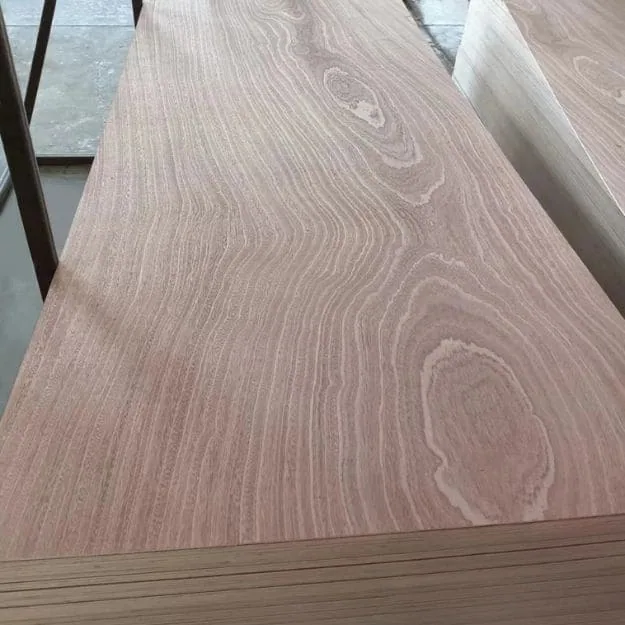
A named face veneer describes the visible surface. It can sit over a different back, several inner species or a mixed core. Request the complete construction separately: species, veneer gauges, layer order, grain arrangement, bond, facing and finished dimensions. An all-species quotation should define which layers that description covers.
Scroll horizontally to compare all columns.
| Offer field | Ask the supplier | Check in the trial |
|---|---|---|
| Face and reverse | Actual species, veneer gauge, grade basis, repairs, preparation and appearance range on each side. | Both faces, visible patches, finish response and the exposed edge under the intended viewing conditions. |
| Inner veneers | Each species and gauge, layer sequence, grain direction and named mixed-core arrangement. | Identified cut locations, routed features, joints and fittings in the actual component. |
| Bond and intended duty | Required method, class or project specification, test conditions and matching product reports. | The component and exposure appropriate to the intended use, alongside the requested technical information. |
| Finished sheet | Nominal and finished dimensions, tolerances, sanding, overlays and supplied condition. | Measured fit, cutting yield, finish, mass and any remaining workshop operations. |
Give similar-looking samples different identities
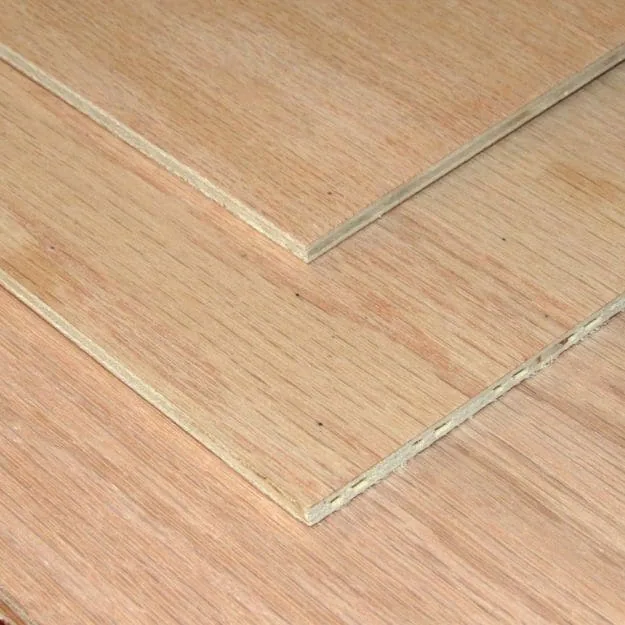
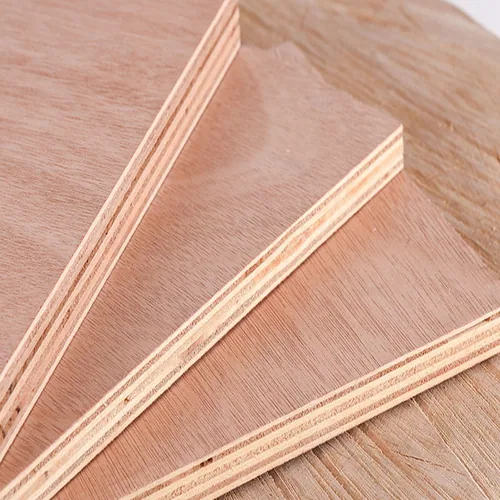
Label each proposed construction before cutting. Keep a full-thickness offcut, front/reverse photographs, sample code, drawing revision and cut locations. Ask the supplier to link its quotation to that reference. If the core or surface changes later, identify the changed item and review the affected part again.
Use photos to choose the face, then compare a cut sample for the internal construction and machining. The core-inspection and face/back grading guides help you prepare those checks. See comparing internal construction at cut locations, face/back grading schedule.
Falcata, Jabon, Meranti or mixed core: choose the veneer construction
Some Indonesian suppliers list Albasia Falcata or Jabon; others offer hardwood or mixed panels. Ask which species are used in each layer and request the density, bond and appearance information needed for your item.
For portable furniture, compare the complete fastened assembly and any required reinforcement. For decorative interiors, compare face selection, preparation, matching and the cured finish. For structural, marine or fire-related work, send the responsible designer’s product requirements and obtain the matching construction and documents.
Keep plywood and blockboard as separate alternatives
If a supplier offers plywood and blockboard, ask for a labelled cross-section of each. Give them separate item codes and compare machining, fixing, edges and finished appearance in a sample trial.
Record the contracting seller, producer, site and shipment origin separately. A distributor or exporter can coordinate an order from another mill. That route still needs a named construction, working sample, inspection responsibility and clear change record.
WORKED BUYING EXAMPLE
Example: compare 20 component blanks from each construction
Illustrative buying scenario. The counts below explain the comparison; use your own trial results for an order.
- Application
- A portable display with visible edges and hardware fittings.
- Common reference
- Drawing D-02, the same part dimensions, finish, joints and acceptance criteria.
- Sample run
- 20 identical component blanks from Sample A and 20 from Sample B.
These samples have the same face species and different inner constructions. Mark the source sheet and cut positions, use the same workshop process and record one main rejection reason per unusable blank to keep the count clear.
Scroll horizontally to compare all columns.
| Trial result | Sample A | Sample B |
|---|---|---|
| Blanks checked | 20 blanks against D-02. | 20 blanks against D-02. |
| Accepted blanks | 18 accepted; 18 ÷ 20 = 90%. | 17 accepted; 17 ÷ 20 = 85%. |
| Primary rejection reasons | 2 rejected: 1 edge-appearance difference and 1 fit difference. | 3 rejected: 2 edge-appearance differences and 1 fit difference. |
| Count reconciliation | 18 accepted + 2 rejected = 20 checked. | 17 accepted + 3 rejected = 20 checked. |
Choose with the complete component record
These percentages belong to the identified 20-blank trial. They are not shipment rejection rates or predictions for later lots. Review the reasons, cut locations and process observations, then compare both completed displays with the same finish and hardware. Include any extra edging, reinforcement or rework in the cost and weight record.
If a process change improves the result, repeat the affected check and keep both records. Request the relevant reports separately for bond, structural or emission requirements.
What price difference would offset one fewer accepted part?
Keep this calculation within the illustrated runs. Let CA and CB be the complete recorded cost of making and checking each set of 20 blanks, including its material, cutting, edging, fittings, preparation, finish and rework. Use the same cost scope and currency for both constructions. Record separately any unallocated transport or receiving costs before comparing an order.
Scroll horizontally to compare all columns.
| Cost question | Calculation | Buying interpretation |
|---|---|---|
| Same total trial cost | A: C ÷ 18 accepted parts. B: C ÷ 17. B’s cost per accepted part is 18 ÷ 17 = 1.0588 times A’s, about 5.88% higher. | Compare the included work and actual rejection reasons. An extra edging or fitting operation belongs in the cost of that construction. |
| Break-even trial cost | CB ÷ 17 = CA ÷ 18 when CB = (17 ÷ 18) × CA, or 94.44% of A’s total. | With these illustrated accepted counts, B needs more than about 5.56% less total trial cost to have a lower cost per accepted part. Use the recorded total, including processing and rework, for that comparison. |
The next shipment needs its own quantity plan and production inspection. Keep the small trial’s costs and observations with its named specimens; use separately stated assumptions for an order estimate. Compare the finished display’s mass, appearance, hardware fit and required product documents alongside the cost, then carry the chosen full construction into the order.
Review my component trial and quoted scopeRequest the complete veneer construction file
A follow-up message you can adapt
Please quote the face and full core lay-up separately. We will compare 20 component blanks against drawing D-02. Link the quoted item to your sample and identify the veneer construction used for that trial. Include the back, bond, finished dimensions, supplied work, requested documents, quantity and named delivery point.
Prepare your inquiry files →YOUR COMPARISON RECORD
Keep the decision attached to the panel and drawing
Before cutting
Agree the component, visible faces, orientation, edges, fittings and finish. Confirm each sample’s full construction and supplied condition. Keep the drawing revision and accepted appearance range with the sample identity so every workshop evaluates the same requirement.
During the trial
Record actual cut locations, process settings, observations and inspection method. Separate edge appearance, machining, fit, fastening and surface results. Record the number checked, accepted and rejected, the primary reason for each rejection and parts still awaiting a decision.
Before placing the order
Identify the selected model and construction, retained specimen and finish reference in the purchase schedule. Define any accepted alternative separately. Agree the sampling, inspection criteria, review contact and handling of changes before production. Use the repeat-order change record for subsequent batches.
Indonesian suppliers: compare the role and product route
The following official channels describe different panel ranges and supply roles. Shortlist around the offered construction and your processing needs; ask each contact to identify the producer and site for the actual order.
Scroll horizontally to compare all columns.
| Supplier | Published product / supply route | First purchasing question |
|---|---|---|
| Hasil Albizia Nusantara | Karanganyar, Central Java; manufacturer describing Falcata/Jabon plywood and blockboard. | Which full veneer or strip-core construction belongs to the proposed sample? |
| Tropika Perkasa | Bekasi, West Java; manufacturer/export supply site with furniture and specialty ranges. | Which producer, construction and supplied surface cover this item and dispatch? |
| Geo Woods Indonesia | Plywood manufacturing and tailored specifications described on its site. | What complete lay-up, manufacturing site and custom work will be quoted? |
| TCP / Tri Cahya Purnama | Plywood manufacturer listing raw, film-faced and laminate/melamine plywood. | How do the substrate, facing and reverse combine in the finished panel? |
| Kutai Timber Indonesia | Probolinggo, East Java; plywood, woodworking and particleboard product divisions. | Which division and identified model match the component and documents? |
| Asvita Adhya Abadi | Banyumas, Central Java; general/decorative plywood and floor-base ranges. | Which named inner species and surface belong to this general or floor-base item? |
| Mega Plywood Indonesia | Central Java supplier with distribution/export and manufacturing descriptions. | Who makes the offered item, at which site, and who contracts and exports it? |
Supplier profiles: useful starting points for a specification
PT Hasil Albizia Nusantara — plantation-wood panels
Hasil Albizia Nusantara identifies its Karanganyar location and describes plywood, blockboard and specialty panels using plantation timbers including Albasia Falcata and Jabon. For a weight-sensitive inquiry, request the species and layer schedule of the actual plywood. Compare measured sheet and completed-component mass under recorded conditions, then trial the selected fitting and edge. Keep any blockboard alternative as a separate item.
CV Tropika Perkasa — furniture and specialty inquiries
The original Tropika Perkasa address now leads to its current company site, which lists a Bekasi location, furniture and specialty product routes and export/container inquiries. Identify the actual manufacturing source, construction and finish for the selected line. Ask for item-specific quantity, allocation, dispatch and receiving stages rather than extending a general ready-stock statement to every specification.
Geo Woods Indonesia — tailored plywood specifications
Geo Woods describes plywood manufacturing and tailored product inquiries. Send a numbered veneer schedule, drawing and supplied-work scope. Ask for the proposed model, producing location, face/back and inner construction, then compare the finished joint or machined feature. Keep the quotation, working specimen and required documents tied to that same offer.
PT TCP Plywood — substrate and surface systems
TCP identifies the business as Tri Cahya Purnama and lists plywood, film-faced plywood and laminate/melamine plywood. Compare the complete substrate/facing/reverse assembly. Request the surface specification, total finished gauge, edge treatment and intended duty, then inspect both sides and a full-thickness cut. A successful decorative-face trial and a formwork surface requirement are different purchasing checks.
PT Kutai Timber Indonesia — select the product division
KTI’s product information lists plywood alongside woodworking and particleboard. Its company profile identifies the head office and factory in Probolinggo, East Java. Specify the selected product division and exact model before comparing construction, processing and documents. Keep a plywood inquiry distinct from a particleboard or completed woodworking-component offer.
PT Asvita Adhya Abadi — general and floor-base constructions
Asvita Adhya Abadi lists a Banyumas location and describes general/decorative plywood and floor-base products. Its published core descriptions include Albasia Falcata, Jabon, Mahoni and Meranti. Ask which species, gauges and layer positions occur in your offered model, and distinguish a flooring substrate from a decorative furniture panel. Request the matched sample and relevant technical files for that construction.
Mega Plywood Indonesia — check the supply source
Mega Plywood Indonesia presents distribution/export services and multiple plywood and blockboard types. Its company page also uses manufacturing descriptions. Establish the seller, actual producer, site and exporter for your item. Request the full lay-up and shipment identity behind an Albasia, Meranti, mixed-core or surfaced offer, then retain them with the accepted specimen.
Follow up with the right product contact
KTI’s English plywood information describes grade and format options. Its Indonesian product route and official contact channel provide further enquiry options. Send the intended use and construction fields and request the current model data for the required panel.
For each shortlist entry, obtain the legal contracting name, producer/site, proposed item code and responsible export/inspection contact. Carry the sample and drawing into subsequent correspondence. This keeps a general company introduction from becoming an incomplete product order.
Compare the cost of usable parts at the same receiving point
A lower sheet price can be outweighed by additional sorting, edge work, reinforcement, finishing or rejected components. Compare both offers against the same finished output and delivery scope. Use actual dated quotations, workshop observations and shipping inputs; keep trials and projected order costs in separate columns.
Scroll horizontally to compare all columns.
| Comparison field | Record for each offer | Decision it supports |
|---|---|---|
| Panel identity | Producer/site, full species/gauge/lay-up, bond, surfaces, dimensions and sample reference. | Confirm the price belongs to the construction you evaluated. |
| Processing and yield | Sheet/part units, cutting plan, work included, actual accepted count, rejects and remaining operations. | Compare the same usable component rather than unlike sheet prices. |
| Delivery cost | Currency/date, named FOB/CIF port, included charges, destination/inland/unloading scope. | Bring Indonesian and alternative origins to the same receiving point. |
| Schedule and handover | Production, dispatch, transit and receiving stages; documents, inspection, pack identity and changes. | Check when the identified usable material reaches the workshop. |
For each trial, divide material and processing cost by usable components. State whether offcut credit, rework, tax and freight are included. Use later production records to update the expected yield.
Use the same quotation comparison fields and the FOB/CIF and processing-cost guide. Download the quotation comparison worksheet for actual offers.
Match the document package to the model, origin and destination
Send the importing country, intended use and project/customer specification with the item schedule. Request producer/model identification, complete construction, relevant test methods and conditions, reports or declarations, marking/labels and the lot/shipment references that connect the file to the proposed material.
Discuss timber sourcing/legality and origin information with the actual exporter and your importer or broker. Where a supplier presents certification, obtain the applicable product and shipment scope. Company credentials, product reports and shipping papers answer different questions; keep them separate in the review.
For US or EU orders, use the destination-specific emission document guide to request the relevant report alongside your E0/E1 choice. Include any structural, marine or fire requirements for the selected panel.
Prepare the product document list. Request Commercial plywood files for a US comparison or Decorative plywood files for an EU comparison. These requests concern CUZI’s proposed China alternative; retain the Indonesian producer’s separate files in your comparison.
Try the details that matter in your finished part
Choose the critical edge, routed feature, joint or fastener from the real component. Keep sample dimensions, conditioning and measuring method in the record. Inspect the supplied face and reverse, then repeat the intended machining, preparation, finish and assembly. Retain the actual observations and finished reference.
Where low weight matters, measure a representative sheet and the complete assembly, including fittings, reinforcement, lipping and finish. Record units and conditions. Compare equivalent completed outputs; a raw-sheet density or a marketing description leaves later additions out of the decision.
For a decorative part, finish representative face and edge areas and review the agreed natural appearance range. For a film-faced item, identify the film, reverse, substrate and edges as one panel. Use the trial to answer the component question, with the required technical documents alongside it.
Request a decorative component sample Request a surfaced-panel sample
For the corresponding data, request Film plywood construction files. Describe your own component and method; the form keeps this comparison purpose with the selected material.
Keep the accepted construction visible through the shipment
Retain a labelled full-thickness offcut and completed reference for the chosen offer. Put the approved face/back, inner species and gauges, layer order, bond, dimensions and supplied finish in the purchase schedule. Confirm which changes require a new sample or document review.
Give each construction its own item code and quantity in a mixed order. Keep that code on the bundles, receiving record and workshop list so panels with similar faces are used for the right parts.
Agree the inspection locations, method, sampling and acceptance criteria, and the person who reviews differences. Use the incoming inspection checklist and download the receiving record. Photograph and identify a reported difference before processing the affected material.
Compare a CUZI China offer against the same component
Send us the face, core, bond, drawing, finished dimensions and quantity schedule used for your Indonesian comparison. We can quote our proposed construction separately, with its sample and product files. Compare each manufacturing origin using its actual freight and destination requirements.
Commercial plywood is available in 3–30 mm with poplar, birch or eucalyptus cores, BB/CC or C/D face/back options and E0/E1 emission options. Standard plywood formats are 1220 × 2440, 1250 × 2500 and 1525 × 3050 mm; 1220 × 3050, 1250 × 3660 mm and other formats are on request. Define the complete species/gauge schedule and grading basis in the offered model.
For a light-core comparison, start with poplar core plywood. Use Okoume plywood to compare an Okoume face with a named core or an all-Okoume construction. Fancy plywood supports decorative veneer and matching inquiries; Film plywood covers 4–30 mm surfaced panels, poplar/birch/eucalyptus/mixed cores, brown/black/red film, 90–240 g/m² and single/double-sided options.
Request a poplar-core comparison sample Request an Okoume comparison sample
Request Poplar-core construction and weight data or Okoume face and core data.
Move from the trial to the planned order
The minimum order is one container; plywood and MDF items can be mixed. Allow 10–15 days for production, with shipping and receiving additional. Samples are free; you pay courier freight, which is credited in full against your formal order. Request FOB or CIF with the port named and confirm the production, dispatch and receiving stages for each item.
Use the complete RFQ. Discuss a comparable China offer or Compare your core and quantity schedule.
Send one comparison brief to the shortlisted supply routes
Start with the component and face you need. Compare the full inner construction, working sample and finishing/assembly result, then compare the complete quoted scope. Keep the alternative model and origin visible throughout the decision.
Destination / receiving point and intended use:
Item / drawing revision / sample and finished reference:
Face and back species / grades / gauges / appearance range:
Inner species / veneer gauges / layer and grain sequence / bond:
Sheet and finished-part dimensions / tolerances / supplied work:
Joint / fitting / finish trial, completed mass and accepted count:
Required product methods / reports / producer / lot identity:
Quantity / unit per item, named FOB or CIF port and receiving date:
Packing / inspection / change record and responsible contact:
Start the veneer and component comparison
Compare alternative cores on poplar-core plywood and the face/core distinction on Okoume plywood. For another regional shortlist, use the Vietnam sample-to-shipment guide; the India guide covers product-line and dealer comparisons.
Indonesia sourcing questions
How do I compare mixed-core and single-species offers?
Request the face, reverse and full inner species/gauge/layer schedule for each. Use the same drawing and process to compare edges, joints, fittings, mass and finish. Keep the accepted specimen and complete construction with the quoted item.
What should a furniture buyer keep after sampling?
The sample code, full construction, drawing revision, cut locations, actual observations and finished appearance reference. Retain an offcut showing the internal veneers. These references help identify the ordered item and evaluate a later change.
Is every company in the list an Indonesian manufacturer?
The contacts describe manufacturing, distribution and export routes. Confirm the seller, actual producer, producing site and exporter for your item. A supplier may coordinate material from another mill; the order should still name its source and model.
Does Falcata plywood mean every layer is Falcata?
Ask which layers the description covers. The face, back and inner construction can be described separately. Obtain the named species, gauges and positions rather than extending one visible-face name to the entire sheet.
How should I compare a lightweight offer?
Measure equivalent sheets under recorded conditions, then compare the completed component with all fittings, edging, reinforcement and finish. Record the actual process and usable-part count. Choose around the complete output required by your drawing.
Can I use a small trial’s rejection percentage for the container?
Use the 20-blank trial to compare the two samples, and keep the test conditions with the result. Agree a separate inspection plan for the production order and delivery.
Which documents should I request for the proposed plywood?
Send the destination, intended use and required standard. Request the producer/model, full construction, relevant methods and reports, applicable declarations or marking, and lot/shipment links. Review source and import papers with the actual exporter and importer.
Can CUZI quote an alternative to an Indonesian construction?
Yes. CUZI supplies from Xuzhou, China. Send the same component and construction brief; identify and trial the proposed alternative separately. One-container orders can mix plywood and MDF, with free samples, buyer-paid freight and FOB/CIF quotations.